Tout dans la vie est une question d'équilibre d'où la nécessité de garder un esprit sain dans un corps sain.

Discipline-Volonté-Persévérance

Everything in life is a matter of balance therefore one needs to keep a healthy mind in a healthy body.

Discipline-Will-Perseverance.

E. do REGO

Monday, March 21, 2011

3 Tricks for Faster Fat Loss


You're doing everything right: Banishing junk food, training hard, adding in some cardio – but none of it seems to touch that spare tire around your waist.
Well, don't save up for lipo just yet.
When everything in your regimen says you should have visible abs and yet you don't, try these tricks to get you ready for the shirtless days of summer.


Trick 1: Dial-In Your Pre-Bed Meal

What did you eat before bed last night? What are you going to eat before bed tonight?
It's important, because what you eat in the two hours prior to bedtime has an enormous impact on your physique, especially when it comes to fat loss.

Here's the rule: Eat for what you're about to do.

Sure, some lucky bastards may go to bed and find a pair of scantily clad Playmates frolicking around between the sheets. But most of us mortals aren't about to engage in two hours of NEPA (non-exercise physical activity) when we head toward the bedroom.
For that reason, we don't need to eat a traditional bodybuilding meal at that time. Instead, we need to eat for what we're about to do: not move very much.
More specifically, your carbohydrate needs are dramatically diminished – arguably eliminated – when you're sleeping. Remember, carbs fuel high-intensity exercise like weight-training and sprinting, and there's no such thing as "high-intensity sleeping."
Fat, on the other hand, becomes the primary fuel source as the intensity of exercise goes down. In fact, when you're sleeping you're burning almost exclusively fat for fuel.
Therefore, feeding your body carbs prior to bed dramatically increases the chance that the carbs are stored as opposed to being burned. And if carbs aren't burned, they're either stored as glycogen or as fat.
If you happen to have weight-trained (cardio doesn't count) in the last three or four hours prior to retiring to your chamber, then there's very little chance that the carbs you eat at this time will be converted to fat. That's because glycogen stores are low and will hog all the carbs, leaving none needing to be converted to fat.
However, the majority of us don't train within three or four hours before bed, so we should eliminate carbs in our pre-bed meal. When I say eliminate I don't necessarily mean zero grams. Don't be afraid of low-starch veggies at this time.
As for pre-bed fat intake, I stand by my rule of "have fat when you don't have carbs." However, I do recommend cutting your normal portion of fat in half.
There's evidence that consuming a large amount of fat (a "fat load") suppresses hormone sensitive lipase (HSL), which is needed to break down fat. (1) Although the fat load in this study was more than a savvy trainee would normally consume in one meal (40g), I'd recommend being even more conservative. For the last meal of the day, limit yourself to 10 or 15 grams of fat.


Trick 2: Do Morning, No-Carb Cardio


No, not "fasted" cardio, but rather "no-carb" cardio. There's a big difference.
Let's say you just knocked back a bowl of Fruit Loops and you decide you want to go do some cardio to get leaner. Problem is, that cardio is going to primarily be fueled by your Fruit Loops, not your love handles.
That's because eating carbs blunts fat burning and promotes the body's use of carbs for fuel. Clearly, we don't want to burn carbs for fuel if we're doing cardio to lose fat.

So how do we burn fat for fuel?

Fasting – going without eating for a period of time, like during sleep – shifts the body toward burning fat for fuel. Why? Liver glycogen and blood sugar are lower after fasting, so the body is forced to burn fat for fuel in a fasted state.
Fasted cardio leads to significantly higher levels of the potent fat-burning hormone, norepinephrine, than non-fasted cardio. (2) That's why bodybuilders have been doing fasted cardio for years, with great results.
But this strategy isn't quite perfect.
In addition to burning fat for fuel, the body will also mobilize protein to help with meeting energy demands. And it will get this protein, specifically amino acids (leucine, isoleucine, and valine) from muscle tissue. Your muscles are parting with precious branched-chain amino acids. Not good.
Yep, your body will break down muscle tissue to fuel your treadmill walking, even without your permission. And this occurs more and more as the intensity of exercise goes up. But there's a way around this robbing-Peter-to-pay-Paul conundrum.
Consuming BCAAs prior to doing cardio reduces and even prevents the protein breakdown that would otherwise occur. (3) That means more muscle for you and a faster metabolic rate.
When doing high-intensity interval training (HIIT), research suggests it's probably not beneficial to do it fasted, since the fuel used for it isn't fat anyway. It's carbs. However, consuming BCAAs prior to HIIT is still crucial, maybe even more so. As the intensity of exercise goes up, so does the role BCAAs play in energy production.


Trick 3: Eat to Replenish Your Muscles, Not Your Liver

Fact:
But it's not enough to just eat carbs and hope they'll make it to your muscles. You need to know they're going to your muscles. Ditch the wish-upon-a-star strategy and implement a scientific protocol of carb consumption.
Let's review some carb science. There are three types of monosaccharides of interest to us humans: glucose, fructose, and galactose. The latter comes from the breakdown of the disaccharide lactose, found in dairy products. I highly doubt a significant portion of your carbs come from lactose.
Regardless, it will be broken down into one part glucose and one part galactose. Subsequently, the galactose will soon be converted to your body's favorite monosaccharide – glucose.
Glucose is the body's preferred carb currency. Once in the body – whether ingested directly or from the breakdown of more complex carbs – glucose is used for energy, stored as glycogen, or converted to fat.
In The Insulin Advantage we discussed the importance of not overeating carbs so that the excess can't be converted to fat. We only want to eat enough carbs to supply our immediate energy needs and to replenish glycogen, specifically muscle glycogen.
The cool, physique-friendly thing about glucose is that it preferentially replenishes muscle glycogen as opposed to liver glycogen. It seems the skeletal muscles worked out some sort of deal with the body so that it gets first dibs on extra glucose before the liver gets a chance to lay its mitts on the fuel. That's great for us, because we desperately want our carbs to go to our muscles, not to our liver!

Enter fructose. This diabolical bastard evidently worked out a similar deal with the devil. Er, I mean the liver.
When we ingest fructose, it's quickly absorbed and shuttled off to the liver. It'll then be stored as liver glycogen and will be slowly broken down as needed by the blood.
The problem? Storing carbs in our liver does our muscles no good! The other problem is that once the liver is full of glycogen (and it only holds about 100 grams) it will convert any incoming fructose to triglycerides. That sucks. It sucks from an appearance standpoint and from a health standpoint.
What does that mean for us? It means that we certainly don't need to be too liberal with our fructose intake!
It also means that your pre-workout carbs should be glucose-containing carbs, NOT fructose-containing. Because, essentially, whatever carbs you eat from fructose are not going to your muscles, which so desperately want and need them post-workout. So, keep an eye on fructose, but also monitor your sucrose intake. Sucrose, which is table sugar, is a disaccharide made of one fructose molecule and one glucose molecule. In other words, sucrose is half fructose.
Soda is definitely not a good choice for post-workout carbs, but there's a much less obvious carb source we need to keep an eye on: fruit. For example, of the roughly 25 grams of carbs in an apple, about 15 grams are from fructose.
The point isn't to avoid fruit altogether. In fact, I typically recommend most people eat one or two servings a day because it's packed with a plethora of micronutrients. Rather, the point is to avoid having a couple pieces of fruit and thinking all 50 grams of carbs are going to your starving muscles. They're not.
A far better approach is to have no more than one piece of fruit at a time, even in the post-workout "window of opportunity." And if you're going to have fruit post-workout, consider making it a banana, which has more glucose, yet about half the fructose of an apple.


Basics Come Before Strategies

These three fat-loss strategies aren't going to get you lean if you superimpose them on otherwise piss-poor nutrition and training programs.
However, I can tell you from experience that if you try to get lean without using these tricks, your abs are going to stay hidden for a much longer time.


References

1. Effects of an oral and intravenous fat load on adipose tissue and forearm lipid metabolism. Evans K, Clark ML, Frayn KN.
2. Effect of moderate incremental exercise, performed in fed and fasted state on cardio-respiratory variables and leptin and ghrelin concentrations in young healthy men. J.A. Zoladz, S.J. Konturek, K. Duda, J. Majerczak, Z. Sliwowski, M. Grandys, W. Bielanski
3. Effect of branched-chain amino acid supplementation on the exercise-induced change in aromatic amino acid concentration in human muscle.

Wikio

8-Week Basic Strength Plan

T NATION | 8-Week Basic Strength Plan


8-Week Basic Strength Plan


Sometimes, the answer is simply that you need to get stronger.
Being stronger in the basic barbell lifts makes everything else you do in the gym easier. It makes it easier to get bigger, build endurance, and perform conditioning work. It's even easier to cut up when you're stronger as you can handle a higher load and perform more work in the gym.
Unfortunately, this simple fact – that strength is paramount – has been forgotten in many modern-day programs. Instead, misguided trainees chase a pump or a burn, or do endless high-rep circuits to the point of projectile vomiting. While there's nothing wrong with some ass-whupping hard work or getting your swole on, these are all of secondary importance to increasing the load.
Just visit any commercial gym to see for yourself. Lots of people lifting, but how many are constantly trying to push more weight? And how many are making noticeable progress?
That's the purpose of this program – to make you noticeably stronger than you are today in 8 weeks. In turn this will make whatever your long-term goal is (build muscle, lose fat, perform better) easier to accomplish. It really is a no-brainer, provided you do your part.
What I need from you is a simple commitment. You're required to train hard with weights, three days a week for 90 minutes each day. That's it. If that's too big of a commitment for you, then you might want to head off to another site. Craigslist has a fitness forum. Feel free to get your wisdom there in between the ads for concert tickets and escort services.

The routine is as follows:

A Monday, Wednesday, Friday setup works great with this routine but it's flexible, so pick three days that fit into your schedule. If you just have to be in the gym more frequently, then you can add in some off-day core work, conditioning, foam rolling, stretching, etc., but you should always be fresh and ready for the main lifting day when it comes. If you're not, reduce the outside work.
Every week is laid out for you. The exercises are presented in the order that they're to be performed. Only work sets are listed. Warm-up as much as required; a few sets before the first work set of the first exercise is usually sufficient.
Do what's listed here, no more, no less. If you fail on a main lift on the first week of the program it means you've no idea what your 1RM is and you way overestimated it. Only in weeks 3 & 4 and 7 & 8 should you have any chance of failing, and if you set up things properly from the get go you shouldn't fail in a main lift for the entire two months.
However, that doesn't mean you won't work hard, it just means you won't fail. There's a difference. Blasting out reps to failure is a helpful way to test strength, not necessarily develop it. The plan here is to reign in the ball busting sets for 8 weeks in exchange for intelligent progressive loading.
But don't worry, you'll get a chance to bust ass at week 9, when you show off all the new strength you developed. How much strength? It's common for an intermediate level lifter to put 10-25 lbs. on their bench and 20-50 lbs. on their squat and deadlift with a routine like this. Think those plates on the bar won't be noticeable in the mirror? Think again.


Chest and Back


Weeks 1-4

ExerciseWeek 1Week 2Week 3Week 4
Bench press5 sets of 8 @ 60% 1 set of 3 @ 75%4 sets of 8 @ 65% 1 set of 3 @ 80%3 sets of 8 @ 70% 1 set of 3 @ 85%2 sets of 8 @ 75% 1 set of 3 @ 90%
Incline press5 sets of 84 sets of 83 sets of 82 sets of 8
3-Board press5 sets of 54 sets of 53 sets of 52 sets of 5
Pull-ups32 reps Minimum 4 sets32 reps Minimum 3 sets32 reps Minimum 2 sets32 reps Minimum 2 sets
45-degree bent over row3 sets of 83 sets of 83 sets of 83 sets of 8
Dead-stop DB row3 sets of 123 sets of 123 sets of 103 sets of 10

Weeks 5-8

ExerciseWeek 5Week 6Week 7Week 8
Bench press5 sets of 5 @ 65% 1 set of 1 @ 80%4 sets of 5 @ 70% 1 set of 1 @ 85%3 sets of 5 @ 75% 1 set of 1 @ 90%2 sets of 5 @ 80% 1 set of 1 @ 95%
Incline press5 sets of 54 sets of 53 sets of 52 sets of 5
3-Board press5 sets of 34 sets of 33 sets of 32 sets of 3
Pull-ups40 reps Minimum 4 sets40 reps Minimum 3 sets40 reps Minimum 2 sets40 reps Minimum 2 sets
45-degree bent over row3 sets of 83 sets of 83 sets of 83 sets of 8
Dead-stop DB row3 sets of 83 sets of 83 sets of 63 sets of 6


Legs and Lower Back


Weeks 1-4

ExerciseWeek 1Week 2Week 3Week 4
Squat5 sets of 8 @ 60% 1 set of 3 @ 75%4 sets of 8 @ 65% 1 set of 3 @ 80%3 sets of 8 @ 70% 1 set of 3 @ 85%2 sets of 8 @ 75% 1 set of 3 @ 90%
Deadlift3 sets of 8 @ 65%2 sets of 8 @ 65% 1 set of 8 @ 70%1 set of 8 @ 65% 1 set of 8 @ 75%1 set of 8 @ 70% 1 set of 8 @ 80%
Leg press1 set of 12, 1 set of 10, 1 set of 81 set of 12, 1 set of 10, 1 set of 81 set of 12, 1 set of 10, 1 set of 81 set of 12, 1 set of 10, 1 set of 8
Front squat5 sets of 84 sets of 83 sets of 82 sets of 8
Glute ham raise10 reps12 reps14 reps16 reps

Weeks 5-8

ExerciseWeek 5Week 6Week 7Week 8
Squat5 sets of 5 @ 65% 1 set of 1 @ 80%4 sets of 5 @ 70% 1 set of 1 @ 85%3 sets of 5 @ 75% 1 set of 1 @ 90%2 sets of 5 @ 80% 1 set of 1 @ 95%
Deadlift3 sets of 5 @ 75%2 sets of 5 @ 75% 1 set of 5 @ 80%1 set of 5 @ 75% 1 set of 8 @ 85%1 set of 5 @ 80% 1 set of 5 @ 90%
Leg press1 set of 12, 1 set of 10, 1 set of 81 set of 12, 1 set of 10, 1 set of 81 set of 12, 1 set of 10, 1 set of 81 set of 12, 1 set of 10, 1 set of 8
Front squat5 sets of 54 sets of 53 sets of 52 sets of 5
Glute ham raise18 reps20 reps22 reps24 reps


Shoulders and Arms


Weeks 1-4

ExerciseWeek 1Week 2Week 3Week 4
Military press5 sets of 84 sets of 83 sets of 82 sets of 8
Power lateral raise2 sets of 123 sets of 124 sets of 125 sets of 12
Power rear deltoid raise2 sets of 123 sets of 124 sets of 125 sets of 12
Close grip bench5 sets of 84 sets of 83 sets of 82 sets of 8
Pullover skullcrushers1 set of 12, 1 set of 10, 1 set of 81 set of 12, 1 set of 10, 1 set of 81 set of 12, 1 set of 10, 1 set of 81 set of 12, 1 set of 10, 1 set of 8
V-grip triceps pushdowns3 sets of 123 sets of 123 sets of 123 sets of 12
EZ biceps curls1 set of 10, 1 set of 8, 1 set of 61 set of 10, 1 set of 8, 1 set of 61 set of 10, 1 set of 8, 1 set of 61 set of 10, 1 set of 8, 1 set of 6
Tim's curls3 sets of 83 sets of 83 sets of 83 sets of 8

Weeks 5-8

ExerciseWeek 5Week 6Week 7Week 8
Military press5 sets of 54 sets of 53 sets of 52 sets of 5
Power lateral raise2 sets of 83 sets of 84 sets of 85 sets of 8
Power rear deltoid raise2 sets of 83 sets of 84 sets of 85 sets of 8
Close grip bench5 sets of 54 sets of 53 sets of 52 sets of 5
Pullover skullcrushers1 set of 12, 1 set of 10, 1 set of 81 set of 12, 1 set of 10, 1 set of 81 set of 12, 1 set of 10, 1 set of 81 set of 12, 1 set of 10, 1 set of 8
V-grip triceps pushdowns3 sets of 123 sets of 123 sets of 123 sets of 12
EZ biceps curls1 set of 10, 1 set of 8, 1 set of 61 set of 10, 1 set of 8, 1 set of 61 set of 10, 1 set of 8, 1 set of 61 set of 10, 1 set of 8, 1 set of 6
Tim's curls3 sets of 83 sets of 83 sets of 83 sets of 8


The Exercises

Bench press. You know this one. Touch the chest and press back up. If you're a powerlifter, you can pause all reps on weeks 5-8 to build strength at the bottom.
Incline bench press. Touch your upper chest, just below the clavicle. These are straight sets (no change in weight each set). Each week try to add 5-10 lbs. Training weights for incline pressing are usually about 80% of bench press loads so use that as a gauge.
3-Board press. Briefly pause the bar on the boards. Straight sets, increasing the weight about 5% each week. (So start light.)
45-degree bent over row. Ascending sets (weight increases each set), about 10% increase each set. Each week the weight should go up 5-10 lbs. per set so it might look like this:
It's important to start light so you can make continual progress. Straps are okay, so is a little leg kick. I prefer a supinated grip here but overhand is acceptable.
See the video below for a demonstration of form:
Dead-stop DB row. This is similar to a standard one-arm DB row except for each rep the weight is paused on the floor for one full second. This eliminates momentum and provides a nice stretch for the lats. Go a little lighter than normal as the pause increases the difficulty. These are straight sets; do the same weight for two weeks in a row. When the program calls to drop the reps simply increase the weight by 5-10 lbs.
Leg press. These are ascending sets; increase by about 10% each set. Every week go up 5-10 lbs. per set – most males can handle a 10-pound increase per week for the full 8 weeks if they push themselves.
Front squat. Straight sets, each week increase the weight by about 5%. Front squat strength can vary – if this exercise is new to you don't be afraid to start light. Ultimately, most lifters front squat about 75% of their back squat but don't rush into that weight until you're ready.
Glute ham raise. The number given is the total reps to perform; take as many sets as necessary to get there. These are the "knees on the pad" version to hit the hamstrings more. As your strength increases, try to use less total sets to get the number of reps prescribed.
Military press. This is done standing with a barbell, although if necessary you can substitute the seated dumbbell military press if your shoulders doth protest too much. Perform straight sets, increase the weight each week by 5-10 lbs. Most lifters can military press about 60-70% of their bench press as a rough guideline.
Power raises. Bend your elbows to 90 degrees and maintain that angle throughout the exercises. These are easier than strict lateral or rear delt raises, so go 5-15 lbs. heavier than normal. Perform straight sets, and use the same weight for each month – increase the volume by adding one set a week to build adaptation.
See the video below for a demonstration:
Close-grip bench press. Take a grip that's 10-14" wide from index finger to index finger. (Two fingers on the grip and two fingers on the smooth also works well.) Perform straight sets, increase the weight each week by about 5-15 lbs. Most lifters usually close grip 80-90% of their bench press as a rough guideline.
Pullover skullcrushers. I love these. Combine a pullover motion with a traditional triceps skullcrusher to increase the recruitment of the long head. Use an EZ bar and increase the weight each set by about 10%. Be sure to start light, and go up by 2.5-5 lbs. per set each week. These are easier than regular skull crushers once you master the form.
See the video below for a demonstration:
V-grip triceps pushdowns. Perform straight sets and go up in weight as you feel you can.
EZ biceps curls. Perform ascending sets and increase the weight by about 10% each set. Shoot for an increase of about 2.5-5 lbs. per set each week. A little swing is okay but in the final position your back should not be excessively arched.
Tim's curls. Perform straight sets and go up 5 lbs. every other week. This is a compound set using dumbbells. Start with a set of supinated curls (perform the twist by at least the halfway point), and then after 30 seconds rest, do a hammer curl for the same number of reps. Rest 90 seconds and repeat for a total of three sets each. The goal is to do the same weight on the hammer curls as the supinated curls, but you can use 5-10 lbs. less if you have to.


Stronger = Better


There are infinite ways to make a program more complicated, but when it comes to getting results, complicated does not equal better. If what you see in the mirror isn't matching the effort you're investing, I suggest taking a step back and focusing on the basics. Getting stronger in the old school barbell lifts is never, ever a step backwards. Start this program now and you're 8 weeks away from real progress.
What's stopping you?

Wikio

The Perfect Body Fat Percentage


The Perfect Body Fat Percentage


Game Plan

Train with weights, eat well, recover, rinse and repeat. The how-to of building muscle is no great mystery. The questions arise in the nitty-gritty: How do I train? How do I eat?
When it comes to bodybuilding nutrition, the question is often this: How lean do I need to stay to optimize muscle gains?
There are a lot of factors involved. No two individuals are alike, and no two bodybuilding programs should be either. Let's explore those factors, then come up with a game plan so you can implement your own strategy for bodybuilding success.

Factor #1: Hormones

We all have different metabolisms and hormonal profiles, and by extension, different dietary needs. When talking about bodybuilding, these differences play a major role in how fast we gain muscle and also how much fat we might gain in the process.
A genetic ectomorph (think Screech from Saved by the Bell) will obviously have very different dietary needs and responses compared to a genetic endomorph (think Fat Albert). If Fat Albert tries to stay as lean as Screech does while gaining, he's going to be spinning his wheels for a long, long time.
Hormones like testosterone, estrogen, cortisol, thyroid, and insulin all play very important (and interdependent) roles in the process of physique manipulation. Looking at each one individually, we have the following:
HormoneToo MuchToo Little
TestosteroneRarely an issue Increase in body fat, decrease in muscle mass
EstrogenIncrease in body fatJoint issues, health issues, slower muscle gain
CortisolSlower metabolism, decrease in muscle mass, increase in body fatRarely an issue
ThyroidDifficulty gaining weight, muscle weakness, fatigueSlower metabolism, fatigue, increase in body fat
InsulinInsulin resistance, increase in body fat , increase in blood pressureType-I diabetes
Relative to diet and body fat, we have the following (for males):
Also remember that hormones are delicately interlinked. Change one and you change quite a few others. If something is out of whack, it can create a hormonal cascade resulting in a myriad of issues, which can make results hard to come by. It can also be hard to pinpoint the root of the problem because of the ripple-effect nature of hormones.

Factor #2: Psychology


You also have to factor in the mental (and social) aspects of weight gain. If you're not comfortable eating 6,000 calories a day, your life may be tough. You need to keep things enjoyable if you plan on playing this game long term.

Factor #3: Health Considerations

Being overweight increases blood pressure, blood sugar, and blood lipids (cholesterol and triglycerides). These issues can lead to diabetes, cardiovascular disease, and kidney issues, among other serious concerns. They also create hormonal imbalances, which can slow muscle gain.
This is a lose/lose situation. You look out of shape, your health is suffering, and you're impeding your bodybuilding goals!
Remember, bodybuilding is more of a marathon than a sprint. The guys with the most longevity in the sport do the best. Ronnie Coleman won his last Olympia at 41 years of age. Three of the seven weight class winners at last year's Nationals were over 40 years old.
Disregard your health by getting too fat and your body may be too wrecked to run the hypertrophy marathon.

Factor #4: Strength and Leverages


Generally speaking, the bigger you are, the stronger you are. Increased body weight not only helps with strength from a muscular standpoint, but also a mechanical standpoint.
Your leverages for most lifts are optimized when you're bigger, and having a bigger midsection helps with lifts like the squat (for stabilization) and also bench press (by reducing the range of motion).
One lift that usually suffers during weight gain is the deadlift. For most guys, leverages for that lift get worse. Having a smaller midsection helps get into position better on the deadlift, so more leg drive can be used and it's easier to get "behind the bar."
So we know that you usually get stronger as you get bigger – and getting stronger is a great way to add muscle – but at what point do the returns start to diminish?
Obviously, if you're disrupting your hormonal axis, the extra ten pounds you're gaining on your bench and squat aren't going to mean a whole lot, especially once it comes time to diet off the pudge and see what's hiding underneath.
If you're constantly chasing bigger numbers on the bar and scale, without considering the mirror and your health, your gains will be very short-lived. Loose skin isn't too cool either.


Putting It All Together

While excess fat can certainly interfere with optimal muscle gains, I'm not a proponent of staying in contest condition year round either. If you're afraid to lose your six-pack and put on some extra weight, you'll be treading water for a long time.
A balance between the two is best. Add enough weight to allow for consistent, realistic muscle and strength gains without disrupting your health and endocrine system in the process.
But remember, there's no one-size-fits-all strategy. Much depends on your natural body type.

Endomorphs: A Guide for the Big Boys

Trying to stay too lean will sabotage your gains. Trying to put on too much weight too quickly will also backfire. Fat will accumulate at an astonishing rate.
Endomorphs need to look for a weight gain of about half to one pound a week to make sure that the majority of the weight they gain is quality. Because of water and glycogen fluctuations, this won't always cause a linear rate of gain, but try to keep the general trend at a pound or less per week.
Larger individuals (over 250 pounds) can aim for a slightly larger rate of gain, in the neighborhood of one to one and a half pounds per week.
A great method is to use a gaining period – averaging about a pound a week – until you reach the upper level of body fat for your body type, then diet down (intelligently!) for a period of time until you get to the lower end of the range. So gain up to 15%, then diet back down to 10%, then repeat.

Ectomorphs: The Skinny-Guy Guide

If you're an ectomorph, take a more aggressive approach. Not only are more calories typically required for growth because of your faster metabolism, you also burn off fat very quickly, so putting on a little fluff every now and then isn't a major concern.
Ectomorphs should shoot for faster gains than endomorphs – maybe one to two pounds a week or more depending on the situation. Truth is, their fast metabolisms usually make this difficult to do unless they'rereally packing in the calories.
Like endomorphs, a weekly gain of half to one pound is usually what they see. It's rare to see ectomorphic weight trainers get much over 12% body fat, so their goal should be to use a gaining period until they reach about 12% body fat – averaging about a pound gain per week – then slowly dieting down back down to 8-10%.

Mesomorphs: We Hate You. No Guide For You!

Mesomorphs are the guys that can just look at a barbell and grow. And they stay reasonably lean regardless of their diets. If you're reading this article, you're probably not one of those guys.


Set Point Considerations

The human body has a lot of internal thermostat-type processes that help it maintain homeostasis. It tries to keep some semblance of "normal" in terms of bodily processes, and it can be quite difficult to change that set point.
Ever notice how after dieting your body tries to fall back to the weight you started at? That's your set point. It's what your body is used to, and it wants to get back to that state.
One way to help re-set your set point is to maintain the new weight for a longer period of time in an attempt to get your body to recognize the new weight as its new set point.
Resetting your set point can take months. So rather than getting your weight up to a certain point and then immediately dieting back down, hold that new weight for six months or longer. It will help you hold on to more of that new muscle when you do eventually diet down.
This doesn't mean get fat and stay fat! It means put on muscle, keep your body fat under control, then hold that new weight for a while before slowly leaning out.


Competition Ready

For those who compete regularly in a physique sport like bodybuilding, it's even more important to stay in shape during the off-season. It takes too much time to lose excess weight just before show time, and you also risk losing muscle in the process.
All too often I see guys go 50-plus pounds over their competition weight, thinking that they've made a ton of progress (hey, they look huge in a sweatshirt). Then they come back the next year and compete at the same weight they did before.
The bullshit stops when the sweatshirt comes off. If you're competing on a regular basis – at least once a year – it's imperative to control your body fat if you intend to improve by next year and move up the competitive ladder.


Assessing Progress


Use mirrors to determine your progress. Sure, body fat is important. But honestly, having it measured regularly can be inconvenient and expensive. So instead of going by specific numbers, I prefer checking the mirror and taking photographs to assess progress.
Your lower back and midsection usually don't lie. They'll tell you if you're putting on too much fat. Once your love handles get to the point where they're hanging over your waistband, you've gone too far.
Some "extra fluff" is okay back there, and a lot of what accumulates over the course of a day is water, but you should never get to the point where you can pinch more than an inch.
As for the midsection, you should always be able to see at least an outline of your abdominals (no great detail, just a general outline) and also have visible serratus.


Supplement to Optimize Hormones

Keeping yourself somewhat lean helps optimize your hormone levels, but you can gain an extra edge with the addition of a few key supplements:
Curcumin and Alpha Male optimize testosterone levels.
FA3 and Flameout are hormonal building blocks.
Rez-V works as an anti-estrogen and pro-testosterone.
Receptormax optimizes insulin sensitivity and androgen receptors.


Stress Control and Sleep

It's easier said than done, but reducing stress in your life can help immensely in your quest for muscle. High stress increases cortisol, which limits muscle gain and promotes fat gain. So get plenty of sleep and don't sweat the small stuff.


The Bottom Line

There's no magic number in terms of an optimal body fat percentage for gaining muscle. But, using the guidelines outlined in this article, you can come up with your own best method for achieving optimal hypertrophy while staying sane and healthy in the process.

Friday, March 18, 2011

How to Get Ripped with Food: A 7-Day Plan


by CHAD WATERBURY on MARCH 17, 2011
You’ll never get ripped without changing your diet. It’s as simple as that. So what changes should you make? This is where you’ll get a million different answers. It seems that every week a new book, article, or diet comes out claiming there’s a better way to lose fat. But you know it’s the same ol’ B.S.
I can sum it up for you right now. The key to losing fat super fast and finally get the lean body you want hinges on vegetables.
Yuck. Vegetables. Who likes them, anyway? Not me. If I never had another one again it’d be too soon.
But vegetables are loaded with all the stuff you probably don’t get enough of such as vitamins, minerals, fiber and phytonutrients while being low in the stuff you probably are getting too much of: calories. Whenever a client needs to lose fat like yesterday, I put him/her on a diet that consists mainly of veggies. It not only works for them, it also always works for me.
And let me tell ya, it works fast!
However, like I mentioned, most people don’t like vegetables. So the question is: How bad do you want to lose fat? If you’re sick of feeling like your fat loss is going nowhere, it’s time to get focused and just do the vegetable thing. The good news is that you can eat any vegetables from the following list in any amount. Just eat until you’re full four times a day. After day 1, the diet will slightly shift toward protein sources.
Trust me when I say that this is one of the fastest, healthiest ways to boost fat burning to the max. It’s not easy, but it works incredibly well.
Vegetables to choose from: artichoke, asparagus, beets, bok choy, broccoli, brussel sprouts, cabbage, carrots, cauliflower, celery, green beans, kale, mushrooms, okra, onions, peppers, spinach, squash, tomato. These can be eaten raw, steamed, or in a big salad drizzled with a little olive oil and/or balsamic vinegar.
DAY 1: At 8am, noon, 4pm, and 8pm eat as much of any vegetable as you want, in any combination. You don’t have to eat at those exact times, but spread out the four meals as evenly as possible. Drink 100 ounces of water.
DAYS 2-4: Eat vegetables at the same four times each day but add in 20 ounces of protein from fish, chicken, lean beef, turkey, eggs or seafood at 8am and 4pm meals. Drink 100 ounces of water.
DAYS 5-7: At 8am, noon, 4pm, and 8pm eat vegetables in any combination and quantity and have 20 ounces of protein from fish, chicken, lean beef, eggs, turkey or seafood. Drink 100 ounces of water.
What about supplements? For one week I recommend you avoid any of them, even after lifting weights. This should not be a week where you’re looking to achieve a new one-rep max in your lifts. Think of this as a detox program for your body and organs with the side-effect being rapid fat loss.
On the morning of day 1 take your weight and waist measurement (around your navel) and repeat those measurements on the morning of Day 8 – the day you return to your normal schedule.
I’m challenging you to do it for one week. Don’t worry about anything else. Just do this and post your results on this blog. Heck, take before/after pics and I might use them for a future blog.
Fast fat loss doesn’t have to be complicated. Give this 7-day plan a try and you’ll see how effective a simple plan can be to finally bring those cuts out of hiding.
Stay focused,
CW


Wikio

Thursday, March 17, 2011

Des médicaments contre l’hypertension et le diabète font prendre du poids


16 mars 2011 – Un type de médicament couramment prescrit aux personnes souffrant d’hypertension, de diabète et de troubles cardiovasculaires, les bêta-bloquants, entraîne un gain de poids à long terme, confirment 4 études australiennes.
Dans chacune des études, menées par la même équipe de chercheurs, on a comparé le gain de poids chez des patients traités aux bêta-bloquants et des témoins qui ne l’étaient pas. En tout, les études ont porté sur 11 468 sujets souffrant d’hypertension artérielle ou de diabète.
Les résultats indiquent que, comparés aux groupes témoins, ceux qui prenaient des bêta-bloquants affichaient systématiquement un poids supérieur. La différence entre les 2 groupes variait de 5 kg à 20 kg, selon les études, et était toujours significative sur le plan statistique.

Pourquoi les bêta-bloquants font-ils grossir?

Dans l’une des études, menée auprès de 30 sujets, les auteurs ont mesuré la thermogenèse2 (chaleur physiologique) consécutive à un repas et le niveau d’activité physique des sujets, qu’ils soient ou non traités aux bêta-bloquants. Les résultats indiquent que, chez les sujets traités, la thermogenèse était réduite de moitié par rapport à celle que l’on pouvait observer chez les autres. Par ailleurs, le niveau d’activité physique des sujets traités était inférieur de 30 % comparé à celui des sujets non traités.
Les chercheurs en concluent que les bêta-bloquants tendent à réduire la thermogenèse, ce qui cause une accumulation plus importante de corps gras dans les tissus, de même qu’une oxydation accrue des matières grasses dans l’organisme. Une thermogenèse réduite et une oxydation accrue des matières grasses engendrent davantage de fatigabilité à l’effort, ce qui expliquerait que les sujets traités aux bêta-bloquants tendent à faire moins d’exercice.
Selon les chercheurs, les patients qui doivent prendre des bêta-bloquants à long terme devraient redoubler de vigilance quant à leur poids en surveillant de près leur alimentation et en faisant davantage d’exercice. Il est possible aussi de demander à son médecin d’employer un autre type de médicament, ou l’un des bêta-bloquants de la toute dernière génération, qui seraient moins antithermogéniques que les anciens.
Pierre Lefrançois – PasseportSanté.net
1. Lee P, Kengne AP, Greenfield JR et al. Metabolic sequelae of β-blocker therapy: weighing in on the obesity epidemic?Int J Obes (Lond). 2011 Feb 8.
2. Thermogenèse : chaleur physiologique qui permet notamment de brûler les calories et les graisses.

Wednesday, March 16, 2011

Two Workouts in One


You know the routine: Do a set, rest, do another set. Let's change that. "By filling your rest periods with exercises, you can improve conditioning and kickstart your metabolism," says Jim Smith, C.S.C.S., co-owner of Diesel Crew. Pick fillers that work different muscle groups than your main exercise does, and do them for 30 to 60 seconds between sets. Smith likes these pairings.

Mountain Climber
Between sets of: Chinups
Do this filler: Mountain climber

Assume a pushup position with your hands on a medicine ball. Lift your right foot off the floor and raise your right knee as close to your chest as you can, without rounding your lower back. Put your leg down, and repeat with your left leg. Continue alternating as fast as you can.

Jump Squat
Between sets of: Dumbbell bench presses
Do this filler: Jump squat

Place your fingers on the back of your head and pull your elbows back so they're in line with your body. Dip your knees, and then explosively jump as high as you can. When you land, immediately squat and jump again.

Medicine-Ball Slam
Between sets of: Deadlifts
Do this filler: Medicine ball slam

Hold a medicine ball at waist level, and stand with your feet shoulder-width apart. While keeping your elbows slightly bent, explosively lift the ball up and then slam it to the floor in front of you. Grab the ball on the rebound and repeat.

Dumbbell Hang Pull
Between sets of: Squats
Do this filler: Dumbbell hang pull

Stand with your hips pushed back (as if you're about a quarter of the way into a squat) while holding a pair of dumbbells with an overhand grip. In one movement, straighten your hips, knees, and ankles, and explosively pull the dumbbells as high as you can. Lower yourself to the starting position and repeat.

Bench Jump
Between sets of: Dumbbell military presses
Do this filler: Bench jump

Stand facing a bench that's at knee height. Squat as low as you can by pushing your hips back and bending your knees. Then explosively jump over the bench and land in a deep squat. Turn around so you're again facing the bench, and repeat.


Wikio

The 3 Best Biceps Exercises


by CHAD WATERBURY on MARCH 15, 2011
The biceps are the most coveted muscle group known to man. Since the first bodybuilding mag ever hit the stands, the biceps has been a showcase muscle and building an impressive set is a big business.
Yet, most guys can’t get the damn things to grow.
So I’m going to outline the three best biceps exercises to catapult your development. But before I do that, let me explain two common errors.
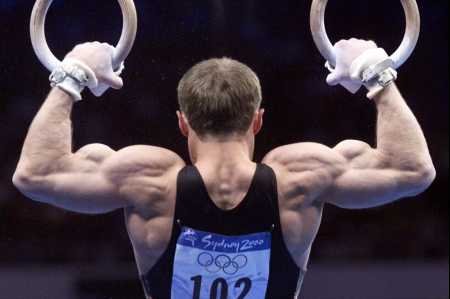
First, the biceps are designed to work with your forearms and upper back. Many machines take those muscles out of the movement so the biceps are left in isolation. The biceps, like most muscle groups, only respond to exercises that challenge them to work the way they’re designed. Just check out the picture in this blog. I used an Olympic rings gymnast for good reason. Those dudes have the most impressive biceps on the planet, but they aren’t bodybuilders that do machine curls all day. Instead, they’re athletes that hang from the rings for hours each day. Exercises on the rings challenge your forearms and upper back, along with your biceps. That’s why their biceps are so incredible – they train them with the muscles they’re designed to work with.
Biceps Training Error #1: Training the biceps in isolation.
Second, the biceps respond best to high training loads. Guys love to train for a pump, and the best way to get a pump is to do slow-grind sets with high reps. But slow training with long sets don’t overload the largest motor units that have the most potential for growth. You need to do multiple sets of low reps with a relatively heavy load to get the biceps to grow. This is why so many people love the 10×3 (10 sets of 3 reps) approach I often recommend for building a muscle group. The biceps respond especially well to that set/rep combination.
Biceps Training Error #2: Training the biceps with light loads and high reps.
With that out of the way, let’s get to the three best exercises that will quickly add muscle.
1. Rope Climb/Neutral grip Pull-up: Of all the exercises I’ve used that overload the biceps, the best one is the least practical. I’m talking about climbing a rope. If you have the luxury of hanging a 2″-2 1/2″ rope from 15 feet up, consider yourself lucky. All you need to do is climb up and down that rope for 10 sets 2-3 times per week and you’ve get all the biceps stimulation you’ll ever need.
But I know that’s not practical for most. The next option is to do pull-ups with a narrow, neutral (palms facing each other) grip. I’ve often talked about the benefit of pull-ups to build the biceps and some coaches scoff at the idea claiming that the stronger upper back will take over the exercise and biceps won’t grow. This is only true with pull-up variations that give the upper back muscles an effective line of pull. By placing your hands close together with your palms facing each other, your arm flexors are effectively targeted and the upper back can’t take over.
I’m sure you’re familiar with the V-bar attachment that you see sitting next to the cable stack in your gym. Grab that V-bar with both hands and look at how close together your hands are – that’s the perfect hand placement for pull-ups. Perform 10 sets of 3-5 reps while alternating it with a chest or triceps exercise.
2. Palms-up Row: A barbell row is one of the best upper back exercises, but it’s also an outstanding biceps exercise when you perform it with your palms up and hands wider than shoulder width. Dorian Yates, the great bodybuilder with impressive biceps, made that exercise famous and he called it the “Yates Row.”
The tricky part of a bent-over barbell row is that it’s very easy to mess up the exercise by leaning back or bringing your hips into play. Therefore, I recommend a more effective, user-friendly alternative. First, set an adjustable bench to a 45 degree angle. Next, lie face-down on the bench while holding a moderately heavy dumbbell in each hand. Start with your arms hanging straight down, palms facing forward, and row the dumbbells. This takes your lower body out of the exercise and ensures that your arms and upper back are doing the work. Perform 10 sets of 3-5 reps while alternating it with an exercise for your chest or triceps.
3. Standing Hammer Curl/EZ bar Reverse Curl: I’m not against direct arm training exercises. They certainly have their place, but many variations do next to nothing. The two best I’ve used in 17 years are the standing hammer curl and standing reverse curl with an EZ bar. For these exercises I like to use slightly higher reps: 6 sets of 6-8 reps works well. Again, you should alternate each set with an exercise that trains your chest or triceps.
The essential component for getting the most out of your direct arm training exercises is to challenge your forearms. That’s why I highly recommend Fat Gripz. They fit around any traditional barbell, dumbbell, or pull-up bar and they work incredibly well to overload your biceps and forearms. Fat Gripz are one of the best training tools out there. Just throw a pair in your gym bag and you’ve got an excellent tool to make any arm exercise more effective.

Stay focused,
CW


Wikio

Tuesday, March 15, 2011

Can Exercise Keep You Young? - NYTimes.com


We all know that physical activity is beneficial in countless ways, but even so, Dr. Mark Tarnopolsky, a professor of pediatrics at McMaster University in Hamilton, Ontario, was startled to discover that exercise kept a strain of mice from becoming gray prematurely.

In the experiment, Dr. Tarnopolsky and his colleagues used lab rodents that carry a genetic mutation affecting how well their bodies repair malfunctioning mitochondria, which are tiny organelles within cells. Mitochondria combine oxygen and nutrients to create fuel for the cells — they are microscopic power generators.But shiny fur was the least of its benefits. Indeed, in heartening new research published last week in The Proceedings of the National Academy of Sciences, exercise reduced or eliminated almost every detrimental effect of aging in mice that had been genetically programmed to grow old at an accelerated pace.
Mitochrondria have their own DNA, distinct from the cell’s own genetic material, and they multiply on their own. But in the process, mitochondria can accumulate small genetic mutations, which under normal circumstances are corrected by specialized repair systems within the cell. Over time, as we age, the number of mutations begins to outstrip the system’s ability to make repairs, and mitochondria start malfunctioning and dying.
Many scientists consider the loss of healthy mitochondria to be an important underlying cause of aging in mammals. As resident mitochondria falter, the cells they fuel wither or die. Muscles shrink, brain volume drops, hair falls out or loses its pigmentation, and soon enough we are, in appearance and beneath the surface, old.
The mice that Dr. Tarnopolsky and his colleagues used lacked the primary mitochondrial repair mechanism, so they developed malfunctioning mitochondria early in their lives, as early as 3 months of age, the human equivalent of age 20. By the time they reached 8 months, or their early 60s in human terms, the animals were extremely frail and decrepit, with spindly muscles, shrunken brains, enlarged hearts, shriveled gonads and patchy, graying fur. Listless, they barely moved around their cages. All were dead before reaching a year of age.
Except the mice that exercised.
Half of the mice were allowed to run on a wheel for 45 minutes three times a week, beginning at 3 months. These rodent runners were required to maintain a fairly brisk pace, Dr. Tarnopolsky said: “It was about like a person running a 50- or 55-minute 10K.” (A 10K race is 6.2 miles.) The mice continued this regimen for five months.
At 8 months, when their sedentary lab mates were bald, frail and dying, the running rats remained youthful. They had full pelts of dark fur, no salt-and-pepper shadings. They also had maintained almost all of their muscle mass and brain volume. Their gonads were normal, as were their hearts. They could balance on narrow rods, the showoffs.
But perhaps most remarkable, although they still harbored the mutation that should have affected mitochondrial repair, they had more mitochondria over all and far fewer with mutations than the sedentary mice had. At 1 year, none of the exercising mice had died of natural causes. (Some were sacrificed to compare their cellular health to that of the unexercised mice, all of whom were, by that age, dead.)
The researchers were surprised by the magnitude of the impact that exercise had on the animals’ aging process, Dr. Tarnopolsky said. He and his colleagues had expected to find that exercise would affect mitochondrial health in muscles, including the heart, since past research had shown a connection. They had not expected that it would affect every tissue and bodily system studied.
Other studies, including a number from Dr. Tarnopolsky’s own lab, have also found that exercise affects the course of aging, but none has shown such a comprehensive effect. And precisely how exercise alters the aging process remains unknown. In this experiment, running resulted in an upsurge in the rodents’ production of a protein known as PGC-1alpha, which regulates genes involved in metabolism and energy creation, including mitochondrial function. Exercise also sparked the repair of malfunctioning mitochondria through a mechanism outside the known repair pathway; in these mutant mice, that pathway didn’t exist, but their mitochondria were nonetheless being repaired.
Dr. Tarnopolsky is currently overseeing a number of experiments that he expects will help to elucidate the specific physiological mechanisms. But for now, he said, the lesson of his experiment and dozens like it is unambiguous. “Exercise alters the course of aging,” he said.
Although in this experiment, the activity was aerobic and strenuous, Dr. Tarnopolsky is not convinced that either is absolutely necessary for benefits. Studies of older humans have shown that weightlifting can improve mitochondrial health, he said, as can moderate endurance exercise. Although there is probably a threshold amount of exercise that is necessary to affect physiological aging, Dr. Tarnopolsky said, “anything is better than nothing.” If you haven’t been active in the past, he continued, start walking five minutes a day, then begin to increase your activity level.
The potential benefits have attractions even for the young. While Dr. Tarnopolsky, a lifelong athlete, noted with satisfaction that active, aged mice kept their hair, his younger graduate students were far more interested in the animals’ robust gonads. Their testicles and ovaries hadn’t shrunk, unlike those of sedentary elderly mice.
Dr. Tarnopolsky’s students were impressed. “I think they all exercise now,” he said.

6 Ways to Outwit Your DNA and Build More Muscle


By: Denny Watkins

Here's a guaranteed motivation killer: After months or years of dedicated lifting, you realize that you'll never bench your body weight, jump high enough to reach the rim, or hit double digits on pullups. It's just not in the cards. You start to wonder why you even bother.

It may seem unfair, but there will always be guys—some of whom inevitably find their way to the bench or squat rack next to yours—who seem born to excel at certain exercises. The truth is, they were. And you weren't. But that's no excuse to cancel your gym membership. "Even if your body proportions aren't ideal, you can still perform exercises that maximize your body's potential," says Todd Durkin, C.S.C.S., the owner of Fitness Quest 10 in San Diego.

So don't give up. Instead, sack up and tackle the problem head-on. Here are some common traits that can lead to frustration in the weight room, and ways to make the most of what you have to build a better body.

Long Arms
The bench press may be a barometer of masculinity, but it discriminates against long-limbed lifters. While the distance the bar travels does limit both performance and results, long arms can also set you up for injury. A tall man's balland-socket shoulder joint—the place where his upper-arm bone meets his shoulder blade—is more vulnerable than a shorter man's. "You actually drive your arm bone into the joint, setting yourself up for rotator-cuff injuries down the road," says Martin Rooney, P.T., C.S.C.S., of the Parisi Speed School.

The workaround: With medicine-ball throws, you can focus on speed instead of on lifting weight. "You'll work more of the fast-twitch muscle fibers that come into play during quick movements," says Durkin. No medicine ball? Do 3 to 5 sets of as many pushups as you can in 30 seconds

Lying Medicine-Ball Throw
Lie on your back, using both hands to hold a heavy medicine ball against your chest. Push the ball just high enough into the air that it leaves your hands. Catch it, and immediately bring it back to your chest for the next throw. Do as many as you can in 30 seconds. Rest, and do 4 more sets.

Short Arms
"Most of the big powerlifters you see have a short, stocky build," Rooney says. It serves them well on squats and bench presses. But when the bar starts on the floor, as with the deadlift, short arms force you to drop into a lower starting position. That changes your leverage and adds strain to your back.

The workaround: "With a sumo deadlift, placing your legs farther apart helps your hands start closer to the ground," Rooney says. It also allows you to begin with a more upright torso, taking stress off your lumbar spine.

Sumo Deadlift
Stand with your feet about twice shoulder-width apart and your toes pointed out. Squat and grab the center of the bar using an overhand grip, with your thumbs 12 inches apart and your torso almost perpendicular to the floor. Without allowing your back to round, thrust your hips forward and stand up with the barbell. Then lower it, keeping it as close to your body as possible. Do 3 sets of 8 to 10 reps.

Small Hands
Short-armed men tend to have smaller mitts; this makes holding the bar harder for them. A small hand's grip gives out faster, reducing the amount of work you can do on pulling exercises, says Rooney.

The workaround: Since you can't grow longer fingers, focus on your forearm endurance with grip training, Rooney says. Add these exercises to the end of any workout.

Farmer's Walk
Grab a pair of heavy dumbbells and let them hang naturally at arm's length next to your sides. Walk forward as long as you can, and then put the dumbbells down and rest. (If you last longer than 1 minute, use heavier weights.) Do this 3 to 5 times.

Towel Bar Hang
Wrap a towel around a pullup bar. Grab the towel using an overhand, shoulder-width grip. Hang for 20 seconds, rest, and repeat.

No Butt
If you rolled a quarter off the back of your head, would it hit anything on the way down? If not, you have a flat back, most likely caused by a pelvis that's tilted backward at the top. A tilted pelvis puts your lower back in a vulnerable position, setting you up for spinal injuries.

The workaround: Strengthen your hip flexors. Once they're in shape, they'll pull your pelvis back to neutral and improve your posture, says Eric Cressey, C.S.C.S., cofounder of Cressey Performance, in Hudson, Massachusetts.

Lying Psoas March
Lie on your back with your right leg on the floor and your left leg off the floor and bent 90 degrees. Loop an exercise band under your right foot and over the top of your left foot. (You can also use a low-pulley cable with an ankle strap, looped around your left foot.) Keeping your right leg steady, pull your left knee toward your chest without your lower back tucking beneath you. Pause, and return to the starting position. Do 10 to 12 reps; switch legs and repeat.

Long Legs
For tall men—basically anyone over 6 feet—the back squat can present two problems, says Durkin. The first involves physics: The longer the bones in your legs, the farther the bar has to travel on each rep and the harder your muscles need to work to lift it. Even with perfect form, you'll have a tougher time adding size and strength. Men with shorter bones can do more reps with heavier weights.

The second problem is that your form is probably flawed. Longer bones have more opportunity to make false moves. You might struggle to keep your lower back in a neutral position (slightly arched) throughout the full range of motion. Or you might lean forward as you tire, putting stress on your lower back.

The workaround: Choose leg exercises that achieve more with less weight, such as the stepup. "You can work your legs hard but with potentially less back strain," says Bill Hartman, P.T., C.S.C.S., co-owner of Indianapolis Fitness and Sports Training.

Dumbbell Stepup
Holding a pair of dumbbells at arm's length next to your sides, stand in front of a step or bench that's about 18 inches high. Place your left foot flat on the step; your left knee should be bent 90 degrees. Push your left heel into the step and lift yourself up until your left leg is straight and you're standing on one leg on the bench. Lower yourself to the starting position. Do 8 to 10 reps and switch legs. To make it harder, place a barbell across your back.

Flat Feet
Everyone is born with flat feet, but most people develop their shock-absorbing arches in childhood. Sometimes, however, the arches never form properly, or they fall from repeated stress, injuries, or some combination of the two. Either way, you end up with feet that can pronate—roll inward—when you walk, run, or jump.

Flat feet can also limit your strength and power in the weight room. "When you pronate, you're in deceleration mode," says Cressey. "Your foot needs to roll in the opposite direction to push off." That affects your strength on squats and deadlifts, and acts like ballast when you jump.

The workaround: Your glutes and hamstrings act as "anti-pronators," Cressey says. Strengthen them, and you can compensate for the loss of power caused by your feet.

Hip Raise
Lie faceup on the floor with your knees bent and feet flat on the floor. Raise your hips off the floor by flexing your glutes so your body forms a straight line from shoulders to knees. Pause, and lower your hips. Do 3 sets of 15 reps; when it becomes too easy, lift one foot off the floor and do a single-leg hip raise. Start with your weaker leg and repeat the set with your stronger leg.


Wikio