Tout dans la vie est une question d'équilibre d'où la nécessité de garder un esprit sain dans un corps sain.

Discipline-Volonté-Persévérance

Everything in life is a matter of balance therefore one needs to keep a healthy mind in a healthy body.

Discipline-Will-Perseverance.

E. do REGO

Monday, March 5, 2012

Freakish Strength With Proper Core Training


Freakish Strength With Proper Core Training

We've all heard it from strength coaches, training partners, even the old jacked dude in the corner who squats five plates on an easy day.
Okay, what does that even mean?
Are they just saying suck in your gut, or is there something special about this core-tightening thing? And if so, why give a rat's ass if your weightlifting goal is to be comparable to a barbarian who crushes his enemies and hears the lamentation of their women?
The often-missed point of keeping a tight core is to stabilize the spine. If you're constantly hurting your back, this is for you. I've seen lifters hurt their backs from just bench-pressing because they had no understanding of spine stabilization.
Before you tune out and write this off as another pre-hab article, pay attention to this – proper spine (core) stabilization coupled with breathing techniques can actually help you lift more weight and improve performance.
Learning to properly contract the core and use intra-abdominal pressure is what separates the guys who are pretty strong from the ones who are freakishly big and strong.


The Core Defined

Freakish Strength With Proper Core Training

Your core isn't just the washboard that you see in the mirror, or in most cases, the bag of laundry that hangs from your midsection.
Along with the abs in the front (rectus abdominis), it includes the internal and external obliques, the transverse abdominis, quadratus lumborum, and psoas major, extending down to include the hips/glutes and up to include the pelvic floor and the muscles by the spine called the multifidus and erector spinae.
Some core muscles are more superficial and are classified as global muscles involved in spinal movement. Other muscles are classified as local muscles, which are deep and specifically involved in stabilizing the spine.
For movement to occur anywhere in the body, force has to be transferred through the core.


Stabilizing Techniques

The most common techniques to stabilize the spine for preventing injuries and achieving greater levels of strength and performance are .
Hollowing is derived from drawing in, and is performed by trying to draw your belly button in to your spine.
You'll hear some say to find a neutral spine first. This technique has been used in rehabilitative settings to teach patients how to activate their transverse abdominus and internal oblique correctly. These are thelocal muscles involved in stabilizing the spine.
Abdominal bracing, on the other hand, involves contracting both your anterior abdominal musculature and your low back muscles at the same time and bracing, like you were about to get hit in the stomach. Some accompany bracing by pushing the abdomen out. This involves the use of the obliques to produce a more stable and powerful contraction.
A study done by Grenier and Dr. Stuart McGill showed that – and a purely observational study conducted by yours truly found that fitness "professionals" who talk about finding a neutral spine and drawing in while squatting usually never squat above 225 pounds.


Learning from Doing

Freakish Strength With Proper Core Training

Bracing is a technique learned in the gym or on the mat. When a fighter goes to strike, he instinctively immobilizes his trunk to a degree, braces his midsection, and swings his limb.
When an experienced powerlifter or informed gym rat gets ready for a maximal lift, he forcefully pushes his belly out and arches his back hard to keep it tight.
What he's doing is contracting his anterior abdominal wall and low back muscles simultaneously, creating a perfect brace. It's a technique acquired from putting your time in.
Looking at this method, it's important to emphasize that .
Some physical therapists teach to actively force the abdomen out while others don't. I find it helpful to push out my abdomen when lifting heavy, but I also remember to actively contract the entire abdominal and low back areas as well as the hip musculature.
I've found this addition to be the difference between hitting a new PR and bombing out, or finishing those last two reps and failing before my potential was reached.


Learning Pelvic Floor Contraction

This full contraction can also include pelvic floor contraction.
A technique used to teach the full co-contraction of core bracing is to pull your pelvic floor upwards. This is similar to the kegel exercises that women practice while pregnant or that adolescent boys try in hopes it will give them a little more staying power in bed when they get to play with a real live girl.
To practice true pelvic floor contraction, imagine finally getting an opportunity to take a whizz after drinking a big cup of strong coffee along with a gallon of water during your hour-long commute to work. Now imagine you had to stop midstream. That feeling is pelvic floor contraction.
To practice a full brace with pelvic floor contraction, squeeze your glutes like you just sat on a tack, perform the pelvic floor lift, and brace your abdominals, obliques, and low back muscles like you were about to get hit.
Rest a second and repeat.
Obviously when you start throwing plates on the bar you're not going to be thinking about stopping a piss stream, but the big guys in the gym do it without thinking.


Does Your Core Work for You?

Have you ever seen someone bend his back squatting as if he were trying to kiss his shoelaces? He's doing so because of poor mobility and a lack of core strength, but working on core strength after restoring mobility is an oversimplification.
Spending too much time without adequate mobility and stability often results in a faulty core stabilization pattern. Adding core strength to a bad pattern won't necessarily fix the problem.
There are exercises that help fix this patterning, but just like strength training and bodybuilding, they have to be practiced. It's also best to add them in after you've first established adequate hip, ankle, and thoracic spine mobility.
The following exercises teach anterior and posterior core stability in the saggital plane as well as rotary and lateral core stability in the transverse and frontal planes.
The first three basic exercises are the curl-up, the bird dog, and the side plank. These movements have typically been used as an introduction to formal strength training after an injury or long hiatus as they recruit the proper pattern in an unloaded state.
The curl-up pattern helps if you have difficulty stabilizing while bending and teaches you how to resist excess extension of the spine in the anterior plane:
The bird dog helps if you have trouble stabilizing in trunk extension and teaches you to resist lumbar spine flexion in the anterior plane:
The side plank teaches you to resist lateral flexion in the frontal plane:
Freakish Strength With Proper Core Training

These should always be progressed to more dynamic and loaded movements. For example, a progression that trains you to resist lumbar extension in the anterior plane is the rollout:
A progression to teach resisting excessive spinal flexion in the anterior plane includes hip extension movements like the deadlift, while the suitcase carry teaches resisting lateral flexion in the frontal plane dynamically:
Rotary stability, which involves resisting too much spinal rotation, is also an important part of core stability that's been receiving considerable attention.
Exercises to train this include cable chops and landmines.


Why Even Care About these Exercises?

I'm sure you've seen 'that' guy, the one who can do front, side, and one-fingered planks on a half-deflated Bosu ball. He can hold this for an hour with perfect alignment, but if you ask him to do a deep squat he literally can't – despite perfect ankle, hip, and thoracic spine mobility. What's the problem?
He has no dynamic stabilization. All that core strength in a stationary position doesn't mean he can stabilize himself during movement.
Bottom line is, it's wise to spare yourself a similar frustration and learn a couple of techniques that will save you time and energy in the long run.


Controlling Breathing

Breathing techniques can and should be coupled with bracing to allow for better performance. The bracing techniques discussed above won't help you lift more weight if there's no increase in intra-abdominal pressure.
Spinal stability is generated partly by diaphragm activation.When pressure is increased in the abdominal cavity, it helps support the spine and works against the compression forces of axial loading (the kind of loading in a squat or standing shoulder press).
Without intra-abdominal pressure created by breathing in air against a braced abdominal musculature and forcing the diaphragm down, true spinal stability can't occur.
The classic breathing technique used is the .
The idea behind this is to create intra-abdominal pressure, which is meant to lead to a greater production of force and stability.
Perform the Valsalva maneuver by breathing deep into the lungs (which are down near your abdomen, for those who still think making your chest and shoulders rise is taking a deep breath), then holding it and forcing the air against a closed glottis.
To learn how to breathe into the lungs and create that intra-abdominal pressure, you can practice something called .
Lie on your stomach with your face resting on the back of your hands. Now breathe deeply so that your low back rises instead of your shoulders and upper back. You want to feel your abdomen pushing against the floor and expanding out sideways. Practice a few times and you'll get the idea.


The Good, the Bad, and the Ugly

There are a few drawbacks to this type of breathing pattern. It can seriously increase blood pressure and restrict blood flow back to the heart. This can be harmful to anyone, let alone someone with a history of heart problems.
Because of this, it's recommended that the Valsalva not be held more than a few seconds to ensure blood pressure doesn't increase dramatically.
Why even use this technique? Furthermore, the Valsalva can improve performance in everything from getting a new PR to aiming a gun.
If this isn't for you but you're still looking to create intra-abdominal pressure and brace your core, you can also use forced expiration. Easily explained, this is done by sniffing in air against a braced core and blowing out some air against a braced abdomen on the working phase of the lift.


Conclusion

Freakish Strength With Proper Core Training

Everyone wants to learn the newest program, lifts, and techniques to wow the treadmill bunnies and stand above their friends. It's wise to first take a step back though and look at the champions in any sport – I guarantee you'll see that they all share an obsession with practicing the basics that produce results.
Don't believe me? Just ask that 50 year-old grey beard squatting a Mack truck what's more important, the newest advanced periodized squat program or knowing how to arch your back and "keep your damn core tight"?


References

Akuthota, V. & Nadler, S.F.Archives of Physical Medicine and Rehabilitation - March 2004 (Vol. 85Supplement 1, Pages 86-92, DOI: 10.1053/j.apmr.2003.12.005)
Grenier, S.G. & McGill S.M. Archives of Physical Medicine and Rehabilitation - January 2007 (Vol. 88, Issue 1, Pages 54-62, DOI: 10.1016/j.apmr.2006.10.014)
McGill, S.M. & Karpowicz, A. Archives of Physical Medicine and Rehabilitation - January 2009 (Vol. 90, Issue 1, Pages 118-126, DOI: 10.1016/j.apmr.2008.06.026)
Verkhoshansky, Y. V., & Siff, M. C. (2009). Supertraining. (6 ed.). Rome, Italy: Verkhoshansky.
Zatsiorsky, V. M., & Kraemer, W. J. (2008). Science and practice of strength training. (2 ed.). Human Kinetics Publishers.

Wikio

Conditioning 101


Conditioning 101 - Jim Wendler

There's no excuse to be out of shape. You don't have to be a marathon runner and you don't have to be able to fight five rounds for the UFC title, but there's no acceptable reason for being an out of shape lard-ass.
Being in shape requires one thing: hard work. And working hard requires no talent. None.
For athletes, you can't always be the strongest or fastest guy on the field, but being in better shape might be the thing that gives you an edge on both the competition and the up-and-comers trying to take your spot on the roster.
To be the last man standing after a game, you need to be the last man standing at practice. If you're like me and had minimal to no talent, you need all the help you can get. Being in better shape and being stronger were two things I could control.
For competitive lifters, you certainly don't need to be running miles every week, and you don't need to be bored doing endless cardio. But a consistent conditioning protocol will help you recover better, have a lower resting heart rate, decrease body fat levels, improve sleep, and improve your general fitness level. This is especially important for the lifters that have done minimal or zero athletic work in the past five years.
For the everyday lifter, it's about having pride in yourself. Respectable levels of conditioning, flexibility, and strength will help you personally, professionally, socially, and most importantly, improve your health.
Here's a list of some of the conditioning activities I've done along with the pros and cons of each. As many of you know, I've been on both sides of the conditioning spectrum and I'll never make the mistake of being out of shape again.


Prowler

Conditioning 101 - Jim Wendler

Much has been written about the Prowler and its benefits. While simple by design, the Prowler is one of the most effective conditioning tools an athlete can have. Any level of athlete, regardless of training level or sport, can use it.
The best thing about the Prowler is the "hard" level of conditioning it can produce with minimal wear and tear on the body. It's very easy on the knees, hips, and ankles, making it great for older strength athletes.
For younger athletes, it's a great way to build the lungs and legs/hips with minimal coaching; just load up some weight and push. It doesn't require the technicality of a squat or the constant coaching of the deadlift.
The Prowler also offers a quick and efficient workout. A Prowler eliminates 60-minute conditioning sessions; in less than 20 minutes, an athlete can push his way to burning lungs and legs. This is a huge plus when running large groups or for the lifter that doesn't have a great deal of time to train (job, school, family, etc.).
The Prowler also allows you to change weights and distances with ease; a stronger, bigger lifter can load the Prowler and use it along side a weaker, smaller, lifter. This makes it applicable to any size, strength, and conditioning level, a huge plus for personal trainers working with a large variety of clients.
The two biggest drawbacks of the Prowler are the price and the difficulty of "prescribing" a workout. Because the Prowler can be pushed on a wide variety of surfaces (cement, concrete, grass, or turf) that all vary in drag coefficient, it's hard for any fitness professional to accurately say what weight and distance to push.
People who own the Prowler may have only one surface to push on (for example, the street in front of their house) and this surface may be much harder or easier than what a prescribed workout was based upon. Thus, a Prowler requires some intelligent thinking of its owner, which can be a tall order, especially in the strength-training world.

Pros


  • Efficient and effective.
  • Requires little skill.
  • Can be used by a large variety of people due to variable weights and distances.

Cons


  • Price is well out of range for many athletes and lifters.
  • No standardized surface and workouts.


Hill Sprints

Conditioning 101 - Jim Wendler

Hill sprints are simply brutal. The legs and lungs are taxed heavily if the hill is steep and long enough. Because I grew up in the Chicago area, Walter Payton was a huge influence on me, and his use of hill running to prepare his mind and body for the rigors of the upcoming NFL season made any Illinois kid want to run hills. I'm sure his off-season regimen was partly responsible for his legendary strength and durability.
Anyone who's ever run hill sprints knows the mental strength it can develop – even more so than a Prowler. There's something very primal about lacing up your cleats and attacking a large hill for a training session.
Of course, the big drawback of running hill sprints is finding a decent hill. Many lifters live in flat, barren areas where there isn't a hill bigger than a speed bump. And those that do live in hilly areas may find it difficult to find one that has a good enough surface to run on. So hill sprints, while extremely effective, have enormous geographical limitations.
The other drawback to hill sprints is the wear and tear on the ankles and Achilles. If you're new to running or are trying to reclaim lost glory like yours truly, make sure you take the necessary steps to stretch and prepare before attacking the hill.
For those that want to find a hill, Google Maps is your friend; I highly recommend looking for sledding hills and reservoirs. These two places are prime areas for some steep hills.
Prescribing a hill sprint workout is much harder than prescribing a Prowler workout. There's no standard hill length or grade so the athlete is going to have to use his best judgment. As with anything in weight training, set a small, reachable goal the first time out and build slowly.

Pros


  • Great workout for the legs and lungs.
  • Builds the body and the mind.

Cons


  • Very hard on the ankles and Achilles tendon.
  • Not everyone has access to a hill.
  • No standard hill, requiring the athlete to develop his own training and programming.


Jump Rope

I've used the jump rope since junior high and it's a great way to warm-up the body and hit some basic conditioning work. It's great for your feet and agility, and I always feel more "athletic" after I've jumped rope for a training cycle.
As a warm-up, I used the jump rope for 500+ jumps before training in high school. This was mainly used with double foot and single foot jumps and was followed by a thorough stretching session.
And if you don't have time to warm-up, you don't have time to work out. Of all the different warm-up options, this is the most efficient way to get the heart rate up and get some sort of athletic benefit.
There are two drawbacks to jumping rope. First, not everyone can do it. I learned this when I was personal training and saw way too many people trip over the rope or receive a stinging whip from an errant jump. Simply working on technique and slowing down the jumps can solve this problem.
The second drawback is shin splints. In college, I used to jump rope in my apartment and after several weeks of 1000+ jumps/day, I suffered from a nasty bout of shin splints.
Despite these things, the jump rope can be used very effectively for conditioning . After you perform the main lift of the day, use the jump rope between assistance lifts.
For example:

Workout

ExerciseSetsRepsRest
ASquat33*
BGood Morning38*
C1Jump Rope550 jumps60 sec.
C2Lunge56**60 sec.
C3Jump Rope550 jumps60 sec.
C4Hanging Leg Raise51060 sec.
C5Jump Rope550 jumps60 sec.
C6Glute Ham Raise51260 sec.
This allows you to get your main lifts in without sacrificing the strength portion of your training, along with getting your conditioning in while doing your assistance work. This is optimal for people who have minimal equipment, especially during the winter when the weather won't allow you to get outside. It's also a great way to maximize your time in the weight room.

Pros


  • Time and space efficient.
  • Makes you feel more athletic.

Cons


  • Shin splints.
  • Requires skill and agility many people don't possess.


Stadium Steps

Conditioning 101 - Jim Wendler

One of the hardest workouts I've ever done was running up the press box side of the University of Arizona stadium. The steps get steeper as you go farther and your legs and lungs are on fire. I remember walking back to my car and my legs shaking like a young Elvis. Very humbling.
Like hill sprints, stadium steps build the legs and lungs to a high degree, but also like hill sprints, the area you live in and the size of the stadium largely limit you. Also, the stadiums near your home may not be open to the public.
However, if you can get in, do yourself a favor and run stadium steps.
Stadium steps are also easier on the ankles than hill sprints. And like hill sprints and the Prowler, they're very knee friendly as the vertical distance of the footfall is much less than running on flat surface.
For people living in big cities, running stairs is a much easier option. Apartment and office buildings have huge amounts of stairs that can be used and abused.

Pros


  • Great for building lungs and legs.
  • Easy on the ankles and knees.

Cons


  • Limited access to stadiums and tall buildings.


Weighted Vest

The first time I used a weighted vest I was surprised at how much it affected my low back and traps. I thought my lungs would be the first to go but by the end of the walk, my back and traps were screaming. I've used the weight vest on walks around my neighborhood and the hill I sprint. For the hill, I did run with the weight vest on, I simply walked up the hill. This killed my legs.
The weight vest is a great way to turn simple tasks, like walking, into something very difficult. We all have access to the outdoors and thus have access to someplace to walk (and I'm not talking about a treadmill).
Add in the low back and trap development one can get from using a heavy weight vest and you have a tremendous conditioning resource. Also, weight vest walks can be done any time of year, unless you're living in blizzard conditions year round.
I think the weight vest is a great option for older lifters that don't want to be bored by traditional cardio equipment. It's also easy on the body (meaning your knees aren't pounded), yet still requires enough effort and strength to make it challenging and not feel like you're "just taking a stroll."
I recommend using the weight vest for distance (e.g., walk for 1 or 2 miles) rather than time.
The drawback to the weight vest is the price. Like the Prowler, it's out of many lifters' budgets. And there's a big difference between using a well-designed weight vest and a backpack stuffed with weights and textbooks.

Pros


  • Can make walking around the neighborhood more manly.
  • Great for total body conditioning.

Cons


  • Price


Body Weight Conditioning

Conditioning 101 - Jim Wendler

Dave Tate, who learned it from John Davies, introduced this to me. I'm not sure if Davies is still part of the fitness world but this simple bodyweight-conditioning workout was short and brutal. It consisted of the following:
ExerciseTime
AJumping Jacks30 seconds
BMountain Climbers30 seconds
CBurpees30 seconds
DSplit Squat Jump30 seconds
Don't be fooled, this is a brutal workout. With people that have limited space and funds, this is a great conditioning alternative. This is also great for when the weather won't allow you to get out and stretch your legs.
There are two drawbacks. The first is that it's a very short workout, something that can be remedied by longer rest periods, more exercises, more reps, and more sets. Suffice it to say, doing these exercises as listed above isn't easy, especially for those who carry more muscle.
Second, of all the conditioning stuff I've done, this is by far the most boring. That may be my personal opinion but I'd much rather run hills or push a Prowler.
Feel free to mix and match exercises, time, and rest periods with body weight conditioning, but remember that there's no need to get too fancy. Simple is always best.

Pros


  • Requires little space and equipment.
  • Great for the winter time.

Cons


  • Not terribly exciting.
  • Athletes still need to run.


Incline Treadmill Sprints

This is by far my favorite winter conditioning tool. Since most people train in commercial gyms, it's very easy to prescribe. Running treadmill sprints is also easy to do.
  • Turn on treadmill.
  • Ramp up the incline as far as it can go.
  • Start at 6 miles/hour.
  • Run for 15 seconds.
  • Hop off treadmill (feet on the sides of the belt) and rest for 45 seconds. During the rest period increase speed .5 mph.
  • Repeat until you get to a speed that is challenging for you.
  • Do this 20-30 times.
Incline treadmill sprints have a great built in warm-up (starting at a lower speed) and allow you to adjust the speed for your conditioning and speed level. It's very easy on the knees and hard on the lungs. Plus, you can do more work in 20 minutes than people who fart around for an hour.
A good option is doing these with a partner – he rests/you go. You can be a little more lax on the rest times than what I listed as it doesn't matter that much. The key is to run the sprints without taking too much rest in-between.

Pros


  • Requires little space and equipment.
  • Great for the winter time.

Cons


  • Not terribly exciting.
  • If you misstep, you will fall and people will point at you and laugh.


Sled Pulling

Sled pulling garnered popularity due to the heavy endorsement by Louie Simmons. He got the idea from Eskill Thommason, who visited Finland to see why they were such great deadlifters. He noticed that many of them were lumberjacks whose job required they pull trees down the trails for the trucks to pick up.
Sled dragging is terribly simple – hook a sled up to your lifting belt or harness and walk forwards or backwards. You can add more weight and pull for shorter distance or use less weight and go for time. Jim Hoskinson used one-mile sled drags to rehab a very bad knee injury and returned to the platform for some very strong lifts.
I like hooking up a 100-foot rope to a sled and pulling it hand-over-hand. This is a great compliment to your regular conditioning (which is usually centered around the lower body). This is also great for the upper back and lats, and provided the rope is thick enough, will tax your grip and arms, too.
While standard sled dragging (forward/back) has fallen out of favor due to the popularity of the Prowler, it's still a great conditioning and strength tool, especially for younger lifters. Like the Prowler, it doesn't require much skill to walk forward or backward.

Pros


  • Easy on the body.
  • Requires no skill.

Cons


  • Prowler can have double use as a sled.
  • Not nearly as taxing and efficient as the Prowler.


Putting Conditioning into Action

Conditioning 101 - Jim Wendler
Many years ago, I was at a standstill with conditioning and uncertain where to put it in my training. When do I do it? What if I get weaker? Will my legs be able to handle it? I had a million reservations and none were valid. They were simply excuses.
I believe that if you want to get something done and you want something bad enough, you'll make it happen. I've had some of the best squat workouts during my heavy conditioning phases (which were mainly hill sprints). It didn't start like that. My legs were exhausted. They shook when I walked out light weights during squat sessions. I lowered my training max and simply willed the weights up when I felt awful.
Eventually my legs got stronger and in better shape. Sure, it took a few months, but 60 days in a lifetime of training is nothing, because training isn't about an 8-week program – it's about building your body and your strength over a lifetime of training. If you're looking for another empty promise of the "6-Week Six Pack," you've come to the wrong guy.
My training plan is simple. It's three things per training session, usually done 3-4 times/week.
  • Stretch
  • Lift
  • Sprint
That's it, and that's all you need. If you stretch hard, lift heavy, and run fast, everything else seems to take care of itself. I'm not forging new ground here, but what I am doing is rekindling the things that were taught to me by "the ancients" that have lost meaning and glam in today's world of complexity for complexity sake.


Now Go Do It!

Do yourself a favor and embrace what some of the strongest people on earth have done – combine stretching, lifting, and conditioning into a balanced program.
These three things make up the N.O.V. (North of Vag) training program, and these things make up my training past and my training future. A future that will assure my "Sell By" stamp will never have a date on it.
Wikio

Saturday, March 3, 2012

Coconut oil may be able to reverse the progression of Alzheimer's disease

Originally published February 23 2012


by Mike Adams, the Health Ranger, NaturalNews Editor

(NaturalNews) Reliable conclusions about the causes of Alzheimer's disease remain elusive, and effective drugs to treat the disease remain equally scarce. An actual pharmaceutical cure seems as close to becoming reality as a cure for cancer (i.e. nowhere in sight). Yet a Florida doctor was actually able to reverse her husband's Alzheimer's disease just by giving him four teaspoons of coconut oil per day. In the course of a year he not only regained the ability to exercise and to care for himself, but his brain atrophy was completely halted.

The most cutting-edge research suggests that Alzheimer's may stem from an inability of the brain to process glucose, leading to cell death. But the brain has another source of fuel: ketones, produced by the body from mid-chain triglycerides like those found in coconut oil. In fat, the most promising experimental Alzheimer's drugs being tested today is nothing more than medium-chain triglycerides derived from coconut and palm kernel oil.

Coconut oil also turns out to be an extraordinary cooking oil because it resists smoking, even at high temperatures. Try cooking in coconut oil instead of olive oil (or cheaper vegetable oils) and you'll notice a clear difference. Finally, coconut oil is also a fantastic food storage item as long as you can keep it cool. It's a dense source of healthy calories that's usable as both food and medicine. In fact, it can be used as the base for many salves, pastes or even herbal suppositories.

Source: 25 Amazing Facts About Food, authored by Mike Adams and David Guiterrez. This report reveals surprising things about where your food comes from and what's really in it! Download the full report (FREE) by clicking here. Inside, you'll learn 24 more amazing but true facts about foods, beverages and food ingredients. Instant download of the complete PDF. All 25 facts are documented and true.

Additional Sources:
http://www.coconutketones.com/
http://www.anh-usa.org/coconut-oil-and-alzheimer%E2%80%99s-disease/

Saturday, February 25, 2012

15 Questions for TC Luoma


By Bret, February 24, 2012 6:21 am
TC Luoma is someone I have tremendous respect for. In fact, I consider him to be one of the most influential individuals in the history of Strength & Conditioning. He’s had a tremendous impact on spreading “non-bodybuilding” strength training methodology with more of a strength, power, functional, or joint-friendly flare to it. Where other publications would have ignored the various writers and article submissions in their quest to promote hypertrophy-based, traditional training practices, TC saw potential and gave guys like me and methods that don’t fit the “bodybuilding-only” mold a chance.
I’m certain that had I submitted my first article, Dispelling the Glute Myth, to other sites or magazines, I wouldn’t have heard back from them. But TC saw potential and agreed to post the article, and two-and-a-half years later the hip thrust is popular around the world. When I think of it, a vast majority of what I’ve learned today as far as strength & conditioning practices are concerned come from reading TNation. I recently reached out to TC to see if he’d conduct an interview for my blog and much to my chagrin he agreed. Here’s the interview:
1. Hi TC, thank you for agreeing to conduct this interview. First off, what does TC stand for, and why do you go by “TC” instead?
Well, if you go to Wikipedia, or at least the last time I checked it, it suggests that the “T” stands for the descriptor, “Ten-Inch,” and the “C” stands for, well, use your imagination. Seriously. That’s what it said on my Wikipedia entry. Kinda’ makes you doubt the authenticity of some of the other info, doesn’t it?
Anyhow, TC is just the two initials of my first and middle name: Terrence Christian. I’ve always preferred to be called TC and I’ve always used it as my pen name.
2. I’d like to know how you stumbled into the fitness field. Were you always a fitness nut or did a job just fall into your lap?
I’ve worked out as long as I can remember. I remember wanting to start lifting weights when I was ten years old but my mother wouldn’t let me – she said it would stunt my growth. So it wasn’t until high school that I started lifting in the basement. I also read the earlier Weider Magazines and somehow thought I was the only one who liked Arnold and Frank and the rest of the California bodybuilders because nobody I knew in real life in Michigan had ever picked up a weight or even knew who those guys were.
I remember hearing that Arnold was going to do a book signing in a nearby town when I was growing up and I drove a couple of hours to see him. I’d stood in line for about an hour, finally got to the head of the line and some woman started talking to him about some business proposition. He took my book, signed it, and never even looked at me. I was seriously bummed.
I finally met him when I got into the biz, but it wasn’t the same.
Anyhow, years later, I hooked up with a bodybuilding photographer named Ralph DeHaan. He worked for all the mags and when I told him I write, he said he always needed articles to go with his pics. I tried writing one, sent it to MuscleMag, and they bought it. Then I sent one to Muscular Development and they bought it.
I started sending articles to mags all over the country, including some in Europe. Pretty soon I was writing 15 articles a month. I got to know everybody in the business, and then I hooked up with George Snyder and Bill Phillips and started writing most of their magazine, Muscle Media 2000. Within a year, they made me editor-in-chief. A few years later after Phillips decided he wanted to go mainstream, I left and hooked up with Tim Patterson, who had the weird and wonderful idea of starting a website called “Testosterone.”
3. It seems that those Muscle Media days were bitter-sweet times for you. Looking back, what important life-lessons did you learn from the experience?
That everybody in this business has something seriously, seriously, wrong with them. Dat’s a fact, Jack. I learned that business, almost invariably, will eventually exploit people, resources, or the environment. I learned that lots of money, earned very quickly, corrupts people as few things do. I learned that most people climb the corporate ladder by being sniveling, obsequious little worms. I learned that many girls, given enough money, will take their clothes off and do wonderful things, especially in Vegas (Bill used to take groups of us there for recreation).
And those were the good things I learned.
Nah, just kidding. I made a name for myself at Muscle Media 2000, earned enough money to put a down payment on a nice house in San Diego and honed any writing skills I had by writing tens of thousands of words in articles (both under my name and ghost writing for others), books, pamphlet, and ad copy. I also met Tim Patterson, which later turned out to be a very good thing because we started Biotest and T Nation together.
4. You started Biotest and TNation with Tim Patterson out of his garage in Colorado. What was your and Tim’s initial vision for the company?
A small correction, Bill Phillips started his company out of his mother’s garage in Colorado. We started Biotest and T Nation out of a small office building in Colorado Springs. Tim, along with Dr. Mike Leahy, were running a medical practice that was built around ART. Tim started building Biotest out of that same building while concurrently running the day-to-day doings of the ART business.
Our first “warehouse,” however, was a former gas station right next door to the ART practice.
Anyhow, we initially wanted to be a better version of the old Muscle Media 2000 had been, before it went mainstream – an entertaining and innovative source of ground breaking information on training, diet, and supplementation that didn’t suffer fools gladly but liked to make fools suffer. Similarly, we wanted to make hugely effective supplements that WE wanted to use; if anybody else wanted to use them, i.e., customers, than great. We’d have our protein cake and eat it, too.
5. Did you ever think back then that TNation would end up being so popular, and how did your and Tim’s vision for the company morph over time?
Yeah, I did think it would be as popular as it is. And as far as how our vision has morphed, it really hasn’t. We’re still passionate about training, whether it’s strictly bodybuilding training, or training to be as functionally brutal and bad-ass as the type MMA fighters. We also still build supplements WE want to use. If you want to use them, too, great.
That’s something that kills me. A lot of times people contact us and ask whether we used such-and-such a crappy or inferior ingredient in one of our products and I think to myself, “You moron. Why would Tim or I put some crappy ingredient in a product that we built for ourselves?
6. Do you feel that TNation is the crème de la crème for strength & conditioning writers? If so, why?
Absolutely. Just about anybody who’s anybody either started out with us or writes for us now. It sounds bad, but sometimes people ask me about if I’ve heard of some obscure coach and I think, perhaps mistakenly, “Hell, if he were anybody I’d already know about him and he’d be writing for us.”
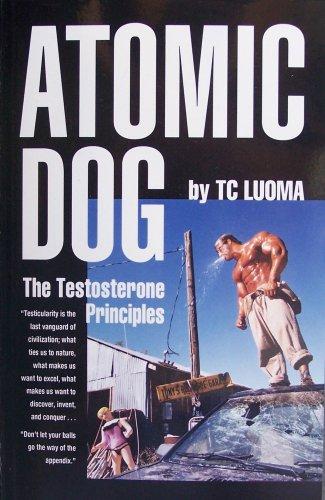
7. Several years back you wrote a book titled Atomic Dog: The Testosterone Principles. I actually bought four copies; one for me, one for my twin bro, and one for each of my two step brothers. The book resonated with me because I feel that most men these days lack integrity, fortitude, and testicular-power. What’s wrong with our current generation of men?
Thanks! That’s really gratifying to hear.
What do I think is wrong with today’s men? Where do I start? Fear. Uncertainty. Lack of identity. Lack of true self worth. Obsession over any perceived slight. A lack of a definition of what true manhood is. Believing that money or material possessions are synonymous with accomplishment. I could write a book. Wait, I have!
8. I suppose you’ve seen it all when it comes to strength training. Since TNation’s inception in 1998 (then it was Testosterone.net) we’ve seen articles from the likes of Ian King, Charles Poliquin, Paul Chek, Dave Tate, Christian Thibaudeau, Dan John, Chad Waterbury, Alwyn Cosgrove, Eric Cressey, Mike Robertson, Michael Boyle, Joe DeFranco, Nick Tumminello, Tim Henriques, Tony Gentilcore, Jim Wendler, Ben Bruno, and even some asshole named Bret Contreras. It’s basically a laundry-list of S&C rock stars. What 3 individuals have made the most significant impact on your training?
Man, I feel like a Hollywood starlet who’s been asked which of her leading men was the best lay. This sounds like I’m being diplomatic, i.e., being a slimy politician talking out of both sides of his mouth, but I’ve stolen from all the guys you’ve listed. Each one of them has things to offer to T Naiton and to me. Otherwise, their stuff wouldn’t have been posted on T Nation.
For instance, I was just doing Bret Contreras glute thrusts yesterday. I’m using some of Wendler’s 531 stuff, too, and I routinely use Christian Thibaudeau’s methodologies, too.
I will say that Poliquin was the first to make me radically change my approach. Before Poliquin, it was 3 sets of 8 for not only me, but virtually everyone who lifted weights. (Bret’s note: I think Charles Poliquin, and possibly more so Ian King, influenced strength coach practices more than any two individuals in S&C)
9. Speaking of strength training, how do you currently train? Are you a bodypart split guy, a lower/upper split guy, or a total body training guy, and what are your goals?
I’m a push/pull guy. After all these years, after trying everything, it’s what makes the most sense to me and what works best for me. I lift 3 or 4 days a week and I have to confess, I’m a grinder (even though Christian and Tim are trying to cure me of this habit). I like extended sets, drop sets, multiple no-rest, make everything burn so at the end you have to drop the weights and make an ugly face until the pain goes away. It’s just my nature. Otherwise, I don’t feel like I worked out.
I also work the Prowler one or two days a week, along with riding a modified mountain bike up and down the local thousand-foot “mountain.”
My goals right now – and they may change in a few months, such is the nature of the beast – is simply to get as strong and conditioned as I can while remaining essentially the same weight. I have virtually no cartilage in my left knee – the result of a football injury – and I find that I can keep the nagging pain away if I stay reasonably light.
10. Here’s a random question. Have you ever noticed that many “gurus” in S&C seem to get really strange over time? What’s up with Gurus Gone Crazy?
I know, I know. Here’s what I often tell new writers. “Here’s how it will be. You’ll start writing for us. You’ll gradually grow to be very popular and make a lot of money. You’ll adore us. Then, things will change. The fame will affect you. You’ll star to castigate us for not treating you like the star you are. Your shipment of Anaconda and Indigo-3G will be a day late and you’ll threaten to sue us. You’ll leave, thinking you don’t need us, and at least 5 out of 10 times, you’ll fade into obscurity and spend your days in the park trying to teach pigeons how to Bulgarian squat.”
11. What irks you the most in regards to article submissions by prospective contributors, and what sort of writers and articles catch your eye?
The thing that bugs me is guys who submit articles without having studied the T Nation site. They send me articles on stuff that we’ve written about the week before. They’ll send me articles that are too simplistic for the Parade Magazine that comes bundled up with the Sunday paper. I don’t get it.
As far as what catches my eye, I usually defer to one thing, and that’s if the article makes me want to try whatever it is they’re writing about. If I’m interested in it, chances are the readers will be, too.
12. Do you have any advice for upcoming S&C writers?
Don’t get too immersed in studies. Instead, use experiential evidence. In other words, studies aren’t the end-all and be-all. I read them and they’re fascinating to me, but studies are often poorly designed. They’re often overlooking or missing certain intangibles. For instance, I bet if some researchers took a group of test subjects and decided to test Westside barbell’s methodologies on them, they wouldn’t get nearly the results that the real Westside does. The real training has intangibles that the research would lack, like being screamed at by a bunch of guys who look like stone killers, or having heavy metal music blasting out at 110 decibels.
Studies are great, but if you depend solely on studies, you’re just writing book reports. A literate high school kid could do the same thing. I prefer guys who read stuff and then test it out themselves.
Similarly, I sometimes get PhD nutritionists writing for us who simply can’t, because of their formal education, make a deductive leap about something. They’ll stammer that the research hasn’t proven it yet, and while every piece of evidence points to a certain conclusion, they’re unable to make the small leap. You want to smack them on the head. Hell, this sport or activity or passion, whatever you want to call it, was built on deductive leaps.
13. Word on the street is that you’ve just written a new book titled Manhood and Other Stuff: The Testosterone Principles II. Is this correct?
Oh, finally, my reward for doing this interview! I get to plug my new book!
Yes, that’s true. The alleged national campaign kicks off in April, but the book is currently available on Amazon and Barnes and Noble in both hard and soft cover. Like the first book, it’s about manhood.
As far as what it’s about, I’ll just give you the synopsis I just sent to the publishers. It’s probably a little longer than you expected, but what the hell, we’re not killing any trees here:
This book is about manhood, and, well, other stuff. But let’s address the manhood thing first.
And I know what you’re thinking. You’re thinking the type of manhood that worships monster truck rallies and nacho fries and fast cars; that paints its bare chest green and sits in the subzero stands of Lambeau Field with a hunk of plastic cheese on its head while bellowing like a gutted Klingon; that communicates largely by grunting, belching, or telling fart jokes.
You know, all that stereotypical crap.
But that’s not what I had in mind. In fact, I had this notion of manhood that combines the do-goodedness of the Boy Scouts with some heaping doses of self-determination and pragmatism, sprinkled with a dollop of Testosterone, and seasoned with a few fistful-size pinches of Howard Stern.
From my experience and observations, men and boys are in some serious need of a new definition of manhood. Men by and large don’t have a masculine identity that’s much different from the one-dimensional and infantile masculinity epitomized by professional athletes or by the characters in Hollywood action movies or, worse, yet, television sitcoms.
But there’s a yin to the masculine yang I just described, and neither side is very pretty.
There’s a whole other breed of man who, despite rejecting silly Maxim Magazine notions of manhood, has gone completely in the other direction, only slowing down to do some occasional antiquing. Their balls were either cut off metaphorically by society, circumstance, or disapproving wives who put them in a Mason jar and stored them in the shed behind the pickled beets.
As a result, many kids don’t have fathers anymore; the traditional American family consists of two “moms,” one with a traditional vagina and one with a penis and testicles that acts like a mom. A lot of wives don’t have husbands anymore – they gave their wedding vows to yet another son who, despite being in his 30′s or 40′s or beyond, has to be told what to do and scolded when he’s bad.
The other type of man I described earlier, the beer-swilling, monosyllabic slobs? Oh, he gets married and has kids, too, but he doesn’t stay married very long — if his wife has any sense, that is.
So I wrote the columns that make up this book. Most of the articles are about some aspect of my version of manhood, along with the occasional observation about new developments in science or psychology, along with a healthy dose of popular culture and sex (the “other stuff” referred to in the title).
I’m hoping against all odds that it helps, at least a little bit, to set things right, or at least generate a little discussion and a lot of laughter.
14. I believe that TNation has been the single most influential website in the past two decades in terms of positively influencing the training practices of lifters worldwide. We have you to thank for helping spread sound training methods, and for this you should feel a sense of achievement. What’s your most proud accomplishment in life thus far?
Thanks! That’s nice of you to say.
As far as being “proud,” I have to take issue with that word. Don’t worry, I’ll be brief. I think pride is an immature emotion. It means I allegedly have done something (or even bought something) that I hope will convey superiority over someone else. I prefer the word “satisfaction,” as in what accomplishment has given me the most satisfaction? In other words, what have I done that was truly useful or life affirming?
First, it’s immensely satisfying when I hear you say that my first book helped your brother “man up.” I hear that type of thing a lot and it’s enormously satisfying. Secondly, I’m happy that it seems that I’ve helped spread what is often –not always – a healthy life style. From what I can see, a lot of people are healthier, fitter, able to enjoy life more, and happier because T Nation exists.
That’s very cool.
15. Thanks again for your time TC. I have one last question. My last several dogs were Min Pins, Dachshunds, or Chihuahuas – all small dogs. I imagine that you’re a Pit Bull, Doberman, or Ridgeback type of guy. Am I correct?
I’ll admit, I have a weakness for masculine dogs. I have two English Staffordshire Bull Terriers and they’re regarded as second cousins to pit bulls. Truth is, they were originally used for fighting in the pit in England by the coal miners that developed the breed, and they would tie a bear to a wall and have a small group of these dogs fight the bear. Pretty weird, huh?
But this breed has been domesticated over the years. In fact, they’re now called “nanny dogs” in England because of their reputation with children. That’s good, because it’s frowned on when you have dogs that actually eat kids.
Anyhow, I like the dogs because they’re relatively small, but with very thick, muscular bodies. They’re canines with the bodies of bodybuilders, coupled with the athleticism of an NFL running back. My male, Tommey, was born from the frozen sperm of a champion dog that had been dead for over ten years. I feed him organic meats, vegetables, and Biotest supps. Hell, we should put him on the label of some of our products.

Wikio

Thursday, February 16, 2012

Sandbags For Strength

Sandbags For Strength


Is the sandbag the key to elite strength and conditioning? Probably not. It isn't a miracle tool and likely not the missing link between you and strength training glory. However, used properly, sandbags can certainly be an effective adjunct to a solid resistance-training program.
Before you rush out and start stealing sandbags from the stack your neighbor has holding up his kid's swing-set, you need a rationale for using them. This article will discuss how sandbags can help you build strength, conditioning, and power.
Often regarded as a "poor man's choice" for strength and conditioning, there's a distinct split between those that use sandbags (and other odd-shaped lifting devices) and those that train with traditional resistance, namely barbells and dumbbells. For some reason, we rarely find people that consistently work at both ends of the spectrum. Why?
  • It's difficult to "grease the groove" with sandbag training. Although your technique will undoubtedly improve over time, you'll still find yourself fighting for most lifts. Most don't like this.
  • Sandbag training, being unstable and constantly shifting, will prevent you from lifting as much weight as you could on a more fixed device, like a barbell. This means that most who train for absolute strength tend to write them off.
  • Sandbags aren't always employed for their unique properties. They're often used for sandbag variations of regular barbell exercises, meaning that serious trainees just end up lifting less weight than normal. As a result, the comparable results between sandbag training and barbell training aren't that impressive.
If you're considering adding sandbag lifting into your training program, it's important to first qualify what it will, and what it won't do for you.


Functional Fiction

Sandbags For Strength
The annoying functional training "buzz" has come full circle. People are now wise to the fact that the modality used (barbell, dumbbell, kettlebell, sandbag, etc.) and exercise selected don't necessarily make it functional. What makes these things functional (and indeed anything) is how they relate to you and your individual needs.
Subsequently, we're starting to see a return to programs that are more functional for most people. Programs based around good, compound lifts are now common – and this is a great thing.
Does this mean that we should avoid those other "real-life" lifts altogether? I say no, provided we realize why we're including them in our program.
Most avoid "odd-object" lifting because it's tough and they find themselves struggling to make many of the lifts, even at moderate loads. For those aiming to increase absolute strength this can become an issue. I'm proposing that you don't substitute sandbag training for barbell training, but use it as an additional tool.


What Makes The Sandbag Awesome


  • The sandbag is awkward to lift, requiring that you fight hard to perform exercises with it, just like working with a "real-life" object or person. (Hello, mixed martial artists, bouncers, and amateur mud wrestlers.)
  • Sandbags require great levels of grip strength to lift. You'll find that you naturally grip them in positions like the bear hug, Zercher, or shoulder.
  • The sandbag is malleable. It will adjust to your body and how you're using it. Like Spiderman's alter ego Venom, it's particularly effective in "molding" itself to your body and is perfect for carrying, dragging, and throwing.
  • The sandbag is unstable and will develop great core strength. This is the opposite of most "core" training where the surface you're standing on is unstable. Working with an unstable object is much more akin to the demands of real life.
  • They're a great way to push past plateaus. Get used to lifting a 200-pound bag of sand above your head and you'll be stronger when you go back to the relatively "stable" barbell.
  • Finally, sandbags are inexpensive. They're perfect for anyone on a budget. Just show up to a riverside community in the weeks following a spring flood – they'll pay you to take them away!


Integrating Sandbag Training

The simplest way to incorporate sandbag lifting is to use the bag as an alternative to deadlifts, squats, presses, and pulls. This isn't the most effective use of the sandbag but it will give you a taste of the benefits therein.
How you integrate sandbag training into your strength and conditioning will be highly specific to your own individual needs. The following three options will provide you with some starting points:
  • Substitute an existing session of lifting for sandbag variations. Replace the lifts you'd normally do with a traditional free weight with the sandbag. Do this 1-2 times per month.
  • Add in a unique sandbag lifting session. Use some of the sandbag exercises described below and try a session that's either strength based (high weight, low rep, long rest periods) or conditioning based (light-moderate weight, moderate-high rep, minimal rest periods).
  • Use sandbags for a sport-specific session. Push it, pull it, drag it, and throw it. Treat it like an opposing shopper at Best Buy on Black Friday and be creative.


Sandbag Exercises

The following exercises will give you the best of what the sandbag has to offer. They're exercises that you probably wouldn't normally do, and that's a good thing!

Sandbag Windmill

Sandbags For Strength

If you've ever tried a windmill with a kettlebell or dumbbell you'll appreciate that it can be a tough exercise. It requires great flexibility, core and shoulder strength. Try it with a sandbag and it goes to a whole new level. The constantly shifting load of the sandbag will challenge your shoulder stability like nothing else.

Sandbag Bear-Hug Load Carry

Sandbags For Strength

This is the type of exercise that the sandbag was designed for. The bear hug will develop the kind of strength that's difficult to get from regular lifting. Couple this with a load carry (or sprint for supreme conditioning) for a great strength and conditioning exercise. You could move the bag between platforms or chairs, or perhaps set out a course to cover.

Sandbag Floor Press with Bridge

Sandbags For Strength

The floor press is a great exercise for developing pushing strength, and the sandbag version encourages greater development of grip strength and shoulder stability. Plus, you can be creative with it. MMA athletes can try escapes and transitions with the sandbag.

Sandbag Clean and Press

Sandbags For Strength

Lifting a bag of sand above your head is no easy feat, and the added challenge from the sandbag is enough to justify its inclusion in the list.


Wrap Up

There's absolutely no substitute for the basics, namely barbells and dumbbells. However, just as the Prowler and kettlebells can be effective additions to a solid weight-training program, so can the dirty old sandbag. It might just be the plateau buster you were looking for!