Tout dans la vie est une question d'équilibre d'où la nécessité de garder un esprit sain dans un corps sain.

Discipline-Volonté-Persévérance

Everything in life is a matter of balance therefore one needs to keep a healthy mind in a healthy body.

Discipline-Will-Perseverance.

E. do REGO

Saturday, April 13, 2013

Considerations in Athletic Performance Enhancement Training: Olympic Style Weightlifting


Ideal athletic performance comprises a positive contribution of various physical (strength) qualities that are necessary to enhance the movements (skills) of the athletic endeavor. One of these essential physical qualities is power. Power may be expressed as Work divided by Time (W/t) where Work = Force X Distance and Force = Mass X Acceleration. Therefore one method of consideration to enhance an athlete’s physical quality of “power” is for the athlete to lift a specific programed weight intensity (mass) at a high velocity (acceleration) or a higher weight intensity (mass) at the same velocity (acceleration).
Power is an important component of athletic performance. There are a vast selection of performance enhancing training exercises, methods, and implements available to the Strength and Conditioning (S&C) Professional to improve this important physical quality. Certainly no one specific exercise or method of training is the only option. Furthermore there is no “one size fits all” approach, as every athlete should be considered as an individual with his or her own specific genetic makeup, anatomical structure, and training as well as medical history.
One training approach for consideration to enhance the physical quality of power is the incorporation of the exercises and principles of Olympic Style Weightlifting (i.e. the Clean and Jerk, and the Snatch). Olympic Style Weightlifting movements have demonstrated some of the highest human power outputs of all the resistance training exercises. Discussions concerning the Olympic Lift’s (OL’s) as a chosen method of “power” development are often controversial, but these exercises do provide both the S&C Professional as well as the athlete with some unique advantages when compared to other methods of “power” training.
Many S&C Professionals are familiar with the concept of “triple extension” and the utilization of the OL’s for power enhancement. That said, this article will also discuss the additional benefits as well.
The Nervous System
The OL’s allow for a specific training of the nervous system. The common denominator of the OL exercises is speed as many of the various components of the OL’s take only fractions of a second to perform. This type of “power” training shortens the time of motor unit recruitment, especially in the fast twitch type muscle fibers while increasing the tolerance of the motor neurons to increased innervation frequencies. A better synchronization of the motor units and their firing patterns also occurs as muscles also learn to discharge a greater number of muscle fibers in a short period of time.
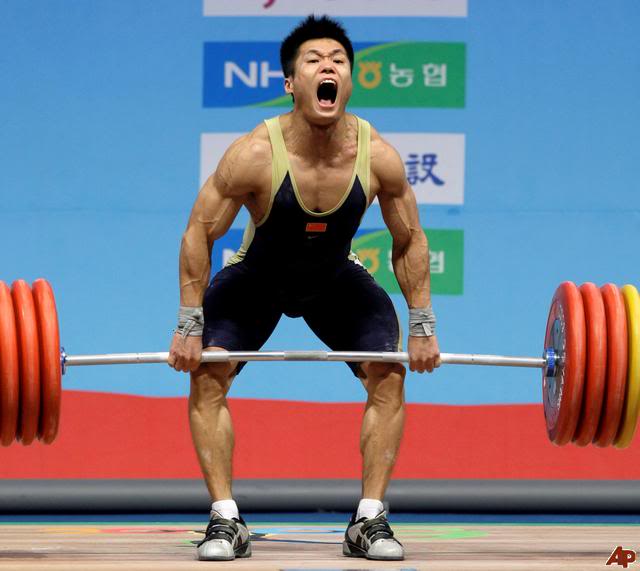
olympic lifting
These exercises also enhance intramuscular coordination, which is the ability for the agonist and antagonist muscles of a joint to cooperate together and effectively perform a movement pattern. This enhanced intramuscular coordination allows for an improved speed of movement, thus optimizing power production.
The Coactivation Index
A unique benefit of the OL’s that is very often omitted in the content of articles and discussions is the subject matter of the muscle coactivation index (CI). During an athletic movement there is a relationship between the agonist and antagonist joint musculature. Agonists (synergists) are muscles that work together to achieve a specific movement while antagonists are muscles that oppose the agonist’s movement. During joint movements the agonist and antagonist muscle activity can be measured and compared resulting in the CI. The CI is calculated by dividing the EMG data of the antagonists by the agonists as expressed as a percentage of the EMG value during the maximum voluntary contraction (MVC) and multiplying by 100%.
The great sprint coach Charlie Francis would often indicate for an athlete to achieve optimal athletic performance their muscle groups would need to coordinate both relaxation and activation throughout the movement (skill) for an ideal force production to occur. Tudor Bompa has also stated that the most skilled athletes are those that have the ability to completely relax the antagonist muscle groups during a movement. It should be noted that rigid and rough movements are a result of poor coordination between agonists and antagonists.
“Traditional” strength type exercises such as the squat and deadlift may actually increase the CI at the corresponding agonist/antagonist joint musculature, as this type of strength training will result in enhanced joint stability. On the other hand the OL’s have been demonstrated to decrease the CI as this type of training mechanism allows for a reduced antagonist muscle group contribution resulting in an superior overall “power” type exercise performance.
The Barbell
The barbell is the weighted implement of choice for the athlete’s performance of the OL’s. Barbells offer some unique benefits when compared to other types of weighted training implements such as dumbbells, kettlebells, and weighted vests. Some of these benefits are as follows:
Exercise Intensity – no other exercise training implement may be loaded with as high a weight intensity (load) for the performance of a high velocity movement like the barbell. Exercise intensity (stress) is the single most important training variable necessary for physical “adaptation”. Without a sufficient stimulus to disrupt the homeostasis of the body adaptation will not occur, thus the athlete will just be wasting valuable training time. The literature provides evidence that weight intensities as low as 10% 1 RM in novices and up to approximately 40% of an athlete’s 1 RM will enhance power development. However, there is also evidence that heavier weight intensities will enhance power development as well. Though these heavier weight intensities may be performed at lower bar velocities when compared to lighter loads, these heavier load intensities will not only continue to improve power output but will also improve necessary absolute strength levels. Frequently in the arena of athletic competition an athlete must initiate a high power output against an additional external resistance. We have all witnessed a running back breaking a tackle, a wrestler “locked up” with their opponent, a lacrosse faceoff, and a basketball power forward tied up under the boards to name a few.
Metabolic Cost – Load also influences the metabolic cost of training. Larger training loads will have an increased effect on the mechanical work performed (i.e. Work = Force X Distance), thus with similarly programed exercise training volumes, larger weight intensities will increase metabolic cost (i.e. kcal/min, VO2 max) resulting in an improved work capacity. Barbells are more practical in accomplishing this goal of exposing the athlete to high loads compared to other aforementioned training implements.
The Olympic Style Lifts and the Development of the Various Physical Qualities of Strength
The utilization of the OL’s in conjunction with a barbell will not only improve the physical quality of power (explosive strength), but acceleration and reactive strength qualities as well.
Acceleration – The ability for an athlete to accelerate is an important component for success in many arenas of athletic competition i.e. the acceleration phase of sprinting. The ability to accelerate transpires from a “preparatory” slower movement velocity (muscles are already contracting) followed by a higher velocity (acceleratory) movement. Dr. Loren Chiu uses the analogy of a NASCAR racecar going around the track at a specific constant speed and then suddenly increasing speed (accelerating) to pass the car in front. During the OL exercise performance the transition of the barbell from the 1st pull through to the 2nd pull requires the athlete to accelerate the bar from a slower preliminary speed.
Reactive Strength – Reactive Strength (RS) training incorporates the stretch shortening cycle (SSC) and is typically accomplished via plyometric or “shock” type training.  Another unique component to performing an Olympic Lift with a barbell is the second knee bend that must occur prior to the 2nd pull to clear the barbell from the front of the knees so that the barbell may continue to move vertically to ensure exercise success. This second knee bend produces a SSC/RS quality at both the Patella and Achilles tendons of the lower extremity, thus enhancing the neuromuscular training of the musculoskeletal system for enhanced force output. No other weighted implement i.e. dumbbell, kettlebell, weighted vest, etc. will produce this SSC/RS phenomenon as exercise performance with these other types of weighted implements are placed lateral to the knees, between the legs, or worn upon the body. Since these other various types of weighted implements to do not pass in front of the knees/legs during exercise performance the second knee bend action is not present (necessary) and only knee extension is required. The “catch” phase, when the athlete must accept a heavy clean or snatch in the bottom position, or when driving him or herself under a heavy jerk will improve the athlete’s RS qualities as well.
The Rate of Force Development
Although training for the Rate of Force Development (RFD) like acceleration has the athlete with the intent to move the weight intensity rapidly, unlike the accelerative abilities the RFD occurs when the initial bar movement velocity is equal to zero. Therefore this type of training requires peak force generation to occur near the start of the movement thus generating maximum force in a minimal amount of time. Dr. Loren Chiu uses the analogy of a drag racing car that must produce high forces/torque from a dead stop. Examples also include a sprinters start or a squat jump.
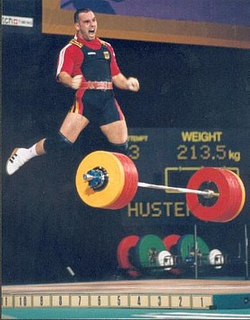
olympic-jump
The RDF is also very important criteria in the opinion of many rehabilitation professionals for an athlete’s return to athletic competition. Presently there are ACL studies demonstrating that ‘acceptable” return to sport strength levels occur at appropriately 6 months post-surgery, however the same “acceptable” levels of RFD may take up to one year.  Therefore, the OL’s as well as variations of the OL’s may be utilized as part of a lower extremity rehabilitation protocol to accelerate the restoration of the RFD after lower extremity pathology and/or surgery. We employ the use of the OL’s exercises and principles with both the rehabilitation and post-rehabilitation training of the athlete’s that we work with at our facilities.
RFD is trained with the OL’s by having the athlete lift the weighted barbell from different dead stop bar positions. Various height “pulling blocks” are used to achieve this goal. The three (3) positions commonly utilized are; “below the knee”, “at the knee”, and “above the knee”. Other bar positions to consider would include at the mid-thigh and at the hips (power position). This is to be determined by the S&C Professional based upon the individual needs of the athlete as to which pulling position(s) will be most beneficial.
Deceleration
The athlete’s ability to decelerate is an important criterion to excel in athletic competition. Tudor Bompa has indicated that in all sports the ability to accelerate is important, but similarly is the ability to decelerate, especially when considering the need to change direction. The ability to decelerate requires strong eccentric capacity of the musculoskeletal system. It is well known that an individual can lower a much heavier weight via an eccentric muscle contraction when compared to the maximal weight that may be lifted concentrically. Some coaches may have their athletes execute “negatives” during an exercise performance as these heavy weight intensities are lowered at slow speeds to enhance strength qualities. However, in the athletic arena, eccentric muscle contractions occur at high speeds in order to decelerate as in landing from a jump, the deceleration phase of pitching, changing direction to avoid an opponent, etc. Thus wouldn’t training eccentrics at higher speeds be more applicable to athletic performance? In review of the force velocity curve one can see that during an eccentric muscle contraction, greater tension is produced at higher velocities.
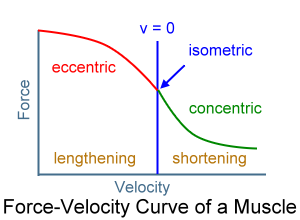
Force Velocity Curve
During the “catch” phase of an OL the athlete has to drop their body under the bar at a high velocity to receive the barbell in the bottom position prior to the barbell “crashing” back to the ground surface area. This ability requires a high-speed eccentric contraction. It is important to note that the athlete must support and control the combined total load of the barbell as well as his or her body weight. This “event” occurs in a very short period of time and produces high levels of force that need to be absorbed in a ballistic manner.  Some may argue that this type of training is unsafe, however we consider this component of the exercise performance as preparation for the unpredictable high forces that occur on the playing field and in essence “armor coat” the athlete as positive soft tissue adaptations will occur as noted in Davis’ law.
Final Thoughts
The athlete’s ability to produce high velocity training movements for the enhancement of a multitude of physical qualities is critical for athletic success. The premise of this article is that the classic barbell Olympic Weightlifting movements provide a very practical and effective training methodology. This combined with the large number of assistant OL’s performed at different positions, offers the athlete a sufficient training variety necessary for enhanced athletic performance.
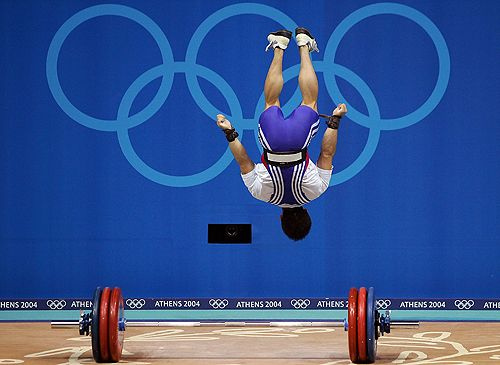
Olympic-Lifting-Backflip

Robert A. Panariello MS, PT, ATC, CSCS
Professional Orthopedic and Sports Physical Therapy
Professional Athletic Performance Center
New York, New York

Wednesday, April 10, 2013

The Lazy Man's Guide to Olympic Weightlifting


The Lazy Man's Guide


The Lazy Man’s Guide
People like the bare minimum. Instinctively we want to know what’s the least we 
can do to get a result.  Yes there are some that would say “if one ibuprofen is good, then 10 must be better” but those are the same people that end up with liver problems.  It could be laziness, but it’s more than likely intelligence.
Training is no different, we should strive for the minimum effective dose, when delivering it to our athletes or to ourselves. Becoming great at a skill like Olympic weightlifting is a different beast, but for most that is not an issue until after we have tried out the minimum effective dose.
This is the bare minimum Olympic weightlifting program you should be doing to be a good Olympic lifter.

Combos to start

Start here. Use combos to get used to real Olympic weightlifting. Combos ease the transition to the full lift.
For the clean use a power clean + front squat and a jerk (power or split depending on your comfort). Get used to pulling under the bar and catching at a lower height to move to the full clean.
For the snatch do a similar movement, power snatch + overhead squat. Start pulling under the bar and eliminating the pause before going into an overhead squat.

The Real Thing (or a variation)

To be effective at the Olympic lifts you have to use the real movement. Even if you have every intention of power cleaning for the rest of your life, take some time to get good at catching in the deep squat position.
Once you are comfortable at the real movement, choose a variation that is the right one for you, or your athletes. This means one that will get your athletes the greatest benefit, or yield the biggest returns for yourself.
For most field sport athletes: use the hang power clean
For sprinters in track: use the power clean
For tall athletes: Use a dead start on the blocks
For times where hypertrophy is needed: Use the full movement to grow some massive quads.
I recommend some time spent doing the full movement because the full movement is the purest expression of technique. You can’t do the full movement while catching the bar in the starfish position, you can’t do the full movement without great mobility.
These technical details will then carry over to whatever variation you choose for your main movement.

LOTS of squatting

A wise man once said “squatting helps everything.” Since I am referring to this man as wise, lets go ahead and assume that I agree with him.
It’s true. If you want to be better at the Olympic lifts squatting is the life blood of champions.
The crazy thing is, even if you aren’t doing the full lifts (floor start, A2G catch), squatting still helps. One of my elite pole vaulter’s does the hang clean exclusively but she was missing all of her lifts at the receiving position. Slightly forward catch and dumping the weight anytime she got heavy.
The solution was simple she had to squat more. After adding 20k to her front squat, and with no technical changes to her clean, she made every clean she attempted.
I do have some bad news for you. You have to be able to squat deep for their to be carry over. Power lifting squats just don’t work for Olympic lifting improvement. Olympic lifting squats need to be front squats or high bar, narrow stance back squats.
Like these (this is Clarence Kennedy a European Jr. lifter, he’s good)

Some pulls

Plenty of people argue against pulls as part of the training program. The typical objection is that they teach people to extend up too much rather than move under the bar (I am in favor of them, they are my plateau busters).
Pulls shouldn’t make up all of your program, but including them periodically will go a long way to making your O lifts improve.
Remember the snatch grip deadlift and clean grip deadlift are pulls as well, just approach the lift like you are moving the bar from the ground for an O lift and not a normal deadlift (Like this).

The Lazy Olympic Weightlifting Program

The bare minimum Olympic weightlifting program could look as simple as what is below.
Two movements per day.
This is designed to be something that you could do while also doing all the curls, bench press, and leg presses you want.
Week 1: Day 1
Exercise SetReps
Power Snatch + OH Squat4(1+1)x3
Front Squat44
Week 1: Day 2
Exercise SetReps
Power Clean + Front Squat+Jerk4(1+1+1)x3
Clean Deadlift44
Week 2: Day 1
Exercise SetReps
Power Snatch + OH Squat5(1+1)x2
Back Squat54
Week 2: Day 2
Exercise SetReps
Power Clean + Front Squat + Jerk5(1+1+1)x2
Snatch Pull (or from deficit)53
Week 3: Day 1
Exercise SetReps
Snatch43
Front Squat43
Week 3: Day 2
Exercise SetReps
Clean and Jerk43+2 (1+1 style)
Back Squat43
Week 4: Day 1
Exercise SetReps
Snatch52
Snatch Deadlift (or from Deficit)53
Week 4: Day 2
Exercise SetReps
Clean and Jerk42+1 (1+1 style)
Front Squat42
*On combos (including clean and jerk) the first number is for the first movement, the second number is for the second movement.
**Loading should be done with the greatest amount of weight that one can handle for each prescribed set.
***This program can be repeated, replacing the combos to start the training program with full movements or your chosen variation

Conclusion

Getting better with the Olympic lifts does not mean that one has to spend hours upon hours on the platform (becoming GREAT does). Rather, focused attention to the craft and the movements that assist the craft the most.

Monday, April 8, 2013

Just one dose of coconut oil can tremendously boost brain function and cognitive performance


Just one dose of coconut oil can tremendously boost brain function and cognitive performance

by PF Louis 

(NaturalNews) It's amazing how coconut oil has recently been acknowledged for the healthy oil that it is after having been vilified for decades as a heart attack oil. Now it's been discovered to boost even brain health.

Defaming coconut oil saturated fat was part of the 1950s creation of low and no fat foods, margarine, and hydrogenated trans-fatty cooking and salad oils, which have recently been proven as actually detrimental to overall health.

The different types of triglycerides in fats

High triglyceride blood readings are red flags for obesity, diabetes, and heart health issues. Most dietary fats contain long chain triglycerides (LCT), which are not easily metabolized and can be stored as fatty deposits in one's body.

Long chain triglycerides contain chains with 14 to 18 carbon atoms. But coconut oil contains medium chain triglycerides (MCT) with shorter chains of 5 to 12 carbon atoms, which are easily metabolized by the liver to produce ketone bodies that can replace glucose as metabolic fuel.

As we age, the brain's ability to metabolize glucose for energy wanes, especially for those who have a metabolic disorder or insulin resistance. But MCT-created ketones can be used as cellular fuel in the brain when glucose is not available.

Study: Coconut oil improves cognitive ability

As far back as 2004, a study published in the journal Neurobiology of Aging determined that coconut oil MCTs improved cognitive function among older folks with memory problems and even Alzheimer's disease.

They took 20 subjects and randomly fed them coconut oil or placebos on different days. Some of the Alzheimer's group demonstrated improved scoring on a special Alzheimer's cognitive rating scale, and all of them demonstrated better paragraph recall shortly after taking each dose of coconut oil.

This wasn't a long term study. They got immediate positive cognitive and memory results from single doses of coconut oil compared to placebos.

So why wasn't this publicized by the mainstream media (MSM) and reported to medical practitioners everywhere? Maybe because Big Pharma was trying to synthesize and patent a ketone body producing pharmaceutical for the increasing Alzheimer's disease market.

A dramatic true story confirming coconut oil's efficacy

Around 2009-10, MD Mary Newport's husband had deteriorated from Alzheimer's so badly he couldn't draw a simple illustration of a clock or perform daily functions without being micromanaged.

Since the Alzheimer's drug developed in 2004 was not effective, Dr. Newport tried to get him into a trial for a new Alzheimer's drug. But he was so bad off he didn't qualify.

After discovering that this new drug was a synthetic version of MCTs for creating ketone bodies and improving brain function, she researched and realized that palm and coconut oils also contained MCTs.

After feeding her husband coconut oil, he started making a remarkable comeback from almost total dementia to being able to start and finish tasks and remember people and events.

Dr. Newport observed that only two doses spaced eight hours apart were sufficient, while the pharmaceutical version required doses every three hours (http://www.naturalnews.com/030373_coconut_oil_Alzheimers_disease.html)

If Mary would have enrolled her husband into that 2009-10 Alzheimer's drug trial, she could have lost him completely.

The drug trial at that time was halted early because of nine deaths among those taking higher doses(http://www.naturalnews.com/028753_Alzheimers_drug_trials.html).

Newport's success without side effects places coconut oil as the dementia food medicine of choice over expensive and harmful pharmaceuticals. Because they went viral on the internet with their experience, several others experiencing Alzheimer's or memory problems have benefited from coconut oil.

Saturday, April 6, 2013

5 Reasons Why Calories Don't Count


Why calories don't count don't count calories

Calories (cal-o-rie, noun): Tiny creatures who live in one’s closet and sew one’s clothes a little bit tighter ever night.

Tiny creatures aside, the common use of the term “calorie” refers to a kilocalorie. Kilocalorie (we’ll just use the common terminology and call it calorie from now on) is a measure of the amount of energy needed to raise the temperature of 1 kilogram of water by 1 degree C (Campbell et al, 2009).

This unit of heat measurement, originally developed in the early 19th century by a French engineer, was harnessed as a simple and universal method to measure the energy content of food. Eventually, processed foods began carrying a label with the total energy content, as well as the gram measurements of fats, carbohydrates and protein (Hargrove, 2006).

 With the help of FDA caloric suggestions, consumers ran into an alarming dietary deception. The use and obsession of food calories presents a greater danger than small creatures making our jeans tight… it corrupts the whole concept of healthy eating.


Calories Distort Focus to Quantity, not Quality

Common story: a shopper starts by scouring the snack isle, searching for a product to satiate their potato chip craving with the least amount of calories per ounce. After careful deliberation and calculation, he or she settles on a bag of air-popped popcorn laden with artificial butter flavor and toxic vegetable oils.

 As the result of compelling media, marketing and labeling, many consumers focus more attention on quantity, not quality. Instead of shopping the nutritional label, shop the ingredient list. That deserves your time and attention.


Calories Falsely Simplify “Healthy Eating”

Healthy eating is complicated, no doubt about it. First you hear butter is bad, then it prevents cancer. First carbs kill you, then they make you lose weight. Even spinach is confusing… should one eat it raw or is that dangerous?  Nutrition labels, however, deceptively simplify healthy eating. Few calories = good, high calories = bad. Simple. Yet dangerous.

That mindset leads to eating disorders, infertility, disease, and depression since it encourages the consumption of processed foods instead of nourishing foods. I believe that healthy eating is simple, but not simple in terms of calories. Make healthy easy by finding calorie-free food (yes, I’m going to explain that in a second).


Calories Prevent a Genuine Relationship with Food

Why Calories Don't Count!Calorie-conciousness shifts emphasis from how you eat to how much you eat. Counting calories ultimately prevents a harmonious relationship with food. Instead of welcoming food as life-giving nourishment, calorie counting produces apprehension of food.

Most importantly, calorie-concsiousness drowns the body’s communication. I believe our bodies knows what, when and how to eat and–if we listen to that quiet voice–we can heal ourselves. It is hard to change habits and blindly trust our bodies, however. So if you need help, try visiting a naturopath or energy practitioner to get tested for food allergies and dis-ease in the digestive system.

In the same way, calorie-counting de-personalizes one’s relationship with food. A common practice is determine one’s ideal daily calories or even calories burned while exercising. Sadly, that creates a mechanical, stressful relationship with food.

It also doesn’t take into consideration one’s food sensitivities, nutrient deficiencies, inflammation, autoimmune/adrenal/hormonal/thyroid issues, or body type. And those things are *really* important to reaching one’s ideal weight.

Weight loss begins with whole, nourishing foods prepared at home. It means eating mindfully, chewing thoroughly, and releasing gratitude and joy for each bite you raise to your lips. Finally, when it comes to weight loss, forget the calories and remember this:

why calories don't count

Calories Promote Stress, Not Satiety

As I mentioned above, paying attention to calories establishes a stress-based relationship with food. Stressing out while eating is a bad idea because it interrupts the entire digestive process.

The sympathetic nervous system triggers the flight-or-flight response in the body. Arousing this reaction shuts down the digestive system so the body can focus on the dangerous situation at hand.  Of course, considering calories doesn’t induce a flight-or-flight response, but even less severe stress works in a similar manner to slow digestion (Suarez, 2010).

Additionally, an article from a 2010 volume of Psychosomatic Medicine explains how stress affects the vagus nerve, a key piece in the digestive process:

Because the vagus nerve innervates tissues involved in the digestion, absorption, and metabolism of nutrients, including the stomach, pancreas, and liver, vagal activation directly and profoundly influences metabolic responses to food… Both depression and stress have well-documented negative effects on vagal activation as indexed by heart rate variability (Kiecolt-Glasser, 2010).

Calories Don’t Deserve Your Attention

End of story.

If calories are out of the picture, what does healthy eating mean?


Healthy Eating Means Finding Calorie-Free Food

No, I’m certainly not suggesting one should subsist on toxic sugar substitutes or even bizarrezero-calorie noodles. Look for food that doesn’t come with a nutrition label. Real food–Mother Nature’s nourishing bounty–does not list calories.

why calories don't count Scouting calorie-free foods may mean shifting your grocery shopping trips from the supermarket to the farmer’s market, joining a CSA, finding a cow share program (for access to raw milk) and/or starting a garden. Pastured eggs, local produce, rendered lard/tallow, wild caught seafood, local honey, grassfed beef and butter, and unprocessed grains (if you do grains)… that is what I mean by calorie-free food!

  Real, unprocessed food is nurturing, majestic, gratifying, and sublime. Forget the calories, have fun in the kitchen, and eat with joy!

 Eat well and heal!™

Sugar: Why Your Body Needs It - Empowered Sustenance


Sugar: Why Your Body Needs It

Do you choose stevia or xylitol over natural sweeteners like honey? Do you make an effort to tightly limit natural sugar consumption due to candida issues or fear of weight gain? Then this is the post for you! Also, before we go further, let me say that I am NOT pro white sugar or corn syrup or other processed sweeteners. I do believe that natural, unprocessed sugars (like fruit, raw honey and pure maple syrup) play an important part of a healthy diet.

I tried quitting sugar. It sucked.

Part of my goal with my blog is to share my health experiences with you so that you can learn from my mistakes… without making the mistakes yourself! So here is my mistake with quitting sugar: When I first began a healing grain-free diet called the GAPS diet, my ulcerative colitis symptoms disappeared. Eager to support my body’s healing process (I really only had good intentions), I jumped on the “anti-candida diet” bandwagon (I explain below why this is a bad idea). So here I was on a limited grain free diet, and I decided also to take out honey and fruits. This sounds like an extreme choice, but many candida diets and “blood sugar control” diets actually recommend this intense carb and sugar limitation.

Well, that lasted about two weeks. Things started to slide downhill… quickly. I felt like a rock: I was so fatigued that a walk around the block left me exhausted. I was an emotional wreck and I literally couldn’t handle spilled milk. And then there were the dizzy spells. Every time I stood up or tried to walk up the stairs, my head went spinning and my vision blurred. Now I know this is because my sugar limitation had left my adrenals helpless. Interestingly, it is the adrenals job to constrict blood vessels when standing to prevent this dizziness. But adrenals need sugar to function.

When  I began loading up my body with starchy veggies like winter squash, lots of raw honey, and ripe fruit, these debilitating symptoms disappeared in a couple of days. I had learned my lesson: my body needs sugar. But I didn’t know WHY.


Why Your Body Needs Sugar

why your body needs sugar!

 I was ecstatic nearly to the point of tears when I first read Kate’s and Cassie’s book, I Didn’t Quit Sugar. I finally understand the numerous important roles this demonized nutrient played in my health. I deeply respect Kate’s and Cassie’s no-nonsense, no-dogma philosophy about nutrition. It is truly refreshing.

For the past generations, saturated fats were thoroughly vilified falsely blamed for issues like heart disease. Now we know that extreme low fat diets are detrimental to health. This pattern is repeating with the low-carb and sugar-free fad. But our bodies need carbs. And sugar.

After taking the plunge into a very low-carb or sugar-free diet, many folks experience amazing weight loss and increased energy. Unfortunately, these are actually symptoms of disregulation in the body.

What most fail to realize is that such changes are attributable to a state of cellular stress and a consequent rise in stress hormones (remember, the cells are being denied their favourite fuel). For 3 months, 6 months, perhaps a year (this is affectionately termed the ‘honeymoon phase’), stress hormones will make you feel excellent – they promote euphoria and a heightened sense of wellbeing.

But beneath the surface, stress hormones do exactly as their name suggests – they’re a stress on the body in its entirety. Prolonged elevation can break down body tissue, impair thyroid function, damage the metabolism and devastate the body physiologically -I Didn’t Quit Sugar

Anti-dogma health renegade Matt Stone also states that depriving your body of sugar is going to mean long-term consequences. He explains in his book Diet Recovery:

Most people will eventually develop health problems on a low-carb diet (or low-fat diet, to pick on the fat haters too and anyone engaged in Macronutrient Warfare) – including even gaining a bunch of weight back that they initially lost, and they will eventually crave carbohydrates or find that a carb-free diet has become just too socially crippling.….The real answer is to improve glucose metabolism and digestion.


Risks of a Sugar-Free Diet

 Why I Didn’t Quit Sugar goes in-depth to explain the roles of sugar in our body. Here are a few condensed points from the book regarding the consequences of eliminating healthy sources of glucose from the diet:

    • Elevated levels of stress hormones, which exhausts the adrenals and taxes the body

    • Impaired thyroid function by lowering T3 production (as a result of increased levels of adrenaline and lack of glycogen in the liver)

    • Lowered metabolism and weight gain due to impaired thyroid

    • Weakened digestion and nutrient malabsorption

    • Systemic candida overgrowth. That’s right–the very thing you are trying to starve out with a sugar-free diet will actually get worse (read why here). The real solution is to correct digestion, heal the gut, and improve metabolism… and you need sugar in your diet to accomplish those things.

Read more HERE

Why sugar is part of a healthy diet

Sugar-Free Natural Sweeteners: A Bad Choice

Healthy eating is a lifelong journey and a learning process. One of the more recent things I learned is that sugar-free sweeteners, even if they are “natural” aren’t a good choice for our bodies.

Our bodies are not designed or evolved to handle calorie-free sweeteners–be it natural or artificial. We all know that artificial sweeteners like aspartame are toxic, but what about natural sugar-free sweeteners like xylitol and stevia? Experiencing a sweet taste from a food that is not going to provide glucose confounds our body’s sugar-handling process. Eating a sugar-free sweetener like stevia or xylitol can trick the body into a state of hypoglycemia:


Stevia is “sweet” on the palate, so the body assumes it is receiving sugar and primes itself to do so. Glucose is cleared from the bloodstream and blood sugars drop, but no real sugar/glucose is provided to the body to compensate. When this happens, adrenaline and cortisol surge to mobilize sugar from other sources (liver and muscle glycogen, or protein, or body tissue) to bring blood glucose back up. (Source)

The frequent release of the stress hormones (adrenaline and cortisol) in response to the stevia-induced hypoglycemia is damaging to our adrenal glands and overall health. These stress hormones are designed to be utilized when we need to be in a flight-or-fight response–not when we are eating a meal. The consequences of excess stress hormones means a suppressed immune system, increased inflammation, and lower thyroid function… just to name a few!

Why do folks reach for these sugar-free sweeteners? Usually, it is because they are afraid of sugar or trying to avoid carbs. I believe this is the wrong approach to nourishing our bodies.We should reach for nutrient-dense foods, with attention to variety, quality and moderation.

Why your body needs sugar

How to eat sugar

Your body needs sugar, but QUALITY COUNTS. Refined white sugar and high fructose corn syrup is not going to provide your body with good cell fuel.

Use unrefined sweeteners. These include things like raw honey, 100% pure maple syrup, dates, raisins, sucanut, coconut sugar, and freshly pressed fruit juices. Unlike processed sweeteners, these sugars in their whole food sources contain the minerals your body requires to metabolize the sugar.

Eat ripe fruits as snacks. Some folks find they digest fruits better when eaten without other foods. Fruits digest much faster than other foods and can cause some digestive distress if consumed with a lot of fat and protein. But we all know that fruit-based desserts like cobblers and upside-down cakes are delicious. So if you don’t have any unpleasant symptoms combining fruits with meals, have a piece of apple pie!

Use natural sugars instead of sugar-free “natural” sweeteners. Stevia and xylitol are devoid of nutrients and trick your body (as discussed above), so swap them for a healthy sweetener that gives your cells healthy fuel.

Relax and enjoy the sugar. This point, of course, applies to anything we eat. We need to be in a parasympathetic mode to produce stomach acid and digestive enzymes. If we are stressed out or eating on the run, we can’t properly digest and assimilate the nutrients in our foods. So relax, sit down, turn off the TV, and mindfully celebrate each bite of food you take into your body. Don’t feel guilty while enjoying your healthy source of sugar. Sugar is delicious, so consciously enjoy it.

Don’t count things like grams or calories. I already shared 5 Reasons Why Calories Don’t Count.  Counting things like calories or sugar grams distort focus to quantity instead of quality. It also prevents a genuine relationship with food and promotes stress, not satiety (and, like I mentioned above, stress drastically impairs digestion).