Tout dans la vie est une question d'équilibre d'où la nécessité de garder un esprit sain dans un corps sain.

Discipline-Volonté-Persévérance

Everything in life is a matter of balance therefore one needs to keep a healthy mind in a healthy body.

Discipline-Will-Perseverance.

E. do REGO
Showing posts with label Body Fat. Show all posts

Monday, May 12, 2014

How to Burn Stubborn Body Fat


No_body_fat

Here's what you need to know...

•  Spot reduction can occur, but on a very small scale. Attacking stubborn fat and spot reduction are two different things.
•  Stubborn fat is physiologically different than other fat. It has a high density of alpha-receptors compared to betas, is more insulin sensitive, and receives less blood flow than less stubborn fat.
•  Dieting by eating less and exercising more is by far one of the major blocks to permanent change.
•  Supplements such as green tea extract, forskolin, and yohimbine HCL can help with stubborn body fat, once you get your diet in order.
The other day I was perusing some popular health and fitness pages on Facebook . One discussion was from a person asking a question about "targeting stubborn fat". The page administrator answered the question this way: "You can't target certain areas of the body. It's simply impossible. The body burns fat from all over. Spot reduction has been proven a myth."

And the truth is? The page administrator is wrong on both accounts. First, you can certainly target stubborn fat, and spot reduction has been proven to occur.


Wait, Spot Reduction Works?

Spot reduction refers to the idea that you can burn fat from a particular area of the body by exercising that area directly. This idea brings back memories of late night infomercials with people bouncing up and down on ab loungers or adducting away with thigh toners. The idea is ridiculous, right? You may be surprised to know that in 2007, a study published in the American Journal of Physiology, Endocrinology and Metabolism by Dr. Bente Stallnecht confirmed that spot reduction does indeed occur. In the study, intense localized exercise in one leg burned significantly more fat than in the non-exercised leg.

So, this study answered the question once and for all. Yes, spot reduction does occur. Only one problem: it occurs on such an insignificant scale as to be useless. The amount of extra fat burned from the working leg in this study was like taking a few drops of water out of a lake. The take home? Spot reduction technically does occur, but at such a marginal level that it's essentially insignificant. I like to say that trying to spot reduce fat with targeted exercise is like trying to change a tire with a pencil. It's practically impossible.


So What Is Stubborn Fat?

I brought up spot reduction first because it's important to define what we're talking about here. We are not talking about spot reduction. Attacking stubborn fat and spot reduction are two different things. Spot reduction is about exercise. Targeting stubborn fat is about diet, exercise and supplementation. Spot reduction is essentially impossible. Targeting stubborn fat is not only possible but probable, if you understand what you're doing.

The first thing to know about stubborn fat is that it is physiologically different than other fat. Stubborn fat has a high density of alpha-receptors compared to betas, is more insulin sensitive, and receives less blood flow than less stubborn fat. Subcutaneous fat is more stubborn than visceral fat (the fat around your organs) or intramuscular fat (the fat in your muscle). The most stubborn areas of fat are the hips, butt, thighs of women, and the love handles on men.


Biochemistry of Fat Burning

PlateTo burn fat you have to release it from a fat cell. That is called lipolysis. That fat then has to be brought to another cell to be burned. This is where blood supply to and from tissues is important. Finally the fat has to get inside a cell and be burned. This last step is called lipid oxidation.

Stubborn fat releases its fat more slowly the non-stubborn fat. This is due to two different types of receptors in fat cells. Your major fat releasing hormones are the catecholamines (norepinephrine and epinephrine to Americans and noradrenaline and adrenaline to most of the rest of the world). These hormones bind receptors in fat tissue that send the signal to speed fat release or slow fat release. These receptors are known as alpha and beta-receptors. The betas speed fat release. Think B for beta and burn. The alphas slow fat release. Think A for alpha and anti-burn.

These receptors have this effect largely because they turn on intracellular signaling that either speeds the activity of hormone sensitive lipase (HSL), the major fat releasing enzyme in the body, or decrease its activity. For the biochemists among you, this is all mediated by cyclic AMP (cAMP). So, to beat stubborn fat you'll need to do things that increase the activity of beta-receptors and decrease the activity of alpha-receptors.


Insulin Sensitivity and Stubborn Fat

The vast majority of fitness and health professionals misunderstand insulin resistance. Most think insulin resistance is all one thing. In reality, insulin sensitivity and resistance is tissue specific. If you're used to thinking about insulin resistance in the typical way you will not understand stubborn fat.

Stubborn fat is more insulin sensitive or less insulin resistant than regular fat. The normal action of insulin on fat cells is to decrease the activity of HSL, the major fat releasing enzyme, and increase the activity LPL, the major fat storing enzyme. A fat cell that's more insulin resistant stores less fat and releases more of it. A fat cell that's more insulin sensitive stores more fat and releases less of it. Stubborn fat is more insulin sensitive than other types of fat. Not only that, but insulin has an effect on the activity of alpha and beta-receptors as well, increasing the relative expression of the alphas compared to the betas. When it comes to stubborn fat, insulin is not your friend for multiple reasons.

Other hormones get in on the action too. Thyroid activity ramps up beta-receptor activity and turns down alpha-receptor activity. Anything that disrupts thyroid function isn't helpful for stubborn fat. Estrogen increases the activity of alpha-receptors. High estrogen states such as the late follicular phase and the early luteal phase of the female cycle are times during the month when female stubborn body fat is more stubborn.


Heat and Blood Flow

Another piece to this story is that stubborn fat gets less blood flow, which means even if the fat is released it doesn't get moved out of the area to be burned elsewhere very easily. First off, alpha-receptors impact blood flow too. More alpha-receptors in an area mean less blood supply to that area. Next, stubborn fat is in areas that are harder for the body to heat up. Saddlebags and love handles are further away from the center of the body and tend to be "colder".

The practicality of this information is limited of course. There are few ways to heat local areas of the body up, but using sauna, hyperthermia baths, massage, high temp workout areas or even those old neoprene ab belts may not have been such a silly idea when looked through this lens. Whether they can make a real difference I'm not sure, but people have done stranger things in pursuit of stubborn fat loss.


How to Beat Stubborn Fat

Now that you understand many of the angles involved with stubborn fat, let's talk about the fix. There are three simple steps that are easier said than done:

1. Stop dieting
2. Cycle the diet
3. Target the area


Stop Dieting

The more I study the metabolism the more convinced I become that dieting by eating less and exercising more is by far one of the major blocks to permanent change. This is especially true of stubborn fat. When you follow this method the body engages in severe metabolic compensation. Adaptive thermogenesis is one aspect of this. You eat less and exercise more and your body will make you more hungry, give you less energy, induce insatiable cravings and decrease your resting metabolic rate around 300 calories per day on average.

In other words, your body has primed itself to resist further losses in body fat as well as made it far more likely you'll soon engage in a three month doughnut binge. And guess where you're more likely to store all the regained fat? You guessed it, the stubborn fat areas you were trying to burn in the first place! So, not only does dieting make you fatter, but it makes your stubborn fat more stubborn. Two of the main ways it does this is through increased insulin sensitivity in stubborn fat tissue and decreased thyroid output which tilts things even more in favor of alpha receptor activity versus beta.

Dieting in the traditional way is a recipe for making stubborn fat more greedy and stingy. Dieting may be making your fat parts fatter. To stop dieting you simply do one of two things. You either eat less and exercise less (ELEL) or you eat more and exercise more (EMEM). What you don't do is continue eating less and exercising more.

ELEL is an approach where low intensity exercise like walking dominates and only a few sessions of weight training are done during the week. This allows a very low calorie or low carb diet without the compensations created by eating less and exercising more. A good way to think of this approach is as a 3:2:1 for diet and exercise. Three meals per day, two of them are protein and veggies based and only one contains starch. This is matched with three rest and recovery activities (i.e. massage, yoga, naps), two traditional weight training workouts and one hour or more of slow walking on all or most days.

The opposite of ELEL is EMEM. In this approach calories and carb intake are high to fuel lots of intense daily activity through the week. This is a 3:2:2 approach. Three meals per day, plus two protein based snacks, and two times the starch intake at the first meal after an intense workout. This is matched by three weight workouts, two metabolic conditioning sessions and two traditional cardio workouts per week.

Both the ELEL and EMEM approach will decrease metabolic compensation, but the EMEM approach is probably the better approach to keep the metabolism humming and stubborn fat burning.


Cycle The Diet

treadmillYou can't get comfortable with any one system either. The metabolism is highly reactive and adaptive, so while it will compensate much less with an ELEL or EMEM approach, it'll compensate none-the-less. To circumvent this compensation it's a good idea to cycle the diet in a way that keeps the metabolism guessing. This once again keeps the thyroid activity elevated, keeps leptin levels from dropping too low and keeps insulin sensitivity at a manageable level. When it comes to calories, hormones, and stubborn fat, you're looking for the Goldilocks effect. Not too much, not too little, but just right.

One to two weeks in an ELEL approach followed by one to weeks in an EMEM approach works great. Women can also time this with their menstrual cycle. The week before and during menses will be the lowest estrogen times, making those pesky alpha-receptors far easier to circumvent. This would be the time you'd want to alter diet, exercise and lifestyle towards fat loss efforts. This is also a time of increased cravings and hunger for women due to altered brain chemistry that accompanies the hormone changes. One clinical pearl I can give that almost completely negates this effect is the use of unsweetened baking cocoa powder in water. Cocoa raises dopamine and serotonin, the same brain chemicals that drop around menses.


Target the Area

When we talk about targeting the area we're not talking about exercise, we're talking about timing diet, exercise and supplementation correctly. When you burn fat, you burn it from all over your body, including your stubborn fat. It's just that under normal circumstances the stubborn fat burns much more slowly. This is why you can have people getting lean but noticing their lower body fat (women) or love handles (men) seem to not be responding... or even appearing fatter. This is of course not the case as fat loss is likely occurring in the stubborn zones too. But when the rest of the body is reducing so much faster it creates the illusion that the stubborn areas are worse off.

The first step is to remember that fat loss is about reducing calories and balancing hormones. In this way you will need to choose which part of your cycle will put you in the most deficit. You'll use one part of the cycle, I suggest the ELEL, to "starve the fat". Then you'll use the other part of the cycle, I suggest EMEM, to "feed the lean" and protect against metabolic compensation and hormonal changes that make stubborn fat more stubborn.

In addition there are supplements that can help. My two favorites are green tea extract and coleus forskohlii (forskolin). Both of these supplements work on the same cellular messengers that are activated by the catecholamines, only they don't do it by binding alpha and beta-receptors. This goes a long way to taking the brakes off of stubborn body fat. Keep in mind these work best in lower insulin states.

There are also ways to directly block alpha-receptor activation. This can be done by the use of yohimbine HCL, synephrine, and berberine. Yohimbine HCL is probably the best here, but it's best used under fasted exercise conditions and you can develop tolerance to it. It also can be very stimulating.

Berberine is an under appreciated insulin reducer and has some weak alpha-receptor blocking effects. Finally, you certainly can use the ephedrine/caffeine combination with or without aspirin, or clenbuterol if you can find it. As a natural healthcare provider, my bias is against the use of these approaches for safety reasons.


Final Thoughts

With limited space and complicated mechanisms, here are the main points:

• Beating stubborn fat takes diet, exercise and supplementation.
• Exercising an area hoping to burn fat from that area doesn't work very well. The body burns fat from all over. Stubborn fat burns more slowly.
• Stubborn fat is stubborn because of greater insulin sensitivity, more alpha receptors and poor blood flow.
• Dieting makes stubborn fat more stubborn due to insulin and thyroid changes that enhance alpha and reduce beta receptor activity.
• Stop dieting by matching intake of food with output of exercise.
• ELEL (eat less and exercise less) and EMEM (eat more and exercise more) reduce metabolic compensation and counter hormonal changes that make stubborn fat more stubborn.
• Cycling the diet between ELEL and EMEM helps continue to reduce negative hormonal changes and keeps the fat burning process engaged in stubborn fat.
• Targeted supplementation including green tea, coleus, berberine, yohimbine and others can speed fat loss in stubborn areas once the diet is in line.


References

Camps, et al. Weight loss, weight maintenance, and adaptive thermogenesis. American Journal of Clinical Nutrition. 2013;97(5):990-994. PUBMED
Ibrahim, et al. Subcutaneous and visceral adipose tissue: structural and functional differences. Obesity Reviews. January 2010;11(1):11-18. PUBMED
Silva, et al. Thyroid-adrenergic interactions: physiological and clinical implications. Thyroid. February 2008;18(2):157-165. PUBMED
Reckless, et al. Alpha-adrenergic receptor activity, cyclic AMP and lipolysis in adipose tissue of hypothyroid man and rat. The Journal Of Endocrinology. March 1976;68(3):419-430. PUBMED
Gormsen, et al. Estradiol acutely inhibits whole body lipid oxidation and attenuates lipolysis in subcutaneous adipose tissue: a randomized, placebo-controlled study in postmenopausal women. October 2012;167(4):543-551. PUBMED
Pedersen, et al. Estrogen controls lipolysis by up-regulating alpha2A-adrenergic receptors directly in human adipose tissue through the estrogen receptor alpha. Implications for the female fat distribution. The Journal of Clinical Endocrinology and Metabolism. April 2004;89(4):1869-1878. PUBMED
Lafontan, et al. Adrenergic regulation of adipocyte metabolism. October 1997;12(s1):6-20. PUBMED

Thursday, July 4, 2013

Top 5 Nutrients to Fight Stubborn Belly Fat

Fat to thin transition
Every year when swimsuit season approaches, millions of people scramble to lose their belly fat.
The midsection is one of the most challenging areas to lose weight in and one of the unhealthiest places to gain it. (See Why Crunches Alone Won't Burn Belly Fat.)
Research over the past few years suggests that the belly fat surrounding the abdominal organs (visceral fat) is potentially the most harmful type of fat. It appears to decrease the sensitivity of insulin receptors on cells while increasing the likelihood of insulin resistance. Over time, this can lead to Type 2 diabetes.
Fat around the abdomen can also increase the risk of cardiovascular disease.
Unfortunately, there are no quick fixes for fighting belly fat, but adding the following nutrients to your diet can help you tighten things up. (If you're already at a healthy weight, adding them can give you more energy and help you feel better overall.)
You can get these nutrients from supplements, but your body will absorb them better from healthy foods. (See Are There Foods to Help You Lose Belly Fat?)

Vitamin C

People with high levels of vitamin C burn more fat during exercise than people with low levels, according to a study out of Arizona State University. Vitamin C is a powerful antioxidant, which helps with the formation of collagen (a protein that helps build muscle tissue), immune function, and proper metabolism of fat.

Probiotics

Found in yogurt, fermented vegetables, and kombucha tea, these friendly bacteria increase immunity. They also help the body digest fats and carbohydrates, as well as absorb and make good use of nutrients.
In addition, probiotics help maintain a healthy balance of ghrelin and leptin—the hunger and hunger-suppressing hormones, respectively—so you're hungry only when your body needs nourishment.

Capsaicin

This is the spicy compound that gives jalapenos their kick. It not only promotes saliva flow, it may also help boost your metabolism. (See also The 6 Most Promising Weight-Loss Supplements.)
Capsaicin has been shown to cause thermogenesis (heat production) in the body, promoting fat loss. It may also reduce appetite and shift the body from burning carbohydrates to burning fat.

Vitamin D

Sunlight is the natural source of this powerful fat-soluble vitamin, which is needed in appropriate amounts to maintain physical, mental, and emotional health.
Vitamin D may also help you lose fat by regulating blood sugar and decreasing the risk of developing insulin resistance—a condition where the body stores glucose in the blood as fat, rather using it to provide energy to cells.
Along with regulating your hunger hormones and boosting your mood, Vitamin D can help cut down on emotional eating. People tend to eat more when their mood is low. (Athletes: See Why You Need Vitamin D in Your Diet.)

Fiber

The benefits of fiber go far beyond improving regularity. In addition to relieving constipation and reducing bloating, fiber may also be a powerful fat-buster. (But Can You Eat Too Much Fiber?)
When fiber is added to meals containing carbohydrates, it reduces the glycemic load on the body. It then slows the spike in blood sugar and insulin so it takes less time to break down carbohydrates into simple sugars. This keeps energy levels up and helps prevent overeating.
Remember, though—to lose fat, you can't just take vitamins. You must practice a healthy lifestyle that includes exercise, plenty of sleep, and a sensible eating plan.
Before you add these nutrients to your diet, check with your doctor.

Wednesday, August 15, 2012

10 Easy Ways to Lose Weight Without Starving


10 Easy Ways to Lose Weight Without Starving
You can stage a coup on calories without ruining your life or eating a single rice cake: Just follow this simple advice.

The no-diet, no-workout plan that is better than running 5 miles a day! Check out The Lean Belly Prescription.
Way #1
Always Eat a Man's Breakfast
No more Lucky Charms—you want some protein and fat. Scrambled eggs and a few sausage links will keep you fuller longer than an airy doughnut will.
Way #2
Eat More!
We're talking three good snacks and three healthful meals. But what do you serve during the bowl game if you can't have chips and dip? Mixed nuts—especially almonds—will satisfy your craving for something crunchy while helping to build muscle.
Way #3
Just Say No to Starches
Foods like pasta, white bread, and potatoes make you fat. If you must have pasta, make yours whole-wheat. Same goes for bread, and swap white potatoes for sweet potatoes. Just don't eat too much!

A perfect example of a great swap are these crispy sweet potato fries. You'll never go back to regular potatoes.
Way #4
Lift Weights
Yes, you have to hit the gym, and no, lifting beer cans during happy hour doesn't count. The muscles you build will not only improve your performance, they'll stoke your metabolism so you burn calories long after your workout is over.

Way #5
Think Before You Eat
Don't just stuff your face with the stale cookies left over from the holidays, eat what tastes good and what's good for you. Take your time eating; you'll stay fuller longer.

Here are 7 ways to harness your hunger from a grumbling stomach.
Way #6
But Have Fun Once in a While—or Once a Week
Stifle those cravings for too long, and you'll be miserable and might fall off your new plan forever. Just splurge reasonably—two slices of pizza, not the whole thing.

Way #7
Go Low-Carb
It's the easiest way to drop weight fast. The cravings are hard at first, but it gets easier—especially when you see the results.

Way #8
Run Intervals
It's easier to alternate between hard and easy running instead of going for a long run—especially if you don't like running. Plus, you'll be done faster and burn more fat.

Break your speed limits by boosting your speed with intervals. You'll not only get faster, but your gut with flatten in no-time.
Way #9
Never, Ever Drink Sweetened Soda
But go ahead, have a glass of wine now and then. Low-carb beer is fine, too, in moderation.

Way #10
Don't Fear Fat
It makes you feel full, helps control your appetite, and your body needs it.

Of course, some fat is good while others are bad. See How Fat Attacks, and how you can make it work for you.

Thursday, August 9, 2012

Change your gut flora and lose weight


by Eric Hunter 

(NaturalNews) Obese and lean individuals have different gut flora composition. The gut microbiota of mice and humans are similar, with Firmicutes and Bacteroidetes dominating. At this point it's not clear exactly which species are important in weight management. Some studies show reduced numbers of Bacteroidetes in obese subjects, while others point to lower levels of beneficial bacteria like Lactobacillus.

Even though diet will affect gut flora composition, most studies conclude that gut flora on it's own has an effect on weight. Alteration of the gut microbiota can be an important part of a weight loss program.

Several mechanisms have been proposed as to how gut flora regulates weight. Inflammation, energy from polysaccharides, insulin sensitivity and energy expenditure and storage are all affected by gut flora.

What you eat affects the gut flora composition, but it can also be hypothesized that it can happen the other way around; that gut flora partly determines what you eat. People with gut dysbiosis and especially yeast overgrowth often feel sugar cravings. Gut flora can probably influence food cravings and thereby play a part in determining dietary choices.

Obesity is hereditary, and the importance of gut flora shouldn't be underestimated. Flora is passed on from mother to child during birth, breastfeeding and early years. The child also comes in contact with microorganisms from other family members. "Obese gut flora" is passed on to the child.
Children born via caesarean have double the risk of becoming overweight, according to research by Harvard scientists. The obesity increase has been linked to a lack of exposure to good bacteria which may be found in the vaginal wall.

Differences in intestinal microflora during the first year of life have been associated with higher risk of obesity later in life. Especially low levels of Bifidobacteria make children more susceptible to weight gain.

Obese individuals usually have a dysfunctional gut flora with higher numbers of LPS-containing microbiota and methane-producing bacteria. LPS, Lipopolysaccharide, is linked to obesity, leaky gut and low-level chronic inflammation.

Colonization of germ-free mice with gut flora from either obese or lean mice, leads to significantly greater increase in total body fat in those colonized with "obese microbiota." Animal studies further show that probiotic supplements with Lactobacillus and Bifidobacterium species help maintain a healthy bodyweight and promote weight-loss. Cattle treated with antibiotics store a lot of fat, and this is one of the reasons why these drugs are used so frequently in feedlots.

How to incorporate this info into your weight loss program

A healthy diet with reduced consumption of sugar, processed carbohydrates, most vegetable oils, anti-nutrients, etc. will on it's own promote weight loss and a healthier gut flora.

Additional gut flora modifications can also be an important part of a weight-loss plan. Simply eating yoghurt will not make any substantial difference in most people. Minimally washed organic plants and plant products, fermented foods and probiotic supplements are all good sources of beneficial bacteria. Prebiotics, soluble fiber that feed good bacteria, can be found in leeks, onions, apples etc.


Sources for this article include


http://coolinginflammation.blogspot.no

Obesity alters gut microbial ecology.Ley, et al. Proc Natl Acad Sci USA. 2005 Aug 2; 102(31):11070-11075.

http://www.dailymail.co.uk

Vael C, Verhulst SL, Nelen V, et al. Intestinal microflora and body mass index during the first three years of life: an observational study.
Gut Pathog. 2011 May 23;3(1):8.

Kalliomaki M., Collado M.C, Salminen S., et al. Early differences in fecal microbiota composition in children may predict overweight
Am J Clin Nutr March 2008 vol. 87 no. 3 534-538

Kondo S, Xiao JZ, Satoh T, et al. Antiobesity effects of Bifidobacterium breve strain B-3 supplementation in a mouse model with high-fat diet-induced obesity.
Biosci Biotechnol Biochem. 2010;74(8):1656-61. Epub 2010 Aug 7.

Takemura N, Okubo T, Sonoyama K. Lactobacillus plantarum strain No. 14 reduces adipocyte size in mice fed high-fat diet.
Exp Biol Med (Maywood). 2010 Jul;235(7):849-56.

Chen JJ, Wang R, Li XF, et al. Bifidobacterium longum supplementation improved high-fat-fed-induced metabolic syndrome and promoted intestinal Reg I gene expression.
Exp Biol Med (Maywood). 2011 Jul 1;236(7):823-31. Epub 2011 Jun 17.

Karlsson CL, Molin G, Fak F, et al. Effects on weight gain and gut microbiota in rats given bacterial supplements and a high-energy-dense diet from fetal life through to 6 months of age.
Br J Nutr. 2011 Sep;106(6):887-95. Epub 2011 Mar 30.

Human originated bacteria, Lactobacillus rhamonosus PL60, produce conjugated linoleic acid and show anti-obesity effects in diet-induced obese mice.Lee, et al. Biochem Biophys Acta. 2006 Jul;1761(7):736-744

Metabolic endotoxemia initiates obesity and insulin resistance.Cani, et al. Diabetes. 2007 Jul;56(7):1761-1772

http://www.cedars-sinai.edu

Monday, June 18, 2012

2 Ways to Lose Fat, Only 1 Way to Get Ripped


2 Ways to Lose Fat, Only 1 Way to Get Ripped
It's that time of year, when even the most anti-cosmetic guy thinks a little bit less about his lifting totals and a little bit more about how he looks in his spandex lifting suit.
If that just made you throw up in your mouth, or made you want to punch me in the face, you don't have to keep reading.
Then again, maybe maintaining your functional lean muscle mass and strength while dropping some non-functional fat will allow you to perform better in a lower weight class, thus giving you a competitive advantage.
At the very least, it could help you improve your health profile, prolong your career – and maybe even your life – if that type of insignificant stuff matters to you? Unless of course, you're still just a teenager at heart that thinks immortality awaits everyone.
We're  fighting an uphill battle in Y2K America. Every human being shares a common problem, and current statistics prove only a very small percentage are able to overcome it.


Fat Loss Nemesis

2 Ways to Lose Fat, Only 1 Way to Get Ripped
Your biggest enemy in the war against body fat may be the one that you're not even aware of – it is , or more accurately, your internal instincts.
Make no mistake about it – human beings are preprogrammed to overeat.
There was no portion control for most of our existence. When you had access to food, you ate it, and stocked energy reserves to prepare for times when you didn't have access to it.
Going crazy at an all-you-can-eat buffet is not weakness or a cheap way to bulk up. It's simply a survival instinct. That may be cool during the off-season, but it's a liability when trying to cut the fat.
In an environment where resources are limited, and food is real and scarce, this natural tendency to overeat leads to survival.
In an environment with unlimited access to highly refined, fake foods, it leads to chronic overeating, and the health and body fat struggles associated with living on the wrong side of excess.
I don't care what the ADA says the arbitrary serving size of a bowl of Cocoa Pebbles is (3/4 cup), human instinct dictates it's the whole damn box.
When you combine the natural evolutionary instinct to overeat with the following:
  • Refined foods that have weak effects on the hormones that regulate appetite and energy intake.
  • Unlimited access to those foods (The 5 AM mocha and muffin run to the 3 AM post-drinking taco truck stop).
You have yourself one big, modern problem – an obese country with biomarkers of health that resemble the zombie apocalypse in an episode of The Walking Dead.
When analyzing the root causes of this problem, it becomes clear there are two different ways you can lose fat and get on the right side of the energy balance equation.


Fast Loss Strategy #1 – The Food Choices Route

2 Ways to Lose Fat, Only 1 Way to Get Ripped
I don't want to beat a dead horse. I'd rather indulge my inner Francophone and eat it. I mean, look at the nutrition analysis and essential fatty acid profile of 1 pound of raw horsemeat:
But alas, horsemeat is not available in my city yet. I'd have to pull up stakes and move to Quebec and kick it with Coach Thibaudeau. Sadly, that would also require swapping my striped Hotskinz unitard for a throwback Quebec Nordiques jersey. Sorry Thibs, not going to happen.
For now, I'll have to settle for kicking that dead horse one more time.
Improving your food choices is the healthiest and easiest (after a rough transition phase) way to lose fat. It's also the most sustainable approach for the long-term.
If you hate counting calories, calculating macronutrient percentages, measuring and tracking foods, etc., your  choice is to start making better food choices. It's way too instinctual and easy to overeat refined foods.
It's much harder to overeat real foods. I'd argue it's almost impossible. Without any tracking or measuring, I've had female clients struggle to eat 1200 calories a day and male clients had a similar problem getting 2000 calories a day when cutting out all refined foods, and only eating real, natural foods.
They couldn't believe how so much food volume led to so few total calories. That's the beauty of real food.
Here's the thing: fat boys like to eat (they used to call me Baby Sumo, so I'm not trying to be a jerk).
A client of mine called me last night complaining about having to eat too much for dinner. What was on the menu?
It was 3/4 pound of top round steak and 2 pounds of potatoes. Remember, my overall approach is to eat lighter during the day and eat the majority of calories and carbs at night – which allows us, at least once a day, to satisfy that natural urge to feast like a beast.
That's a crap-load of food to eat; yet it's still less than 1500 calories. No late night, starvation-induced binges here.
This guy couldn't lose weight when he was on his ketogenic, unlimited fat diet pouring oils on everything. Why?
Refined oils are much easier to overeat than real food, so he was always in a caloric surplus despite treating carbs like rat poison.
On his new plan, he's lost 50 pounds.


Simple Eating Templates

2 Ways to Lose Fat, Only 1 Way to Get Ripped
  • If you're sedentary, eat like a caveman: animal proteins, vegetables, whole fruits, whole food fats (nuts, shredded coconut, avocado), and muddy pond water.
  • If you're active, follow the patterns of a Japanese village-style diet, which simply means adding in some low sugar, gluten-free starches to the above caveman diet to support anaerobic training: sweet potatoes, potatoes, or rice.
Now I'm sure I'm going to get some nit-picker saying something like epidemiological research shows no culture has a universal diet and food intake varies across geographical locations, etc. My response?
  • When was the last time you got laid? Seriously? And Palmela Handerson doesn't count.
  • "Themed" approaches to eating aren't meant to be 100% historically accurate dogmatic scrolls. They're simply educational tools to give people simple templates to remember.
The bottom line is that emphasizing lean proteins, vegetables, whole fruits, whole food fats, and a select few starch foods if you strength train is good advice regardless of historical era or geographical location.


Fat Loss Method #2 – The Portion Control Route

2 Ways to Lose Fat, Only 1 Way to Get Ripped
Here's the tough love reality: That's why people are always shocked, or even offended, when I give my honest opinion about certain food choices.
They suck.
If I didn't list it, I don't like it. And the list is relatively small. But remember, I'm not the be-all-end-all of nutrition. To paraphrase the Dude, well, that's just my opinion, man.
And for a lot of people, a full-blown real-foods diet may seem too restrictive or extreme.
There are some people out there who just don't want to eat better, despite their knowledge of the health effects of food. It's mind blowing to me. But I get it at some level – refined foods and sugar have drug-like effects. Like any addict, we scour the earth for justifications for including them into our plans.
Some people just aren't going to give up their cereals, wheat bread sandwiches, fruit juices, high n-6 cooking oils and salad dressings, pastas, etc., no matter what. Fair enough.


Fake Foods and Real Instinct Don't Mix

If you think you can take an instinctual approach to eating while making less-than-ideal food choices, you're in for a rude, belly fat awakening. See beaches and poolsides everywhere.
Because it's so easy to overeat refined foods, you'll have to do the ol' measuring, calorie counting, macro-calculating, and tracking thing if you have any real shot at dropping a visually significant amount of body fat.
My ears are already ringing from all the complaints.
Quit whining. Damn, am I talking to a T-Man or my Auntie? If you don't want to eat real foods, you're going to have to measure your fake foods.
I like to make fat loss as easy as possible for people, but you can't be completely lazy and expect to achieve goals. If you refuse to fight one battle, you're going to have to fight another one. You can't win a war from the sideline.
Besides, all it really takes is one extra step. If you're on a carb-based diet, is it backbreaking to pour your cereal or pasta into a measuring cup first instead of directly into a bowl?
If you're on a low carb, fat-based diet, how hard is it to pour salad dressing into a tablespoon measurer instead of directly onto the salad, or count out twenty-four almonds?
I'll even help you. I have two nuts for you right here for you to get started with.
For most foods, especially the energy nutrients (added fats or carbs) that are the most important to measure, it takes an extra 10 seconds to get an exact measurement, instead of just winging it.


Portion Precision Tactics

2 Ways to Lose Fat, Only 1 Way to Get Ripped
Here are some thoughts about how to implement this process in the real world. It's not as hard or inconvenient as you think:
  • Buy a couple sets of measuring cups (1/4 cup to 1 cup) and teaspoon/tablespoon measures.
  • Use measuring cups as serving spoons instead of traditional serving utensils, particularly for starch foods and added fats like nuts.
There's no need to weigh your meats, poultry, and fish on a scale. Simply buy these foods one pound (16 oz.) at a time and cut them up according to your dietary needs.
If you're supposed to be eating 3 oz. servings cut into 5 pieces, 4 oz. servings = 4 pieces, 5 oz. servings = 3 pieces, 8 oz. servings = 2 pieces. It doesn't have to be exact; we just want the right range. Food scales seem a bit excessive to me.
  • Pour oils, dressings, and condiments into teaspoon or tablespoon measures before cooking or topping food.
  • When you don't have access to measuring cups and spoons, like eating at a friend's or at a restaurant, you'll have to eyeball portion sizes.
4-6 ounces of meat, poultry, or fish is about the size of the palm of your hand or a deck of cards. 1 cup of starch is about the size of a closed fist or a baseball. 2 tablespoons of dressing is about 2 spoonfuls, or about 1/2 of most of the cups they use for the "dressing on the side."
  • No need to measure non-starchy vegetables (broccoli, lettuce, spinach, onions, etc.) unless they're cooked in butter or oil. Plain vegetables are pretty much free foods that can be eaten in unlimited amounts.


Halftime Report

The first half summary is really simple. To lose fat you can either:
  1. Make better food choices.
  2. Start measuring your crappy food choices.
For health, and overall ease of the program, I prefer route #1. You're always going to be hungry trying to diet on refined foods, and your biomarkers of health probably aren't going to be great either.


The Lethal Combination – The Only Get Ripped Method

2 Ways to Lose Fat, Only 1 Way to Get Ripped
Now all of that's for losing some fat – a relatively easy process, right? The problem is with summer coming up, the approaches to just lose some fat start to get marketed as effective approaches to get ripped. I respectfully disagree with that.
Getting ripped is a whole different ballgame in a completely different stadium than just trying to lose some fat and get healthier. It's an athletic endeavor that needs to be treated as such.
The only way I know of for most people to achieve this higher-level goal is to combine fat loss strategies #1 and #2. You must make good choices  measure/track your food intake so you consistently hit targeted calorie and macronutrient numbers.
 fat loss nutrition is all about details – portions and ratios. It's about a well thought-out plan based on science that gives our body exactly what it needs without any excess.
Why do you think there are serving sizes and measuring cups in your Surge® Recovery containers? Because the people that use Surge® are most likely advanced athletes with more advanced goals, not just average goals.
And advanced goals require way more details and precision.


Don't Follow the Exceptions to the Rule

Many fitness professionals proclaim that you don't need to count calories or macronutrients to get ripped. Really? Those are generally the ones who are:
  1. Blessed with great genetics, and could do whatever they want and would still be in shape.
  2. The drug enhanced, that still have to work hard, but have a lot more leeway than the average dude.
  3. Have never been ripped. Trust me, there are plenty of fitness experts, dieticians, and PhD types who write about getting ripped because they know it sells well, but have never successfully gone through the process themselves.
Theory is different from real world application and results. What looks good on the chalkboard doesn't always end up looking good in the streets.
I'm not interested in theory or opinion. I'm interested in real world results. And if you look at the diet plans of the most ripped people on the planet – bodybuilders – you'll see that they all measure their food. Whether they're as natural as grass-fed beef or a Salisbury steak TV Dinner is irrelevant.
Eight ounces of this, 1 cup of that, 2 tbsp., etc., are used for the good food choices that make up the bulk of their diet. If you're serious about reaching elite leanness, follow their example.
Saying you can't learn anything from bodybuilders is just as ignorant as saying you should learn everythingfrom them.
Because of the negative association with the extreme chemical experiments that have become bodybuilding, the industry as a whole seems to have this subconscious need to dissociate from anything related to its core principles. Anything even remotely resembling old school bodybuilding methods gets blasted. This is ridiculous.
The truth is, measuring food is a bodybuilding habit that will serve you well in your get-shredded efforts.


Arguments Against Purely Instinctual Eating

We've used caveman, village, and farmer-style eating as templates to help people lose fat. But these demographics were eating simply to survive.
Modern athletes are eating and training for much more than just the fulfillment of the general life cycle. They're trying to reach the pinnacle of physique development, and "get ripped."
If you want to reach peak condition and ultra-low body fat percentages, then certain sports nutrition principles must creep their way into a 100% natural or instinctual eating plan.
And sports nutrition is all about numbers, calculations, and details.
Look, I get it. I have a genetically elite colleague who is about as honest as it gets, and he always says to me, "People don't get it Nate, I could do anything and be ripped. I don't need to measure anything, especially doughnuts. But that's not what I recommend to other people."
While we'd all like to dream that could be us, and a lot of us use those 'exceptions to the rule' as examples of why we don't need to do certain things, the reality is, it's not.


Simple Summer Shredding Tips

2 Ways to Lose Fat, Only 1 Way to Get Ripped
I'd rather go outside and look at some bikini babes than continue writing, so let's wrap this thing up.
Debate could go on forever about what the best plan is to get ripped. Who cares? It all needs to be tested and refined in the real world, for  personally, anyway.
Here's a decent starting point, assuming you strength train 3 or more days a week:
  1. 12 calories/pound of lean body mass.
  2. 1-1.5 grams of protein/pound of lean body mass.
  3. 20% calories dietary fat mostly as byproduct of protein sources and maybe some Flameout™.
  4. Remaining calories to carbs.
  5. Have a cheat meal/re-feed meal once a week.
  6. Choose the meal frequency pattern that's most functional and sustainable for you.
  7. Aside from your peri-workout nutrition, I think the easiest plan is to eat lighter during the day and eat the majority of calories and carbs at night.
  8. Try measuring your foods and making sure you're consistently hitting the above recommendations before you think you need some crazy, triple-carb rotating, ketogenic cycling diet to get ripped.
Chances are you just need to be better with the basics.
Until next time, enjoy your summer loving! It happens so fast.

Sunday, February 12, 2012

12 Reasons You’re Not Losing Fat | How to Build Muscle, Gain Strength & Become a Better Athlete

1) You’re Eating Too Many Carbs

carbohydrates 300x238 12 Reasons Youre Not Losing FatThis should be pretty obvious to most people by now, but there are still the old die-hards out there who swear that everyone should be consuming two grams of carbs per pound of bodyweight every day while maintaining a low fat intake. Load up on whole grains and fruit while cutting down on healthy, essential sources of fat like grass fed beef they’ll tell you.
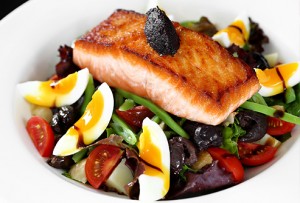
Anyone experienced in physique transformation knows this is nonsense.Most people have a terrible tolerance for carbs, shitty insulin sensitivity and simply don’t do enough physically demanding work to warrant too many carbs. If you want to get lean cutting carbs is usually one of the first and most important steps you need to take. That doesn’t mean you can’t have any but you need to make smart choices and they need to be taken in at the right times and cycled properly.

2) You’re Eating Carbs at the Wrong Time

If you’re above 20% body-fat pretty much any time is the wrong time. In that case I would only recommend vegetables and possibly some post workout potatoes or a once per week refeed. When you get down to 15% you can increase the amount of carbs in the post workout meal or the weekly refeed. Everyone else should limit carb consumption to post workout and night time, as per The Renegade Diet rules. During the day you want to be alert and focused, which is one reason why you don’t want to load up on starchy carbs during this time. Save for them for the night time when you want to optimize serotonin production and rest, relax and repair.

3) You’re Eating Too Much Fat

Some people cut carbs and assume that they’re good to go and there’s nothing else to worry about. Unfortunately, the low/no carb diet isn’t as much fun as Dr. Atkins made it out to be. You can’t just eat pounds of bacon and mayonnaise with reckless abandon and think that you’ll magically end up ripped. Fat contains calories; nine per gram to be exact. At the end of the day total calories still matter, and if you’re eating more than you burn you’re never going to get ripped. Please don’t mistake this as my advocating a low fat diet. That’s just as bad, if not worse, than eating too much fat. A bare minimum of 20% of your calories should come from healthy fats like pastured egg yolks, wild caught salmon, grass fed beef and coconut oil to ensure optimal health. Just be careful about going overboard with it and thinking that low carbs automatically leads to single digit body-fat. You still need to keep a handle on things like total calories.

4)You’re Not Eating Enough Protein

protein food 300x203 12 Reasons Youre Not Losing FatIn my experience it’s usually only females who are guilty of this but guys can make this mistake on occasion as well. The average female who can’t lose body-fat usually eats a bowl of oatmeal for breakfast with an egg. One… single… egg.
Then she’ll have a sandwich for lunch with four ounces of lean turkey. For dinner it will be a salad with low fat dressing and four ounces of chicken or fish. Although, in all honesty they may skip the protein all together and just have a salad for either lunch or dinner. Let’s assume she weighs 135 pounds. Most experts would agree that she would need to consume at least 100 grams of protein per day, if not a gram per pound, which would equal 135 grams. Each ounce of protein is around 4.5 grams of protein. So in this example she had 36 grams combined with lunch and dinner plus the six grams from the egg. So that’s a total of 42 grams, which falls just a wee bit shy of where she needs to be.
Females often freak out when you tell them to eat more than six ounces of protein at a sitting but when you break down the numbers for them and reveal just how many calories they’re eating it should make more sense. If they had eight ounces of protein three times per day it would 108 grams of protein. That’s only 432 total calories. Add in the fat and it’s still not that much.
People who eat a sufficient amount of protein usually end up having an easier time getting ripped than those who don’t. Make sure you’re getting enough.

5) You’re Drinking Too Many Protein Shakes

There are two problems associated with drinking shakes when you’re trying to get ripped. First of all, whey protein can raise insulin levels, as I have been telling people since the mid 90’s. If you’re trying to get lean you don’t want insulin to be flowing like the Nile all day. You want a nice insulin surge post workout but the rest of the day you want it under control. That’s why The Renegade Diet limits the intake of whey protein to very small amounts during most of the day and only allows a larger amount post workout or at night.
The second problem with drinking too many shakes is that they are so easy to digest that you don’t really burn any calories when you eat them. When you chew down some salmon and broccoli your body works harder to digest that food and you burn more calories during the digestion process. When you drink something that is so easily digested, like a protein shake, your body does almost no work in the process.
So, when getting ripped is your main goal, limit your shake intake and chew as many calories as you can.

6) Your Liver is Over Stressed

This is usually the last thing people think of when embarking on a fat loss diet but it can sometimes be the most important. Everything that goes into or on your body has to be processed by the liver. That means all food, alcohol, suntan lotion, environmental pollutants, etc. If you are constantly exposing yourself to this kind of stuff and overstressing the liver fat loss will be much more difficult to come by. Cut out booze, stop eating grain-fed, chemical laden meat and incorporate some regular periods of intermittent fasting to give the liver a break and you will find your rate of fat loss is noticeably faster.

7) You’re Eating Nuts

I love nuts. I mean, who doesn’t? Give me a bag of pistachios or cashews and I won’t look up till the whole thing’s gone. The problem is nuts have a ton of calories. When you’re dieting for fat loss the rules are usually the opposite of those followed by skinny hardgainers trying to gain size. Those guys want the most calorically dense foods possible. Fat loss dieters do not. You’re better off filling up on nutritionally dense foods that don’t pack a lot of calories, like green vegetables. If you’re dieting you need to limit your nut consumption to about ten almonds per serving. No too many people can eat ten almonds. Most people eat ten handfuls. If you are strictly tracking and calculating everything all day and you want to load up on nuts at certain times I suppose you could but I wouldn’t recommend it. Nuts can be very problematic for a lot of people, especially those with digestive or auto immune issues. As Paleo Solution author Robb Wolf has noted, nuts should be used the same way you use condiments- sparingly.
I should also add, and this is strictly my opinion, meaning it has NOT been proven and posted on Pubmed… nut butters seem to be easier for most people to digest than actual whole nuts. Just something to consider.

8) You’re Eating Fruit

jolie berry 300x224 12 Reasons Youre Not Losing Fat“What?! You’re telling people not to eat fruit!? Everyone knows that it’s impossible to get fat from eating too much fruit!”
Yeah, yeah I know, that’s why physique competitors eat so much fruit and why all fat loss experts who specialize in getting people shredded recommend such high quantities of it. In our hunter gatherer days fruit was nothing like what you see in the supermarket today. Berries were small, dark and bitter; not the huge sugar sacks most people consume these days. Don’t get me wrong, fruit is healthy and can be eaten by lean individuals in limited amounts but any type of excessive fructose (a sugar found in fruit) consumption will lead to fat gain. Fructose can only be processed by the liver and once liver glycogen stores are full the excess gets converted to triglycerides and stored as body-fat. If you want to get ripped cut fruit completely for a while or limit it to one to two small servings per day. Just be sure to really up the vegetable consumption so you can keep your vital nutrient uptake where it needs to be.

9) You’re Not Training Heavy

When you want to lose body-fat the first inclination is often to crank up the reps and cut the rest periods. I actually have no problem with fairly low rest periods. But not if you’re used to resting three minutes between sets and all of the sudden cut them down to thirty seconds because you decided it was time to get shredded you’ll be in trouble. That never works. All that happens is your weights start plummeting on every exercise and you get weaker and smaller. High reps have the same effect.
When dieting, the primary role of strength training is to maintain muscle mass. That is the single most important thing. Don’t use it as your primary “fat burning” activity… UNLESS you are seriously overweight. If you need to lose more than fifty pounds or so that would probably be fine (although please don’t ever do any of the bullshit you see on those fat camp TV shows). Females can actually get something out of metcon workouts in the right situation as well. The caveat, however, is that that they need to be strong and actually have some muscle mass. If you take a weak female with no muscle and give her a silly metcon circuit she won’t usually get much out of it because she’s too weak to produce enough force. Females should get strong first before they attempt that type of training.
If you’re a guy and are trying to lose 10-20 pounds of body-fat without losing all your muscle mass in the process you should use strength training as a way to maintain size and strength; nothing more, nothing less. So the same principles that helped you get big and strong apply when dieting. Keep the reps low and the resistance high.

10) You’re Overdoing Cardio

Traditional forms of cardio are largely useless for fat loss. But useless is even okay, it’s when it starts to be counterproductive that we have a real problem. Excessive amounts of cardio lead to an overproduction of cortisol which leads to more abdominal fat and numerous health problems. If you want to do cardio that won’t actually hurt you and could do you some good, go for a long walk. No self respecting man should ever be spotted on an elliptical machine.
dog sled chan 12 Reasons Youre Not Losing Fat
Sled work builds muscle, burns fat and is irreplaceable

11) You’re Not Running Sprints or Doing Sled Work

Dieting is the most important thing for fat loss. After that you should be doing some form of strength training to maintain your muscle mass. When you have those to things dialed in you’ll want to add in some type of sprinting or sled work. There is nothing more effective for fat loss. See all wide receivers, defensive backs, sprinters, soccer players, etc. for proof. Two or three 20-40 minute sprint or sled sessions per week will be enough for most people.
Don’t have a sled? 

12) You’re Not Getting Enough Sleep

When you’re short on sleep your insulin sensitivity decreases and your cortisol goes up. Both things lead to less than optimal fat loss. You also miss out on the critically important Growth Hormone boost that comes each night during deep sleep. If you want to lose more fat you have to get more sleep. Most people will ignore this and some of you are probably reading this at 2am. Unfortunately this just might be the most important thing on the whole list. More sleep improves EVERYTHING. Make it a priority.
Wikio