Tout dans la vie est une question d'équilibre d'où la nécessité de garder un esprit sain dans un corps sain.

Discipline-Volonté-Persévérance

Everything in life is a matter of balance therefore one needs to keep a healthy mind in a healthy body.

Discipline-Will-Perseverance.

E. do REGO
Showing posts with label Bret Contreras. Show all posts

Monday, July 14, 2014

4 Myths About Female Glute Training


Plus How to Really Perfect Your Glute-Ham Tie-In


Strong-glutes

Here's what you need to know...

•  Judges of female figure and bodybuilding shows look for a glute-ham tie-in, but most women prefer glutes with a more prominent profile.
•  There is no glute-ham tie-in muscle! If you want to maximize the muscularity of the glutes and hamstrings, hammer them with a variety of hip extension and knee flexion exercises.
•  Attempting to carve the glutes with spot reduction exercises like the Stepmill doesn't work.
•  Sprinting doesn't spot reduce fat off from the posterior chain and it doesn't activate the posterior chain muscles to a greater degree than hip thrusts or back extensions.
You've heard of the glute-ham tie-in, the area that separates the glutes and hamstrings. In bodybuilding and figure competitions, judges look for a smooth transition between these two muscles. It's therefore of great interest for physique athletes to optimize the appearance of this region. However, there are several misconceptions pertaining to the glute-ham tie-in.


Myth #1 Do Cardio for Preferential Fat Burning in the Glute-Ham Area

I just don't get it. We see so many physique athletes slaving away for hours on the Stepmill, claiming that it sheds fat and etches in the details in the glute-ham region. According to the research, spot reduction is a myth - it doesn't work. The Stepmill can indeed hit the type I fibers and potentially aid in total muscle building efforts. However, this could also be accomplished via incline walking, cycling, the elliptical, or simply adding in some high-rep, low-load resistance training. I'm not saying that cardio (or the Stepmill) should be avoided; just know that it doesn't preferentially burn fat in the glute-ham region.


Myth #2 You Should Do Special Exercises

I've overheard many bodybuilders and figure competitors mention that a certain exercise "really works their glute-ham tie-in." The trouble is, there's no glute-ham tie-in muscle! The gluteus maximus is one muscle. You also have the hamstrings, which consist of the biceps femoris long head, semitendinosus, and semimembranosus (the biceps femoris short head doesn't apply to the glute-ham tie-in because it only crosses the knee joint). Finally, you have the adductor magnus, which can also contribute to the appearance of the glute-ham tie-in.

There are plenty of exercises that do a great job of activating the glutes and the hamstrings at the same time. Deadlifts and back extensions both hit the glutes and hammies very hard. There are also plenty of exercises that might make you feel sore in your lower glute region, like walking lunges and Bulgarian split squats. However, if you want to maximize the muscularity of the glutes and hamstrings, you'll need to perform a variety of exercises. No single exercise will optimally build both muscles. Rather than looking for a special exercise to help you with your glute-ham tie-in, make sure you hammer your glutes and hamstrings with a variety of hip extension and knee flexion exercises (which we'll review below.)


Myth #3 Sprinting Will Improve Your Glute-Ham Tie-In

Sprinters tend to have impressive posterior chain development, and sprinting works the backside very well. So wouldn't sprinting be a good candidate for improving the glute-ham tie-in? The answer might surprise you. Sprinting is an ultra-high intensity activity. Most physique athletes who decide to take up sprinting will fail to condition their bodies properly and will inevitably injure themselves. Several clients I've worked with have gone against my recommendations and implemented sprinting into their preparatory training and suffered negative consequences as a result. Typical injuries include hamstring strains, hip flexor strains, and sacroiliac joint injuries. I can help you improve your glutes and hamstrings, but only if you're healthy.

Sprinting doesn't spot-reduce fat from the posterior chain and it doesn't activate the posterior chain muscles to a greater degree than hip thrusts or back extensions. These exercises are much easier to control than sprinting, and they lend themselves to slightly greater levels of metabolic stress due to the constant tension they provide.

One last thing - sprinters also lift weights, and much of their muscular development can be attributed to this. If you think back to how sprinters looked before weight training for track & field athletes was the norm, you'll note that their posterior chains weren't quite as developed. My advice for physique athletes is to stick to weights and leave sprinting to the sprinters. If you insist on sprinting, then ease into things gradually and make sure you spend ample time warming up.


Myth #4 A Smooth Transition Between Glutes and Hams Always Looks Best


An aesthetically pleasing glute-ham tie-in is in the eye of the beholder. I like a great deal of separation between the glutes and hamstrings and I like the glutes to pop out visually from the hamstrings. It looks like I'm not alone. Think about which ladies possess the most popular booties worldwide. Jennifer Lopez or Kim Kardashian probably come to mind, or, perhaps you're familiar with Jen Selter. These ladies have big ol' booties and their hamstring development is lackluster, but it doesn't seem to be hurting their popularity.

Jen SelterTo provide further evidence, look at Bikini Olympia winners, like Ashley Kaltwasser. Note the emphasis on glute development over hamstring development.

Ashley KaltwasserIn bikini, competitions are won from the rear, but glute shape seems to trump hamstring shape, which isn't necessarily the case with men's bodybuilding. For females that compete in bikini, glute training should probably be prioritized over hamstring training.


Glute-Ham for Female Bodybuilders and Figure Competitors

There are three things that are vital for aesthetically-pleasing glute-ham tie-ins:

1. Low body fat levels
2. Muscular glute development
3. Muscular hamstring development

Attaining Low Body Fat Levels

This one is obvious, but it can't be stressed enough. If your body fat isn't low, your glutes aren't going to look good, at least from a figure or bodybuilding standard. Attaining low body fat levels is best achieved through a periodized combination of dieting, strength training, and cardiovascular training. You won't be able to optimize your body fat levels if you fail to incorporate all three strategies.

Building Muscular Glutes

hip thrustThe weapon of choice for glute development is the hip thrust exercise. Hip thrusts can be performed with a barbell, with bands, or one leg at a time. However, no exercise on its own will optimally develop any muscle. Variety always trumps single exercise performance when it comes to hypertrophic gains. Competitors also need to perform squats, walking lunges, Bulgarian split squats, barbell glute bridges, back extensions (done in a glute-dominant fashion), and the American deadlift. In case you're not familiar with the American deadlift, it's very similar to the Romanian deadlift, only you incorporate some pelvic motion. At the top of the motion, the bar moves straight forward as your glutes push the hips forward. Think of it simply as a glute-centric Romanian deadlift.

For rep ranges, hit the full spectrum - do some heavier sets in the 3-8 rep range, some medium sets in the 8-12 rep range, and some lighter sets in the 12-20 rep range. I'll even have my female clients perform sets of 30 when using bands for hip thrusts, monster walks, sumo walks, or seated hip abduction.

Building Muscular Hamstrings

For optimal hamstring development, you want to utilize variety. You'll already be hitting the hamstrings hard with American deadlifts and back extensions, but make sure to add in good mornings, Nordic ham curls, glute ham raises, and various leg curls (lying, seated, and standing are all good choices). Stick with low reps and an eccentric emphasis with Nordic ham curls and glute ham raises, but go for high reps and constant tension with the leg curl variations.


Non-Competitive Female Lifters: Focus on Glutes

With most of my female clients, I focus primarily on glutes. It's not easy to create the coveted "pop" that gives the glutes such a 3D appeal. This is why we hip thrust multiple times per week. I'm trying to create a visual discrepancy between the glutes and the thighs.

When focusing on glutes, the quads and hams will become strong and shapely. This is due to the performance of squats, lunges, deadlifts, and back extensions. However, if I added in too many leg extensions, leg presses, leg curls, and glute ham raises, or if I prioritized these movements, then over time some of my female clients would develop legs that were too big for their liking and not enough glute prominence. This doesn't happen with everyone, but it does with some, especially after a few years of progressive training. If you grow the legs without growing the glutes, it makes the glutes look relatively small.

Think of your body as a sculpture. Determine where you want to add clay, and then hammer that region with exercises that activate it. If you don't want more clay on a particular region, then avoid highly activating that area to the best of your abilities. If you want to lose fat, engage in progressive overload, adhere to a sound nutritional plan, and judiciously utilize cardio. It ain't rocket science.

Monday, November 11, 2013

19 Squat & Deadlift Variations


11/07/13
Squat-and-deadlift-variations

Here's what you need to know...

• Variety is good for both strength and hypertrophy and it helps prevent overuse injuries.
• Every body is unique, and the best form for a lifter is the one that best suits his unique anthropometry and injury history.
• Contrary to popular belief, there's no standardized perfect form, only what form is best suited for your body and goals.
Strength training gurus love to say there's only one way to perform a lift, and that all other techniques and variations are either wrong or ineffective. Such a philosophy is shortsighted, and this article will show how intelligent variation can build a bigger, stronger, bulletproof body.
First, every body is unique, and the best form for a lifter is the one that best suits his or her unique limb lengths, body segment proportions, tendon attachment points, muscularity, and injury history.
Second, the form that a lifter uses is heavily predicated on his or her overall goals. These goals might include hypertrophy, in which case it's possible to accentuate tension on a particular muscle; strength, in which case it's possible to perform a lift in a manner that maximizes leverages; or transference, in which case it's possible to execute an exercise in a manner that best transfers to another lift or sporting action.
And third, all lifters should purposely perform lifts in a variety of ways in order to build well-rounded and maximal strength.
Stubbornly sticking to a particular form or variation that isn't right for you, no matter how popular it is, will eventually lead to injury. It's akin to forcing a square peg through a round hole.


Top Athletes Vary in Exercise Form

All my powerlifting and strongman friends look markedly different when they squat, deadlift, and bench. Hell, take a look at the various powerlifting world record holders, strongman champions, top Olympic weightlifters, and even the best bodybuilders on the planet – you'll see that their techniques with the big lifts vary markedly.
They've all taken the time to figure out the style of each lift that caused the least pain and injury, maximized their leverages and performance, and/or allowed them to best reach their particular goals. What's hilarious is that many of these top strength and physique athletes "break the rules" according to various experts, making it difficult to find merit with any hard rules in lifting mechanics.
The top lifters have also taken the time to figure out their favorite exercise variations. The top bodybuilder might prefer rack pulls over full-range deadlifts because they're safer on his low back, but still might hammer his entire posterior chain.
The top powerlifter might perform low bar squats and sumo deadlifts in competition, but prefers high bar squats and conventional deadlifts in training until a month out before the meet since they better build his lifts.
The strongman might tell you that he gave up low bar squatting years ago to preserve his shoulder health, but that he still front squats every week. Lastly, the top Olympic lifter may prefer the Romanian deadlift and high-bar full squat as assistance lifts, whereas the top powerlifter might prefer the deficit deadlift and high box squat. You get the picture.


Useful Barbell Variations of Squats and Deadlifts

I realize most don't have access to specialty bars, so I only included traditional barbell variations. However, there are dozens of incredible variations that use the rackable cambered bar, safety squat bar, or Dead-Squat™ Bar, to name a few.


Deep Back Squats: High Bar Versus Low Bar

Though the difference might appear subtle, the high-bar squat exhibits less forward trunk lean and therefore places more stress on the quads. Conversely, the low-bar back squat increases trunk lean and places more stress on the hips.
Strong quads are critical for proper squat performance, as are strong hips. You should incorporate both types of squats into your training arsenal.
High-Bar Back Squat
title
Low-Bar Back Squat
title


High-Bar Versus Low-Bar Parallel Squats

With sufficient training experience, most lifters will find that they're stronger with squats when they use a low-bar placement and take a wide stance. However, there are lifters who discover that they're indeed stronger with high-bar squats.
Usually, high-bar squats are performed with a moderate stance as opposed to a very wide stance. Again, the high-bar squat emphasizes the quads, whereas the low-bar squat will emphasize the hips. Both variations are great for squat training.
High-Bar Moderate Width Parallel Squat
title
Low-Bar Wide Stance Parallel Squat
title


Front Squats: Wide Versus Narrow Stance

Most of the time, when you see someone performing front squats they're using a narrow stance. But there's no reason why you can't perform front squats with a wider stance. Again, both should be used in your training regimen.
Narrow Stance Front Squats
title
Wide Stance Front Squats
title


Box Squats: Low Box/High Bar Versus High Box/Low Bar

Most lifters are familiar with high box/low bar squats where they sit back and keep vertical tibias, thereby maximizing stress on the posterior chain. However, it's also a good idea to perform low box/high bar squats from time to time. This variation places considerable stress on the quads and is quite useful depending on the purpose.
High Box/Low Bar Squat
title
Low Box/High Bar Squat
title


ZercherSquats: Hip Emphasis Versus Quad Emphasis

Most lifters only employ one style of Zercher squats but it's a good idea to occasionally perform two different styles. To stress the hips, take a wider stance, keep the shins vertical and sit back more, descending to parallel. To stress the quads, use a moderate stance, keep the torso more upright, sit down, and descend below parallel.
Hip-Dominant Zercher Squat
title
Quad-Dominant Zercher Squat
title


Deadlift: Conventional Versus Sumo

You should perform both conventional and sumo deadlifts from time to time. They build each other, especially if you have a huge strength discrepancy between the two variations.
Conventional Deadlift
title
Sumo Ddeadlift
title


Block or Rack Pulls: Conventional Versus Sumo

The same logic applies to block or rack pulls. You can and should use a conventional and sumo stance throughout your training year.
Conventional Block Pull
title
Sumo Block Pull
title


Sumo Deadlifts: Quad Versus Hip Dominant

When you pull sumo, there's a sweet spot for trunk angle and joint ROM that enables you to hoist the heaviest loads. That said, sometimes it's a good idea to use lighter loads and practice your sumo deadlifts using a quad-emphasis or a hip-emphasis. With the quad-dominant style, sink deeper and keep a more upright trunk. With the hip-dominant style, raise the hips and use a greater trunk lean.
Quad-Dominant Sumo Deadlift
title
Hip Dominant Sumo Deadlift
title


Deficit Deadlifts: Clean Grip Versus Snatch Grip

When pulling from a deficit, you should employ a traditional grip width as well as a snatch grip width. The snatch grip deficit deadlift increases joint ROM and is a brutal yet useful variation.
Deficit Deadlift
title
Snatch Grip Deficit Deadlift
title


Hack Lift

The hack lift is a nifty way to build quad strength in a deadlift. Just place the bar behind the back and try to mimic your typical deadlift form. This variation stresses the knees and should be used only occasionally. The lockout can be tricky, but most lifters can learn to perform the movement correctly with practice.
Hack Lift
title


The Spice of Training Variety is good for both strength and hypertrophy and it helps prevent overuse injuries. Through tremendous effort and experimentation, accomplished lifters determine optimal positioning and technique for their bodies as well as figure out the movements that transfer best to their particular goals.
The takeaway point is that the best do what works best for them, not what some guru tells them to do. Contrary to popular belief, there's no standardized perfect form, only what form is best suited for your body and goals.
There's more than one way to skin a cat... or squat or deadlift a weight.

Monday, August 5, 2013

8 New Exercises for a Thicker, Stronger Back


8 New Exercises for a Thicker, Stronger Back

Here's what you need to know...

• Forget the abs – isolating the erectors can greatly improve your squat and deadlift poundages.
• There are many movements you can use to target your erectors that use a variety of implements, many of which also build upper back strength.
• Try incorporating a few of these movements for three weeks and then retesting your deadlift or squat. You should see a new PR!
When it comes to squatting and deadlifting strength, the thoracic extensors play an even greater role in stabilizing the spine than the abdominals. And while many lifters perform accessory movements for the quadriceps, hamstrings, gluteals, and abs, most lifters don't do any accessory work for the erector spinae. That's a mistake.
For years powerlifting experts such as Louie Simmons and Dave Tate have stressed the importance of targeting the erector spinae, especially when it's an inherent weak link for the lifter, but until now we haven't had any research to back up their methods.
A recent study by Fisher et al. showed that performing the Romanian deadlift (RDL) didn't improve lumbar extension torque, but lumbar extension training was found to improve both RDL performance and lumbar extension torque.
This shows that performing isolation movements for the spine can directly improve deadlifting performance. According to Hamlyn et al., the lumbar erectors fire harder during squats than deadlifts, but the thoracic erectors fire harder during deadlifts than squats.
Needless to say, both the lumbar and thoracic spine need to be incredibly strong to hold the pelvis in place and prevent the spine from buckling during heavy squat, deadlift, and good morning variations.
Below are eight go-to-exercises for accessory erector work. When you perform thoracic extension exercises, it's very important to do them properly. You want to move mostly at the thoracic spine and not so much at the lumbar spine.
While the lower back does flex slightly when performing thoracic extension exercises, trying to maintain a lumbar arch ensures that it doesn't round excessively and that the vast majority of motion comes from the upper back. Moreover, the lower lumbar spine and pelvis will remain stabilized with any lumbar motion occurring in the upper lumbar spine.
A variety of barbell, safety squat bar, chain, kettlebell, band, and dumbbell exercises can all be used to develop upper back strength.
Here's a video that shows how to do all of these movements, with descriptions to follow.


1. Seated Good Morning

The seated good morning is a powerlifting staple for upper back building. Do these in a power rack and make sure you set the j-cups and safety pins at the appropriate heights.
You can do these from a higher bench height or a lower bench height (I prefer higher benches); with the legs bent or with the legs more out in front of the body; with a traditional barbell, or even better, with a safety squat bar.
The trick with seated good mornings for upper back building is to make sure you feel it in your upper back. If you keep a big arch you can make it more of a hamstring movement, but you don't want this. Keep the bar high up on your back and let the t-spine flex and extend.

2. Safety Squat Bar Upper Back Good Morning

These aren't traditional good mornings – not even close. You're not bending over at the hips so much as just bending the upper back over. You can do these with a traditional barbell, but a safety squat bar is even better.
Moreover, you can do them with the safety squat bar in the regular or backwards position. Both work well but they feel differently from one another.

3. Chain Upper Back Good Morning

Chain upper back good mornings are my favorite t-spine exercise. The only problem is that if you're very strong, you'll need a lot of chain. Just drape the chains around your neck and then flex and extend the upper back.
You can hyperextend the t-spine with these and obtain good resistance through the entire range of motion. Hell, just standing with the chains on for extended periods murders the upper back.

4. Chain Upper Back Extension

Upper Back
This is an exceptional exercise and probably the most versatile of the group. Set up in a glute-ham developer (GHD), round the torso over the pad, and make sure your knees are bent so the hamstrings don't contribute to the movement.
Chains are my favorite way to load this movement, but you can pretty much use anything – bands, a barbell, a safety squat bar, a cambered bar, or a dumbbell.
What's best about this exercise is that you can tinker around with torso hinging placement to target different areas of the t-spine. Lower torso placement on the pad targets the lower thoracic region, mid placement targets the mid thoracic region, and upper placement targets the upper region.

5. Seated Kettlebell Deadlift

The seated kettlebell deadlift is highly effective for thoracic building, but you need a heavy kettlebell. The video shows me using a 48-kilogram (106-pound) kettlebell, but it's still a bit light. If combined with chains, however, the exercise can be even more effective. Focus on upper back movement and push the chest tall at the lockout.

6. Front Squat Isohold

The front squat isohold is a great thoracic strengthener. Load up a barbell with 130-150% of your 1RM front squat, un-rack, keep the chest tall, squeeze the abs and glutes, and hold for time.

7. Band Upper Back Good Morning

Another convenient way to load the upper back is with bands. Simply stand on the elastic band (or on multiple bands if you don't have strong ones), wrap it around your neck, and flex and extend the upper back. Get full extension as it will provide resistance through the entire ROM.

8. Dumbbell Upper Back Extension

The upper back extension performed with a dumbbell is another simple way to load the t-spine, assuming you have access to a GHD. Try to hold the dumbbell up near chest level, because if you let it sink to navel level it reduces the torque loading on the spine.
Powerlifting legend Fred Hatfield used to perform this exercise with 225 pounds for sets of 10 reps using a special contraption that allowed him to hold a loaded barbell up closer to his chest so he could achieve full ROM. He felt that this exercise was very helpful in allowing him to achieve a 1,000-pound squat way back in the day.


3 Weeks to New PR's

Squats and deadlifts can build a world class back, but isolating joint actions can thicken your thoracic region and help you blast through plateaus.
I recommend hammering the erectors for three weeks by incorporating some of these movements into your regular training. Test your max on the fourth week to see how your hard work paid off!


References

Fisher J, Bruce-Low S, Smith D. A randomized trial to consider the effect of Romanian deadlift exercise on the development of lumbar extension strength. Physical Therapy in Sport. 2012, published ahead of print.
Hamlyn N, Behm D, Young W. Trunk muscle activation during dynamic weight-training exercises and isometric instability activities. Journal of Strength and Conditioning Research. 2007, 21(4): 1108-12.

Saturday, April 13, 2013

Considerations in Athletic Performance Enhancement Training: Olympic Style Weightlifting


Ideal athletic performance comprises a positive contribution of various physical (strength) qualities that are necessary to enhance the movements (skills) of the athletic endeavor. One of these essential physical qualities is power. Power may be expressed as Work divided by Time (W/t) where Work = Force X Distance and Force = Mass X Acceleration. Therefore one method of consideration to enhance an athlete’s physical quality of “power” is for the athlete to lift a specific programed weight intensity (mass) at a high velocity (acceleration) or a higher weight intensity (mass) at the same velocity (acceleration).
Power is an important component of athletic performance. There are a vast selection of performance enhancing training exercises, methods, and implements available to the Strength and Conditioning (S&C) Professional to improve this important physical quality. Certainly no one specific exercise or method of training is the only option. Furthermore there is no “one size fits all” approach, as every athlete should be considered as an individual with his or her own specific genetic makeup, anatomical structure, and training as well as medical history.
One training approach for consideration to enhance the physical quality of power is the incorporation of the exercises and principles of Olympic Style Weightlifting (i.e. the Clean and Jerk, and the Snatch). Olympic Style Weightlifting movements have demonstrated some of the highest human power outputs of all the resistance training exercises. Discussions concerning the Olympic Lift’s (OL’s) as a chosen method of “power” development are often controversial, but these exercises do provide both the S&C Professional as well as the athlete with some unique advantages when compared to other methods of “power” training.
Many S&C Professionals are familiar with the concept of “triple extension” and the utilization of the OL’s for power enhancement. That said, this article will also discuss the additional benefits as well.
The Nervous System
The OL’s allow for a specific training of the nervous system. The common denominator of the OL exercises is speed as many of the various components of the OL’s take only fractions of a second to perform. This type of “power” training shortens the time of motor unit recruitment, especially in the fast twitch type muscle fibers while increasing the tolerance of the motor neurons to increased innervation frequencies. A better synchronization of the motor units and their firing patterns also occurs as muscles also learn to discharge a greater number of muscle fibers in a short period of time.
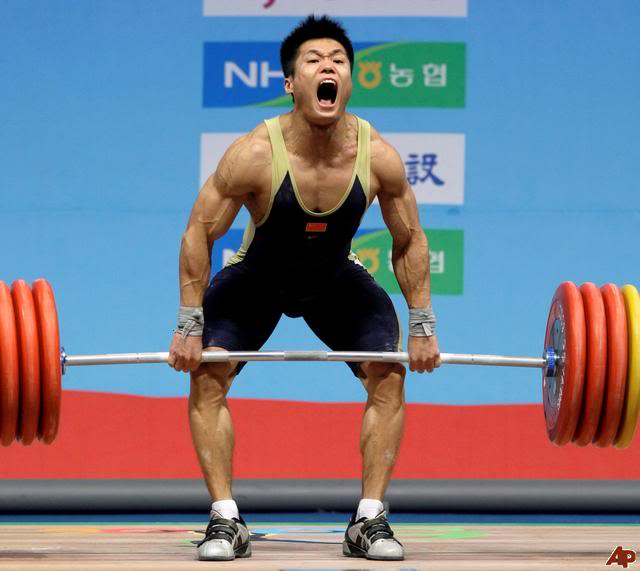
olympic lifting
These exercises also enhance intramuscular coordination, which is the ability for the agonist and antagonist muscles of a joint to cooperate together and effectively perform a movement pattern. This enhanced intramuscular coordination allows for an improved speed of movement, thus optimizing power production.
The Coactivation Index
A unique benefit of the OL’s that is very often omitted in the content of articles and discussions is the subject matter of the muscle coactivation index (CI). During an athletic movement there is a relationship between the agonist and antagonist joint musculature. Agonists (synergists) are muscles that work together to achieve a specific movement while antagonists are muscles that oppose the agonist’s movement. During joint movements the agonist and antagonist muscle activity can be measured and compared resulting in the CI. The CI is calculated by dividing the EMG data of the antagonists by the agonists as expressed as a percentage of the EMG value during the maximum voluntary contraction (MVC) and multiplying by 100%.
The great sprint coach Charlie Francis would often indicate for an athlete to achieve optimal athletic performance their muscle groups would need to coordinate both relaxation and activation throughout the movement (skill) for an ideal force production to occur. Tudor Bompa has also stated that the most skilled athletes are those that have the ability to completely relax the antagonist muscle groups during a movement. It should be noted that rigid and rough movements are a result of poor coordination between agonists and antagonists.
“Traditional” strength type exercises such as the squat and deadlift may actually increase the CI at the corresponding agonist/antagonist joint musculature, as this type of strength training will result in enhanced joint stability. On the other hand the OL’s have been demonstrated to decrease the CI as this type of training mechanism allows for a reduced antagonist muscle group contribution resulting in an superior overall “power” type exercise performance.
The Barbell
The barbell is the weighted implement of choice for the athlete’s performance of the OL’s. Barbells offer some unique benefits when compared to other types of weighted training implements such as dumbbells, kettlebells, and weighted vests. Some of these benefits are as follows:
Exercise Intensity – no other exercise training implement may be loaded with as high a weight intensity (load) for the performance of a high velocity movement like the barbell. Exercise intensity (stress) is the single most important training variable necessary for physical “adaptation”. Without a sufficient stimulus to disrupt the homeostasis of the body adaptation will not occur, thus the athlete will just be wasting valuable training time. The literature provides evidence that weight intensities as low as 10% 1 RM in novices and up to approximately 40% of an athlete’s 1 RM will enhance power development. However, there is also evidence that heavier weight intensities will enhance power development as well. Though these heavier weight intensities may be performed at lower bar velocities when compared to lighter loads, these heavier load intensities will not only continue to improve power output but will also improve necessary absolute strength levels. Frequently in the arena of athletic competition an athlete must initiate a high power output against an additional external resistance. We have all witnessed a running back breaking a tackle, a wrestler “locked up” with their opponent, a lacrosse faceoff, and a basketball power forward tied up under the boards to name a few.
Metabolic Cost – Load also influences the metabolic cost of training. Larger training loads will have an increased effect on the mechanical work performed (i.e. Work = Force X Distance), thus with similarly programed exercise training volumes, larger weight intensities will increase metabolic cost (i.e. kcal/min, VO2 max) resulting in an improved work capacity. Barbells are more practical in accomplishing this goal of exposing the athlete to high loads compared to other aforementioned training implements.
The Olympic Style Lifts and the Development of the Various Physical Qualities of Strength
The utilization of the OL’s in conjunction with a barbell will not only improve the physical quality of power (explosive strength), but acceleration and reactive strength qualities as well.
Acceleration – The ability for an athlete to accelerate is an important component for success in many arenas of athletic competition i.e. the acceleration phase of sprinting. The ability to accelerate transpires from a “preparatory” slower movement velocity (muscles are already contracting) followed by a higher velocity (acceleratory) movement. Dr. Loren Chiu uses the analogy of a NASCAR racecar going around the track at a specific constant speed and then suddenly increasing speed (accelerating) to pass the car in front. During the OL exercise performance the transition of the barbell from the 1st pull through to the 2nd pull requires the athlete to accelerate the bar from a slower preliminary speed.
Reactive Strength – Reactive Strength (RS) training incorporates the stretch shortening cycle (SSC) and is typically accomplished via plyometric or “shock” type training.  Another unique component to performing an Olympic Lift with a barbell is the second knee bend that must occur prior to the 2nd pull to clear the barbell from the front of the knees so that the barbell may continue to move vertically to ensure exercise success. This second knee bend produces a SSC/RS quality at both the Patella and Achilles tendons of the lower extremity, thus enhancing the neuromuscular training of the musculoskeletal system for enhanced force output. No other weighted implement i.e. dumbbell, kettlebell, weighted vest, etc. will produce this SSC/RS phenomenon as exercise performance with these other types of weighted implements are placed lateral to the knees, between the legs, or worn upon the body. Since these other various types of weighted implements to do not pass in front of the knees/legs during exercise performance the second knee bend action is not present (necessary) and only knee extension is required. The “catch” phase, when the athlete must accept a heavy clean or snatch in the bottom position, or when driving him or herself under a heavy jerk will improve the athlete’s RS qualities as well.
The Rate of Force Development
Although training for the Rate of Force Development (RFD) like acceleration has the athlete with the intent to move the weight intensity rapidly, unlike the accelerative abilities the RFD occurs when the initial bar movement velocity is equal to zero. Therefore this type of training requires peak force generation to occur near the start of the movement thus generating maximum force in a minimal amount of time. Dr. Loren Chiu uses the analogy of a drag racing car that must produce high forces/torque from a dead stop. Examples also include a sprinters start or a squat jump.
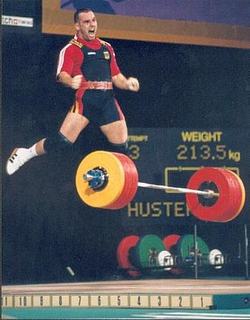
olympic-jump
The RDF is also very important criteria in the opinion of many rehabilitation professionals for an athlete’s return to athletic competition. Presently there are ACL studies demonstrating that ‘acceptable” return to sport strength levels occur at appropriately 6 months post-surgery, however the same “acceptable” levels of RFD may take up to one year.  Therefore, the OL’s as well as variations of the OL’s may be utilized as part of a lower extremity rehabilitation protocol to accelerate the restoration of the RFD after lower extremity pathology and/or surgery. We employ the use of the OL’s exercises and principles with both the rehabilitation and post-rehabilitation training of the athlete’s that we work with at our facilities.
RFD is trained with the OL’s by having the athlete lift the weighted barbell from different dead stop bar positions. Various height “pulling blocks” are used to achieve this goal. The three (3) positions commonly utilized are; “below the knee”, “at the knee”, and “above the knee”. Other bar positions to consider would include at the mid-thigh and at the hips (power position). This is to be determined by the S&C Professional based upon the individual needs of the athlete as to which pulling position(s) will be most beneficial.
Deceleration
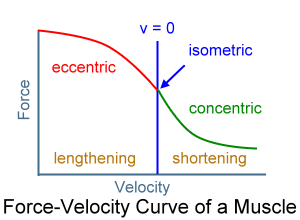
The athlete’s ability to decelerate is an important criterion to excel in athletic competition. Tudor Bompa has indicated that in all sports the ability to accelerate is important, but similarly is the ability to decelerate, especially when considering the need to change direction. The ability to decelerate requires strong eccentric capacity of the musculoskeletal system. It is well known that an individual can lower a much heavier weight via an eccentric muscle contraction when compared to the maximal weight that may be lifted concentrically. Some coaches may have their athletes execute “negatives” during an exercise performance as these heavy weight intensities are lowered at slow speeds to enhance strength qualities. However, in the athletic arena, eccentric muscle contractions occur at high speeds in order to decelerate as in landing from a jump, the deceleration phase of pitching, changing direction to avoid an opponent, etc. Thus wouldn’t training eccentrics at higher speeds be more applicable to athletic performance? In review of the force velocity curve one can see that during an eccentric muscle contraction, greater tension is produced at higher velocities.
Force Velocity Curve
During the “catch” phase of an OL the athlete has to drop their body under the bar at a high velocity to receive the barbell in the bottom position prior to the barbell “crashing” back to the ground surface area. This ability requires a high-speed eccentric contraction. It is important to note that the athlete must support and control the combined total load of the barbell as well as his or her body weight. This “event” occurs in a very short period of time and produces high levels of force that need to be absorbed in a ballistic manner.  Some may argue that this type of training is unsafe, however we consider this component of the exercise performance as preparation for the unpredictable high forces that occur on the playing field and in essence “armor coat” the athlete as positive soft tissue adaptations will occur as noted in Davis’ law.
Final Thoughts
The athlete’s ability to produce high velocity training movements for the enhancement of a multitude of physical qualities is critical for athletic success. The premise of this article is that the classic barbell Olympic Weightlifting movements provide a very practical and effective training methodology. This combined with the large number of assistant OL’s performed at different positions, offers the athlete a sufficient training variety necessary for enhanced athletic performance.
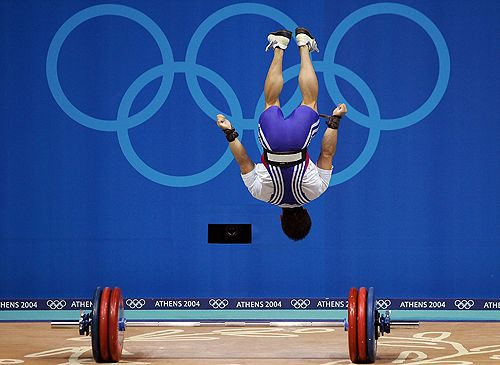
Olympic-Lifting-Backflip

Robert A. Panariello MS, PT, ATC, CSCS
Professional Orthopedic and Sports Physical Therapy
Professional Athletic Performance Center
New York, New York

Monday, November 5, 2012

20 Almost Laws of Strength Training


Gene Lawrence is a 73 year-old powerlifter who stays up-to-date with the writings and recommendations of his favorite strength coaches. Like many lifters, he finds the conflicting advice extolled by the various experts to be downright confusing.
I've been training with Gene for the past several months, watching him bust out 365-pound deadlifts like it ain't no thang. Just recently he said to me, "I really wish someone would just write an article that taught me the rules. What are the things you have to do versus the things that are just nice to do?"
I pondered his question for several days, and came to the conclusion that there are only 8 laws in strength training.
At first I figured there'd be more, but almost every time I thought up a potential law, a refuting argument came to mind.
Now of course, it's difficult to make hard-fast laws due to varying goals and genetics. However, in the end I feel that I was fair with my determinations.
These laws are based on what I've learned both as a lifter and researcher, and they're formed by my current level of scientific understanding, meaning they're malleable and subject to change.
Bear in mind here that I'm assuming that since you read T Nation, you care about both your strength and your physique.
In Part II of this series, I'll give you the 8 laws, but in this article I'll set the stage and present 20 potential laws that got shot down. Many coaches and trainers might determine that some of these are indeed laws, but not me.
The following 20 things are "nice" to do, but not absolutely necessary.


The 20 "Almost" Laws that Didn't Make the Cut


1. You must foam roll.

20 Almost Laws of Strength Training
Foam rolling feels good. Ask any foam rolling lifter if it makes them feel better, alleviates pain, or prevents injury, and the resounding answer will be yes.
However, there are millions of lifters who don't foam roll who do just fine. To date, there are only a couple of studies that have been conducted on foam rolling, and to be frank, we really don't know much about it as far as what it does and doesn't do (Miller & Rockey 2006, MacDonald et al. 2012).
Right now we can speculate as to what it does, but at this point it's just that – speculation.

2. You must stretch.

Stretching usually feels good too, and intuitively most lifters feel like it's a good idea. Nobody wants to lose their flexibility, and it's no fun being tight.
However, proper strength training itself involves stretching. Research shows that strength training is as effective as stretching at building flexibility, due to several factors (Aquino et al. 2010, Simao et al. 2010; Morton et al. 2011, Nelson & Bandy 2004).
First, the eccentric component of exercise, along with exercises that place sufficient tension on muscles at long lengths, induces sarcomerogenesis and actually increases flexibility through creating new sarcomeres in series and lengthening muscle (Brughelli & Cronin 2007). So resistance training is a viable form of loaded, active stretching.
Next, passive stretching can indeed decrease stiffness and increase pain tolerance to stretch, but it doesn't regulate muscle length like active stretching does (Weppler & Magnusson 2010, Riley & Van Dyke 2012). If you regularly perform exercises like full squats, Romanian deadlifts (RDL's), lunges, chin-ups, dips, and calf raises with good form through a full range of motion, you'll possess good overall flexibility.

3. You must do cardio and/or HIIT.

20 Almost Laws of Strength Training
Cardio sounds good in theory. After all, the heart is the most important muscle, right? But what exactly is "cardio?" Doesn't the heart beat quite hard during strength training?
While prolonged low-intensity cardiovascular exercise does indeed have its own merits, strength training – particularly performed intensively close to muscular failure – provides many of the benefits that cardio does (Steele et al. 2012).
As long as you have an active lifestyle and lift weights frequently with sufficient intensity, cardio isn't mandatory. If you've ever performed a set of 20-rep walking barbell lunges with 225 pounds, then you know that resistance training works the cardiovascular system very well.
Over the past decade, exercise scientists have raved about HIIT, pointing out that it leads to greater metabolic expenditure and fat-loss over prolonged periods compared to steady state cardio due to the effects of EPOC (Tremblay 1994, Hazell et al. 2012). However, lifting weights is a form of HIIT, as long as you train intensely.

4. You must go heavy (i.e., lift over 90% of your 1RM).

Recently, it's been shown that lighter weights performed to failure can indeed provide a potent muscle hypertrophy stimulus, perhaps even greater than heavy weights (Mitchell et al. 2012).
It's too early to tell as the studies have relied on beginner subjects, but at the very least the newer research shows that you can certainly build muscle without using heavy weights.
Ever seen Kai Greene train his glutes? He uses light weight for high reps and focuses on feeling the glutes moving the loads. Jay Cutler doesn't go nearly as heavy as he did earlier in his career, but nevertheless he's more muscular due to a shift in focus on muscle contraction.
Few bodybuilders go lower than 6 reps, and for lower body most stick to sets of 10-30 reps. For the most part, Andy Bolton, the first man to deadlift over 1,000 pounds, relies upon Dynamic Effort deadlifts to build his world class deadlifting strength.

5. You must train explosively (i.e., Dynamic Effort).

Many lifters benefit from the Dynamic Effort method. Explosive lifting increases muscle activation at the start of the lift and allows for more frequent training due to lighter loads being used.
However, explosive lifting also diminishes muscle activation in the latter half of the lift due to requisite deceleration of the load (Frost et al. 2010).
Most bodybuilders lift semi-explosively, yet they're sure to control the weight through the entire ROM. Many seek to keep more constant tension on the muscles to maximize the pump effect.
Furthermore, many powerlifters have gained plenty of strength having never focused on lighter weight for maximum acceleration. Dynamic Effort work is a great idea for Olympic lifters and athletes, but it's not mandatory for general lifters.

6. You must go to failure.

Growing up reading strength training articles, I was led to believe that the last rep of a set was the only one that counted and the only one that built strength. Now I realize that it was hogwash.
You can build incredible strength staying far away from failure. Sure you won't build maximum strength if you don't push the boundaries from time to time, but you can leave a rep or two in the tank and still be quite strong and muscular.
In fact, a recent article showed that maximum muscle activation during a set was reached a few reps prior to failure (Sundstrup et al. 2012). A decent case could be made that by avoiding the increased wear-and-tear on the joints and nervous system induced by going too heavy or too hard might lead to increased progress through decreased stress, pain, and injury, along with increased recovery.

7. You must squat.

20 Almost Laws of Strength Training
The squat is the king of lower body movements, no doubt. But do you have to squat? Some lifters never seem to dial down their form on squats, and this has much to do with their anthropometry.
Ben Bruno has shown that it's indeed possible to make steady progress with squatting strength through intensive focus on single-leg strength. Research has shown that single-leg strength and power training led to slightly better performance effects than double-leg strength and power training, though the effects weren't significant (McCurdy et al. 2005).
Strength is highly dependent on the movement pattern, so as long as you perform a single-leg squatting movement such as a Bulgarian split squat or a reverse lunge, your strength on the squat won't suffer dramatically.
Let's say that week in and week out you performed a bilateral deadlift or good morning variation along with a single-leg squat variation, yet you never did bilateral squats. Your quads would still be muscular, your spine stable, and your hips strong.

8. You must deadlift.

If the squat is the king of lower body movements, the deadlift is the king of total body movements. Therefore you must deadlift to see great results, right?
Westsiders showed long ago that a lifter could build a very strong deadlift without deadlifting. They performed tons of box squats, good mornings, back raises, pull-throughs, reverse hypers, and glute ham raises – and their deadlifts were incredibly strong.
I've found that heavy-ass kettlebell swings can do wonders for building and maintaining deadlift strength. Max Shank can single-leg RDL 315 pounds for reps, which provides a huge training effect for the hip extensors, keeping the deadlift pattern strong while sparing the low back.
In terms of bodybuilding, many lifters prefer the blend of bent-over rows, T-bar rows, and back extensions for their mid and lower back development rather than deadlifts, as they've found that the deadlift just isn't worth the risk to their body.
If your program contained heavy KB swings, box squats, good mornings, bent over rows, T-bar rows, and back raises, your deadlift would be plenty strong, and your back and hip extensors would display impressive muscularity.

9. You must bench press.

Now let's move on to the king of upper body movements, the bench press. The bench press is without a doubt the most popular exercise in the world, but do you have to perform it? Many lifters' shoulders just don't agree with the bench press, and therefore, they need not include it in their programs.
You can build a strong bench press through other pressing movements. For example, a lifter who performed lots of weighted push-ups and/or dumbbell pressing from different angles will have muscular pecs and triceps, not to mention a reasonably strong bench press.

10. You must do unilateral or bilateral exercises.

Let's say a lifter only performed squats, leg presses, deadlifts, hip thrusts, back extensions, glute ham raises, bench press, military presses, dips, push-ups, bent-over rows, chins, and barbell curls for his entire lifting career. I think we'd all agree that he'd be incredibly strong and muscular, provided of course that he gets strong on those exercises.
Conversely, let's say a lifter only performed Bulgarian split squats, reverse lunges, single-leg RDL's, sled-pushes, single-leg hip thrusts, single-leg back extensions, single-arm db bench presses, single-arm DB shoulder presses, one-arm DB rows, single-arm pulldowns, and alternating DB curls for his entire lifting career. He'll also be incredibly strong and muscular, provided he gets strong on those exercises.

11. You must train your core directly.

20 Almost Laws of Strength Training
Free-weight compound exercise does a good job of activating the core musculature. Getting an aesthetically pleasing mid-section has more to do with being lean than possessing muscular abdominals anyway.
If you perform exercises such as chin-ups, push-ups, squats, deadlifts, farmer's walks, military presses, and barbell curls, your core will be plenty strong and muscular. Combine this with proper nutrition and your midsection will look great.

12. You must use free-weights.

Free weights reign supreme in the strength training world. They allow for natural movement patterns and require real-world stabilization. Therefore they're absolutely necessary, right? Not so fast.
Prime-mover muscle activation can be matched with machine training, and a lifter can gain incredible strength and size this way.
Moreover, there's a big difference between a crummy machine program and an optimal machine program.
For example, if a lifter simply performed leg extensions, leg curls, calf raises, pec deck, straight-arm pulldowns, and lateral raises, he probably wouldn't get very far in terms of total body strength and muscularity.
However, if a lifter performed Lever squats, Hammer strength deadlifts, leg presses, lying leg curls, Hammer strength upper body presses and pulls from various angles, and cable curls, he'll be incredibly strong and muscular, provided he gets strong on those exercises.

13. You must always strive for progressive overload.

Earlier in a lifter's career, progressive overload is mandatory. But later on, there are other ways of progressing. For example, you can use better form, emphasize a particular muscle, or exert better control.
Many bodybuilders, in an attempt to spare their joints and decrease the likelihood of injury, actually place heavy squats and/or deadlifts toward the end of the workout so they can achieve a training effect while not relying on such heavy loads.
Let's say you've built your strength up to a 300-pound bench, 400-pound squat, and 500-pound deadlift, and you decide to stay there for a year while improving upon your form and honing in on your diet. You'd look better despite not using progressive overload. Progressive overload is critical, but it's not always mandatory.

14. You must incorporate plenty of variety.

20 Almost Laws of Strength Training
Variety is the spice of life. Training can be quite mundane, and it's always nice to spruce your programs up with new exercises, altered stance and grip widths and ranges of motion, or other tweaks such as pause reps or drop sets. Failure to vary your workouts is said to lead to stagnation and "habituation".
However, is variety truly necessary? Plenty of Olympic weightlifters from Bulgaria didn't fall into this trap – they performed around six exercises year-round. And this is the crux of John Broz's system – back squats, front squats, power cleans, power snatches, clean & jerks, and snatches.
Let's say that a certain lifter performed the same five exercises his entire lifting career, and for 30 straight years he only did back squats, deadlifts, bench press, military press, and bent over rows. He'd probably have better strength and development than 90% of lifters.
Variety is nice – we all like it, it breaks up the monotony, and it keeps us interested in going to the gym, but if you don't like change, then you don't have to change in order to see excellent results.

15. You must periodize your training.

Periodization is essential for lifting success, right? The Russians were all about it, and American sports scientists have gone to great lengths planning detailed cycles of varying lengths. So it has to be mandatory for success, right?
The fact is, periodization is debated in the literature, and studies don't tend to show a huge difference in gains between varying periodization models (Kiely 2012, Issurin 2010).
If you're in tune with your body, you possess ample "common sense", and you know the basics of program design, then you don't really need to "periodize" your training.
But first let me clarify this statement. What is "periodization" anyway? It's "planning". How can any sensible lifter not perform some sort of planning when he trains? Even the biggest fools at the gym know what their "go-to" exercises are for the chest and biceps.
The vast majority of respectable lifters plan their training splits, training frequency, exercise selection, and order. Based on intuition and biofeedback, they tend to vary the intensity and volume on a particular day, but there's some structure and planning to their methods.
Therefore, every single respectable lifter does in fact periodize his training. But do you need to jot down an annual plan full of cycles and phases? The vast majority of bodybuilders don't do this, especially the top dogs.
Furthermore, "life" tends to force you into cycles and phases. Stress, new jobs, vacations, injuries, parties, holidays, work, deadlines, new relationships, and travel force lifters into varying their programming.
Moreover, periodization doesn't allow for "on-the-fly" adjustments and can be too rigid. Chuck Vogelpohl was notorious for maxing out on his Dynamic Effort day; once he got ramped up he couldn't resist going heavy. Are you going to tell him he's not lifting correctly?

16. You must deload and/or fluctuate your training stress.

As mentioned above, life forces you into fluctuating your training stress. Nevertheless, should you plan recovery weeks? Probably, but what if you're the type of lifter who simply "nails" the optimal training variables each week?
Some lifters lack testicular-fortitude and never overreach. These folks don't need back-off weeks. Some lifters train balls-to-the-wall and are prone to overdoing it. These folks benefit greatly from deloading.
But there are certain lifters who intuitively understand just how hard to push things. They might slightly overreach by Friday, but after taking the weekend off, they're good to go by Monday. They make steady gains despite never taking a week off or even taking a back-off week, due to the fact that they perform just the right amount of frequency, volume, and intensity for their body week in and week out.

17. You must train frequently.

20 Almost Laws of Strength Training
I'm a huge fan of HFT. But is it absolutely necessary? Some of the best gains I ever made were from a HIT program. Every five days, I performed a full-body workout consisting of big basic movements such as squats or front squats, deadlifts or sumo deadlifts, bench presses or close grip bench presses, and chins or rows. I got incredibly strong and gained a lot of muscle. Mike Mentzer saw great success from infrequent, full-body, intense training, as have plenty of other strong lifters.
One of the biggest misconceptions out there is that you have to be in the gym all day long in order to see results. If more aspiring lifters knew that they could in fact see incredible gains from lifting just six days per month, they'd probably embark on a resistance training regimen.
The caveat is that you have to do it right – no wimpy isolation lifts allowed. Hammer the big basic movements every five days and you'll see great results.

18. You must perform total body workouts, or you must split your workouts.

The vast majority of bodybuilders split their programs. Many powerlifters split things up too. Total body training works for many individuals, but no single system is ideal for every individual and goal.
On the contrary, Olympic lifters don't split their workouts, nor do most strongmen or athletes. There are prisoners who've gotten incredibly jacked from daily full-body workouts. Split training works for many individuals, but no single system is ideal for every individual and goal.

19. You must perform multiple sets.

Research clearly shows that multiple sets trump single sets for strength and size (Krieger 2009, Krieger 2010, Rhea et al. 2002). However, think of it this way:
Let's say that a lifter did one exercise per workout and squatted on Monday, benched on Wednesday, and deadlifted on Friday. He performs five sets in each session.
Let's say another lifter did one set of five compound exercises on Monday, Wednesday, and Friday. They're both doing 15 sets of exercise per week. Do you really think that they'd be much different in terms of strength or size?
Aside from a couple of warm-up sets, Dorian Yates performed one set to failure, and he had one of the best physiques in the history of bodybuilding.
The first set is by far the most important, with each subsequent set being less and less important. And if you end up hitting the muscles from more angles due to more exercises being performed, a case could be made that you can see even better results in terms of hypertrophy with single-set protocols versus multiple-set protocols.

20. You must consistently train balls-to-the-wall.

If you don't go all-out every session, you won't progress, right? Maybe not. Many experts feel that overdoing things holds more lifters back than underdoing things. Leaving a rep or two in the tank, choosing less-taxing exercise variations, and performing Dynamic Effort work allows lifters to train more frequently by sparing the nervous system and the joints from heavy pounding.
Pavel Tsatsouline advises lifters to "grease the groove" and quit obsessing about maximal performance on every set of every exercise.
Let's say you train five days per week, never quite going to failure or maxing out on chain close grip bench press, feet-elevated inverted rows, chain front squats, heavy kettlebell swings, and farmer's walks. You'd be very fit, strong, and muscular, and your joints would thank you.


Conclusion

I'm definitely not telling you that you shouldn't do the things mentioned in this article. However, some of the tenets listed will be more or less important for you depending on your particular genetics and goals. Just keep in mind that these 20 items are nice to do, but not absolutely mandatory for success.
In Part 2 of this series I will disclose the things you must do to ensure optimal gains in strength training.

Saturday, February 25, 2012

15 Questions for TC Luoma


By Bret, February 24, 2012 6:21 am
TC Luoma is someone I have tremendous respect for. In fact, I consider him to be one of the most influential individuals in the history of Strength & Conditioning. He’s had a tremendous impact on spreading “non-bodybuilding” strength training methodology with more of a strength, power, functional, or joint-friendly flare to it. Where other publications would have ignored the various writers and article submissions in their quest to promote hypertrophy-based, traditional training practices, TC saw potential and gave guys like me and methods that don’t fit the “bodybuilding-only” mold a chance.
I’m certain that had I submitted my first article, Dispelling the Glute Myth, to other sites or magazines, I wouldn’t have heard back from them. But TC saw potential and agreed to post the article, and two-and-a-half years later the hip thrust is popular around the world. When I think of it, a vast majority of what I’ve learned today as far as strength & conditioning practices are concerned come from reading TNation. I recently reached out to TC to see if he’d conduct an interview for my blog and much to my chagrin he agreed. Here’s the interview:
1. Hi TC, thank you for agreeing to conduct this interview. First off, what does TC stand for, and why do you go by “TC” instead?
Well, if you go to Wikipedia, or at least the last time I checked it, it suggests that the “T” stands for the descriptor, “Ten-Inch,” and the “C” stands for, well, use your imagination. Seriously. That’s what it said on my Wikipedia entry. Kinda’ makes you doubt the authenticity of some of the other info, doesn’t it?
Anyhow, TC is just the two initials of my first and middle name: Terrence Christian. I’ve always preferred to be called TC and I’ve always used it as my pen name.
2. I’d like to know how you stumbled into the fitness field. Were you always a fitness nut or did a job just fall into your lap?
I’ve worked out as long as I can remember. I remember wanting to start lifting weights when I was ten years old but my mother wouldn’t let me – she said it would stunt my growth. So it wasn’t until high school that I started lifting in the basement. I also read the earlier Weider Magazines and somehow thought I was the only one who liked Arnold and Frank and the rest of the California bodybuilders because nobody I knew in real life in Michigan had ever picked up a weight or even knew who those guys were.
I remember hearing that Arnold was going to do a book signing in a nearby town when I was growing up and I drove a couple of hours to see him. I’d stood in line for about an hour, finally got to the head of the line and some woman started talking to him about some business proposition. He took my book, signed it, and never even looked at me. I was seriously bummed.
I finally met him when I got into the biz, but it wasn’t the same.
Anyhow, years later, I hooked up with a bodybuilding photographer named Ralph DeHaan. He worked for all the mags and when I told him I write, he said he always needed articles to go with his pics. I tried writing one, sent it to MuscleMag, and they bought it. Then I sent one to Muscular Development and they bought it.
I started sending articles to mags all over the country, including some in Europe. Pretty soon I was writing 15 articles a month. I got to know everybody in the business, and then I hooked up with George Snyder and Bill Phillips and started writing most of their magazine, Muscle Media 2000. Within a year, they made me editor-in-chief. A few years later after Phillips decided he wanted to go mainstream, I left and hooked up with Tim Patterson, who had the weird and wonderful idea of starting a website called “Testosterone.”
3. It seems that those Muscle Media days were bitter-sweet times for you. Looking back, what important life-lessons did you learn from the experience?
That everybody in this business has something seriously, seriously, wrong with them. Dat’s a fact, Jack. I learned that business, almost invariably, will eventually exploit people, resources, or the environment. I learned that lots of money, earned very quickly, corrupts people as few things do. I learned that most people climb the corporate ladder by being sniveling, obsequious little worms. I learned that many girls, given enough money, will take their clothes off and do wonderful things, especially in Vegas (Bill used to take groups of us there for recreation).
And those were the good things I learned.
Nah, just kidding. I made a name for myself at Muscle Media 2000, earned enough money to put a down payment on a nice house in San Diego and honed any writing skills I had by writing tens of thousands of words in articles (both under my name and ghost writing for others), books, pamphlet, and ad copy. I also met Tim Patterson, which later turned out to be a very good thing because we started Biotest and T Nation together.
4. You started Biotest and TNation with Tim Patterson out of his garage in Colorado. What was your and Tim’s initial vision for the company?
A small correction, Bill Phillips started his company out of his mother’s garage in Colorado. We started Biotest and T Nation out of a small office building in Colorado Springs. Tim, along with Dr. Mike Leahy, were running a medical practice that was built around ART. Tim started building Biotest out of that same building while concurrently running the day-to-day doings of the ART business.
Our first “warehouse,” however, was a former gas station right next door to the ART practice.
Anyhow, we initially wanted to be a better version of the old Muscle Media 2000 had been, before it went mainstream – an entertaining and innovative source of ground breaking information on training, diet, and supplementation that didn’t suffer fools gladly but liked to make fools suffer. Similarly, we wanted to make hugely effective supplements that WE wanted to use; if anybody else wanted to use them, i.e., customers, than great. We’d have our protein cake and eat it, too.
5. Did you ever think back then that TNation would end up being so popular, and how did your and Tim’s vision for the company morph over time?
Yeah, I did think it would be as popular as it is. And as far as how our vision has morphed, it really hasn’t. We’re still passionate about training, whether it’s strictly bodybuilding training, or training to be as functionally brutal and bad-ass as the type MMA fighters. We also still build supplements WE want to use. If you want to use them, too, great.
That’s something that kills me. A lot of times people contact us and ask whether we used such-and-such a crappy or inferior ingredient in one of our products and I think to myself, “You moron. Why would Tim or I put some crappy ingredient in a product that we built for ourselves?
6. Do you feel that TNation is the crème de la crème for strength & conditioning writers? If so, why?
Absolutely. Just about anybody who’s anybody either started out with us or writes for us now. It sounds bad, but sometimes people ask me about if I’ve heard of some obscure coach and I think, perhaps mistakenly, “Hell, if he were anybody I’d already know about him and he’d be writing for us.”
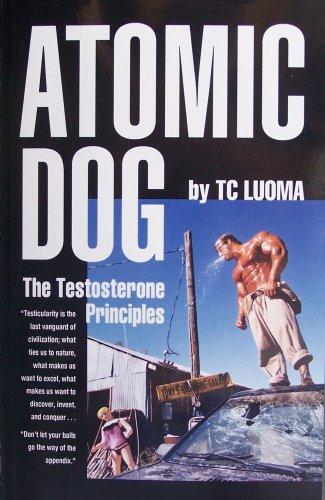
7. Several years back you wrote a book titled Atomic Dog: The Testosterone Principles. I actually bought four copies; one for me, one for my twin bro, and one for each of my two step brothers. The book resonated with me because I feel that most men these days lack integrity, fortitude, and testicular-power. What’s wrong with our current generation of men?
Thanks! That’s really gratifying to hear.
What do I think is wrong with today’s men? Where do I start? Fear. Uncertainty. Lack of identity. Lack of true self worth. Obsession over any perceived slight. A lack of a definition of what true manhood is. Believing that money or material possessions are synonymous with accomplishment. I could write a book. Wait, I have!
8. I suppose you’ve seen it all when it comes to strength training. Since TNation’s inception in 1998 (then it was Testosterone.net) we’ve seen articles from the likes of Ian King, Charles Poliquin, Paul Chek, Dave Tate, Christian Thibaudeau, Dan John, Chad Waterbury, Alwyn Cosgrove, Eric Cressey, Mike Robertson, Michael Boyle, Joe DeFranco, Nick Tumminello, Tim Henriques, Tony Gentilcore, Jim Wendler, Ben Bruno, and even some asshole named Bret Contreras. It’s basically a laundry-list of S&C rock stars. What 3 individuals have made the most significant impact on your training?
Man, I feel like a Hollywood starlet who’s been asked which of her leading men was the best lay. This sounds like I’m being diplomatic, i.e., being a slimy politician talking out of both sides of his mouth, but I’ve stolen from all the guys you’ve listed. Each one of them has things to offer to T Naiton and to me. Otherwise, their stuff wouldn’t have been posted on T Nation.
For instance, I was just doing Bret Contreras glute thrusts yesterday. I’m using some of Wendler’s 531 stuff, too, and I routinely use Christian Thibaudeau’s methodologies, too.
I will say that Poliquin was the first to make me radically change my approach. Before Poliquin, it was 3 sets of 8 for not only me, but virtually everyone who lifted weights. (Bret’s note: I think Charles Poliquin, and possibly more so Ian King, influenced strength coach practices more than any two individuals in S&C)
9. Speaking of strength training, how do you currently train? Are you a bodypart split guy, a lower/upper split guy, or a total body training guy, and what are your goals?
I’m a push/pull guy. After all these years, after trying everything, it’s what makes the most sense to me and what works best for me. I lift 3 or 4 days a week and I have to confess, I’m a grinder (even though Christian and Tim are trying to cure me of this habit). I like extended sets, drop sets, multiple no-rest, make everything burn so at the end you have to drop the weights and make an ugly face until the pain goes away. It’s just my nature. Otherwise, I don’t feel like I worked out.
I also work the Prowler one or two days a week, along with riding a modified mountain bike up and down the local thousand-foot “mountain.”
My goals right now – and they may change in a few months, such is the nature of the beast – is simply to get as strong and conditioned as I can while remaining essentially the same weight. I have virtually no cartilage in my left knee – the result of a football injury – and I find that I can keep the nagging pain away if I stay reasonably light.
10. Here’s a random question. Have you ever noticed that many “gurus” in S&C seem to get really strange over time? What’s up with Gurus Gone Crazy?
I know, I know. Here’s what I often tell new writers. “Here’s how it will be. You’ll start writing for us. You’ll gradually grow to be very popular and make a lot of money. You’ll adore us. Then, things will change. The fame will affect you. You’ll star to castigate us for not treating you like the star you are. Your shipment of Anaconda and Indigo-3G will be a day late and you’ll threaten to sue us. You’ll leave, thinking you don’t need us, and at least 5 out of 10 times, you’ll fade into obscurity and spend your days in the park trying to teach pigeons how to Bulgarian squat.”
11. What irks you the most in regards to article submissions by prospective contributors, and what sort of writers and articles catch your eye?
The thing that bugs me is guys who submit articles without having studied the T Nation site. They send me articles on stuff that we’ve written about the week before. They’ll send me articles that are too simplistic for the Parade Magazine that comes bundled up with the Sunday paper. I don’t get it.
As far as what catches my eye, I usually defer to one thing, and that’s if the article makes me want to try whatever it is they’re writing about. If I’m interested in it, chances are the readers will be, too.
12. Do you have any advice for upcoming S&C writers?
Don’t get too immersed in studies. Instead, use experiential evidence. In other words, studies aren’t the end-all and be-all. I read them and they’re fascinating to me, but studies are often poorly designed. They’re often overlooking or missing certain intangibles. For instance, I bet if some researchers took a group of test subjects and decided to test Westside barbell’s methodologies on them, they wouldn’t get nearly the results that the real Westside does. The real training has intangibles that the research would lack, like being screamed at by a bunch of guys who look like stone killers, or having heavy metal music blasting out at 110 decibels.
Studies are great, but if you depend solely on studies, you’re just writing book reports. A literate high school kid could do the same thing. I prefer guys who read stuff and then test it out themselves.
Similarly, I sometimes get PhD nutritionists writing for us who simply can’t, because of their formal education, make a deductive leap about something. They’ll stammer that the research hasn’t proven it yet, and while every piece of evidence points to a certain conclusion, they’re unable to make the small leap. You want to smack them on the head. Hell, this sport or activity or passion, whatever you want to call it, was built on deductive leaps.
13. Word on the street is that you’ve just written a new book titled Manhood and Other Stuff: The Testosterone Principles II. Is this correct?
Oh, finally, my reward for doing this interview! I get to plug my new book!
Yes, that’s true. The alleged national campaign kicks off in April, but the book is currently available on Amazon and Barnes and Noble in both hard and soft cover. Like the first book, it’s about manhood.
As far as what it’s about, I’ll just give you the synopsis I just sent to the publishers. It’s probably a little longer than you expected, but what the hell, we’re not killing any trees here:
This book is about manhood, and, well, other stuff. But let’s address the manhood thing first.
And I know what you’re thinking. You’re thinking the type of manhood that worships monster truck rallies and nacho fries and fast cars; that paints its bare chest green and sits in the subzero stands of Lambeau Field with a hunk of plastic cheese on its head while bellowing like a gutted Klingon; that communicates largely by grunting, belching, or telling fart jokes.
You know, all that stereotypical crap.
But that’s not what I had in mind. In fact, I had this notion of manhood that combines the do-goodedness of the Boy Scouts with some heaping doses of self-determination and pragmatism, sprinkled with a dollop of Testosterone, and seasoned with a few fistful-size pinches of Howard Stern.
From my experience and observations, men and boys are in some serious need of a new definition of manhood. Men by and large don’t have a masculine identity that’s much different from the one-dimensional and infantile masculinity epitomized by professional athletes or by the characters in Hollywood action movies or, worse, yet, television sitcoms.
But there’s a yin to the masculine yang I just described, and neither side is very pretty.
There’s a whole other breed of man who, despite rejecting silly Maxim Magazine notions of manhood, has gone completely in the other direction, only slowing down to do some occasional antiquing. Their balls were either cut off metaphorically by society, circumstance, or disapproving wives who put them in a Mason jar and stored them in the shed behind the pickled beets.
As a result, many kids don’t have fathers anymore; the traditional American family consists of two “moms,” one with a traditional vagina and one with a penis and testicles that acts like a mom. A lot of wives don’t have husbands anymore – they gave their wedding vows to yet another son who, despite being in his 30′s or 40′s or beyond, has to be told what to do and scolded when he’s bad.
The other type of man I described earlier, the beer-swilling, monosyllabic slobs? Oh, he gets married and has kids, too, but he doesn’t stay married very long — if his wife has any sense, that is.
So I wrote the columns that make up this book. Most of the articles are about some aspect of my version of manhood, along with the occasional observation about new developments in science or psychology, along with a healthy dose of popular culture and sex (the “other stuff” referred to in the title).
I’m hoping against all odds that it helps, at least a little bit, to set things right, or at least generate a little discussion and a lot of laughter.
14. I believe that TNation has been the single most influential website in the past two decades in terms of positively influencing the training practices of lifters worldwide. We have you to thank for helping spread sound training methods, and for this you should feel a sense of achievement. What’s your most proud accomplishment in life thus far?
Thanks! That’s nice of you to say.
As far as being “proud,” I have to take issue with that word. Don’t worry, I’ll be brief. I think pride is an immature emotion. It means I allegedly have done something (or even bought something) that I hope will convey superiority over someone else. I prefer the word “satisfaction,” as in what accomplishment has given me the most satisfaction? In other words, what have I done that was truly useful or life affirming?
First, it’s immensely satisfying when I hear you say that my first book helped your brother “man up.” I hear that type of thing a lot and it’s enormously satisfying. Secondly, I’m happy that it seems that I’ve helped spread what is often –not always – a healthy life style. From what I can see, a lot of people are healthier, fitter, able to enjoy life more, and happier because T Nation exists.
That’s very cool.
15. Thanks again for your time TC. I have one last question. My last several dogs were Min Pins, Dachshunds, or Chihuahuas – all small dogs. I imagine that you’re a Pit Bull, Doberman, or Ridgeback type of guy. Am I correct?
I’ll admit, I have a weakness for masculine dogs. I have two English Staffordshire Bull Terriers and they’re regarded as second cousins to pit bulls. Truth is, they were originally used for fighting in the pit in England by the coal miners that developed the breed, and they would tie a bear to a wall and have a small group of these dogs fight the bear. Pretty weird, huh?
But this breed has been domesticated over the years. In fact, they’re now called “nanny dogs” in England because of their reputation with children. That’s good, because it’s frowned on when you have dogs that actually eat kids.
Anyhow, I like the dogs because they’re relatively small, but with very thick, muscular bodies. They’re canines with the bodies of bodybuilders, coupled with the athleticism of an NFL running back. My male, Tommey, was born from the frozen sperm of a champion dog that had been dead for over ten years. I feed him organic meats, vegetables, and Biotest supps. Hell, we should put him on the label of some of our products.

Wikio