Tout dans la vie est une question d'équilibre d'où la nécessité de garder un esprit sain dans un corps sain.

Discipline-Volonté-Persévérance

Everything in life is a matter of balance therefore one needs to keep a healthy mind in a healthy body.

Discipline-Will-Perseverance.

E. do REGO
Showing posts with label Chad Waterbury. Show all posts

Monday, April 28, 2014

More Muscle in 10 Minutes A Day


Pushup

Here's what you need to know...

•  All you need is a heavy kettlebell and a doorway pull-up bar to add some serious muscle.
•  Alternate between the swing/pull-up and goblet squat/one-arm push-up combo 4 times each day. It'll only take 10 minutes each day.
•  With HFT (High Frequency Training), you don't need to train with balls-to-the-wall intensity every workout to stimulate muscle growth. Just add circuits into your current training plan and get ready to add lean body mass across your upper body and legs.
Do you want to add new muscle mass across your entire body? If so, we've got a solution for you. Pick a doorway in your house that you walk through frequently and install one of those home pull-up bars. Then set a heavy kettlebell next to it. Honestly, it's all you need to add a full-body, high-frequency training (HFT) plan into your life.

Doing that will be the best technique you ever used to add muscle. Plus, if you slack off, you'll feel riddled with guilt on a daily basis because you'll constantly be reminded that your ticket to new muscle is right in front of you. I mean, do you really not have the time to knock off 10 swings and 5 pull-ups as you pass through that doorway a few times each day? Or 10 goblet squats and 5 one-arm push-ups?

I think you do. In fact, I know you can do it, and you will gain muscle. Look, if every guy who's short on muscle mass would alternate between the swing/pull-up and goblet squat/one-arm push-up combo four times each day, there'd be a lot more muscle in this world three months from now. And it would take a grand total of about 10 minutes of time per day.


A Quick Note About Fatigue

It's essential to manage fatigue when you add full body workouts to whatever you're already doing. We all know that more workouts can lead to more growth, but we need to respect the delicate balance between fatigue and recovery. Two exercises that can drain your recovery capacity are the deadlift and barbell squat, so that's why they aren't part of this HFT plan. However, at least one of them should be included in your primaryworkouts.

The volume guidelines listed below will be sufficient to stimulate growth without the CNS fatigue that comes from maximal strength loading during the barbell squat and deadlift. Your replacement moves will be the goblet squat and swing since they're two of the best exercises you can do using submaximal loads. With HFT, you don't need to train with balls-to-the-wall intensity every workout to stimulate muscle growth. Just add these circuits into your current training plan and get ready to add lean body mass across your upper body and thighs.


The SOP Circuit (Swing, One-Arm Push-Up, Pull-Up With Fat Grip)

Kettlebell Swing: Most guys will need a kettlebell that weighs 48 kilograms (105 pounds). If you don't have one that heavy, use the swing version where you switch hands with each rep. Swing deep using the hip hinge and squeeze the glutes hard at the top of each rep.

One-Arm Push-Up: A one-arm push-up isn't only excellent for the triceps, chest, and shoulders, but it's also a killer anti-rotation core exercise. This is an exercise that can make even the strongest guys feel weak. You should be able to knock off 5 reps with at least half of the full range of motion. If you can't, do the push-ups off a bench or box that's just high enough off the floor to challenge you for 5 reps.

Pull-Up With Fat Gripz: I do most of my pull-ups from rings, but I also have one of those doorway pull-up bars with a pair of Fat Gripz attached to the neutral (hammer) handle position. Fattening the grip is one of the simplest and most effective ways to stimulate more growth in your forearms and biceps. You won't be able to knock off nearly as many reps when using a fat grip, and that's the point.

1A. Swing for 10 reps
Rest 30 seconds
1B. One-Arm Push-Up for 5 reps
Rest 30 seconds
1C. Pull-Up With Fat Gripz for 5 reps
Rest 30 seconds, and repeat 1A-1C for 5 total rounds.


The GHO Circuit (Goblet Squat, Handstand or Headstand Push-Up, One-Arm Row)

Goblet Squat: This exercise is one of the best submaximal-load squat variations you'll find. If you don't have a single kettlebell or dumbbell that's heavy enough to challenge you by rep 10, use two kettlebells held in the rack position. Squeeze the glutes hard at the top of each rep.

Handstand or Headstand Push-Up: A headstand push-up is the version when the palms are on the ground and you lower the body until the top of your head touches the floor. A handstand push-up requires parallettes (the gymnastic devices used to simulate parallel bars) or something similar, so you can lower the tops of your shoulders until they touch your thumbs. Both versions work well, so choose whichever version best suits your strength.

One-Arm Row: Use a split stance with your opposite leg forward. Shift the trunk forward as far as possible and keep an arch in your low back. You can mix up the movement variation by pulling with an overhand, neutral, or underhand palm position.

1A. Goblet Squat for 10 reps
Rest 30 seconds
1B. Handstand or Headstand Push-Up for 5 reps
Rest 30 seconds
1C. One-Arm Row for 5 reps
Rest 30 seconds, and repeat 1A-1C for 5 total rounds.


The RDI Circuit (Reverse Lunge, Dip, Inverted Row)

Reverse Lunge: Hold a kettlebell or dumbbell in the "rack" position (elbow tucked to the side with arm fully flexed) on the same side as the leg that's stepping back. When people do a reverse lunge with a single weight they usually hold the weight on the side of the leg that remains in front, but that version isn't as challenging to the glutes.

Dip: Use rings since they recruit more muscle fibers due to the instability they incur (besides, you can hang them from the pull-up bar). Shift the chest toward the floor as your body lowers, without rounding the spine, to minimize shoulder strain.

Inverted Row: Again, use rings and take advantage of the fact that they'll already be in the proper position from the dips that preceded it. This is why I pair the dip and inverted row in the same workout. Elevate your feet on a box or bench to make your upper back work harder and hold the top position for a count of "one-one-thousand" with each rep. If that's still too easy, increase the peak-contraction hold time to 2 or 3 seconds with each rep.

1A. Reverse Lunge for 5 reps with each leg
Rest 30 seconds
1B. Dip for 10 reps
Rest 30 seconds
1C. Inverted Row for 10 reps
Rest 30 seconds, and repeat 1A-1C for 5 total rounds.


Programming Options

You have three primary programming options for using these circuits to gain muscle. The first two options don't require you to perform all 5 rounds each time you do a HFT circuit.

Option #1. Do what you can, when you can: This is often the most popular option since it's the simplest. Put a pull-up bar and heavy kettlebell in your house and just knock out one round of the Swing/One-arm push-up/Pull-up (SOP) circuit when you have a few minutes. The next time you have a few free minutes at home you'll do the Goblet squat/Headstand push-up/One-arm row (GHO) circuit for one round.

You'll alternate between those two circuits throughout the week whenever you can. Maybe you fit in four rounds on Monday, three rounds on Wednesday, and five rounds on Saturday and Sunday. It doesn't matter as long as you're adding something on top of your current training program.

Option #2. Be meticulous with your training log: Some guys like to keep detailed records of all their training. If you're one of them, you can certainly be meticulous with your HFT workouts and work to add more volume over time. This is the best way to manage fatigue, so it's the ideal choice for people who are already on an intense training program that consists of three or more primary workouts each week.

Now there are countless ways you can systematically increase your training volume by adding HFT circuits, but I'll just touch on the two key points.

Perform the workouts at the right time. Keep in mind that the sole purpose of HFT is to help you train more frequently. If you make any of the above circuits part of your primary workout, it won't lead to noticeable muscle growth. The circuits must stand alone as separate, albeit very brief, workouts. Therefore, perform the circuit of your choice on a day when you're not doing your primary workouts, or 8 hours before or after your primary workout.

Start with less than you think you need. It's easy to go gung-ho on HFT and annihilate your joints and recovery abilities the first week. Don't do that. Start with 2 rounds of any circuit or circuits and do them 4 times per week. Do 3 rounds the following week. Continue progressing until you work up to 5 rounds of the circuits. At that point don't add any more rounds because the purpose of this technique is to help you add brief workouts and not turn your primary workouts into 2-hour monsters.

Take at least one full day off each week, so if your primary workouts are in the mornings on Monday, Wednesday, and Friday, you could add HFT circuits in the following manner:

Week 1

Monday: Primary workout in the morning, SOP circuit for 2 rounds in the evening
Tuesday: GHO circuit for 2 rounds at any time
Wednesday: Primary workout in the morning
Thursday: RDI circuit for 2 rounds at any time
Friday: Primary workout in the morning
Saturday: SOP circuit for 2 rounds at any time
Sunday: Off

Week 2

Monday: Primary workout in the morning, GHO circuit for 3 rounds in the evening
Tuesday: RDI circuit for 3 rounds at any time
Wednesday: Primary workout in the morning
Thursday: SOP circuit for 3 rounds at any time
Friday: Primary workout in the morning
Saturday: GHO circuit for 3 rounds at any time
Sunday: Off

Week 3

Monday: Primary workout in the morning, RDI circuit for 4 rounds in the evening
Tuesday: SOP circuit for 4 rounds at any time
Wednesday: Primary workout in the morning
Thursday: GHO circuit for 4 rounds at any time
Friday: Primary workout in the morning
Saturday: RDI circuit for 4 rounds at any time
Sunday: Off

Week 4

Monday: Primary workout in the morning, SOP circuit for 5 rounds in the evening
Tuesday: GHO circuit for 5 rounds at any time
Wednesday: Primary workout in the morning
Thursday: RDI circuit for 5 rounds at any time
Friday: Primary workout in the morning
Saturday: SOP circuit for 5 rounds at any time
Sunday: Off
At this point you can increase the frequency of the HFT workouts to 5 times per week with 5 rounds, or work to finish each circuit in less time.

Option #3. The final option is to use the 3 circuits above as your standalone primary training program. You can definitely add more exercises after the 5 rounds are finished to focus on your calves, abs, or whatever else you're trying to build, but the 3 circuits alone will cover most of your training needs.

If you choose this option, you'll start with 4 workouts, 5 rounds of each, for the first 2 weeks and increase the frequency as shown below.

Week 1

Frequency: 4 workouts per week
Monday: SOP circuit for 5 rounds
Tuesday: GHO circuit for 5 rounds
Wednesday: Off
Thursday: RDI circuit for 5 rounds
Friday: Off
Saturday: SOP circuit for 5 rounds
Sunday: Off

Week 2

Frequency: 4 workouts per week
Monday: GHO circuit for 5 rounds
Tuesday: RDI circuit for 5 rounds
Wednesday: Off
Thursday: SOP circuit for 5 rounds
Friday: Off
Saturday: GHO circuit for 5 rounds
Sunday: Off

Week 3

Frequency: 5 workouts per week
Monday: RDI circuit for 5 rounds
Tuesday: SOP circuit for 5 rounds
Wednesday: Off
Thursday: GHO circuit for 5 rounds
Friday: RDI circuit for 5 rounds
Saturday: SOP circuit for 5 rounds
Sunday: Off

Week 4

Frequency: 5 workouts per week
Monday: GHO circuit for 5 rounds
Tuesday: RDI circuit for 5 rounds
Wednesday: Off
Thursday: SOP circuit for 5 rounds
Friday: GHO circuit for 5 rounds
Saturday: RDI circuit for 5 rounds
Sunday: Off

Weeks 5-6

Frequency: 6 workouts per week
Monday: SOP circuit for 5 rounds
Tuesday: GHO circuit for 5 rounds
Wednesday: RDI circuit for 5 rounds
Thursday: SOP circuit for 5 rounds
Friday: GHO circuit for 5 rounds
Saturday: RDI circuit for 5 rounds
Sunday: Off
At this point you'll have learned enough about your own training needs and recovery to design a customized full-body HFT program on your own. Finally, HFT requires proper workout nutrition. You'll be pushing your recovery capacity to the limit, so use Biotest's latest high-performance supplements to aid recovery and enhance muscle growth.

Friday, January 10, 2014

5 Ways to Add New Muscle in the New Year


Now that the new year is finally here, most of us are taking a more critical look at our body. Even though fat loss tips, tricks and pills are the big sellers every January, muscle growth is just as important. Adding quality muscle will not only increase your basal metabolic level (i.e., the calories you burn at rest) but it will also make you stronger and faster – if you add the right kind of muscle.
Not all muscle is created equal. Cyclists and Olympic weightlifters both have heavily-muscled thighs, but the type of muscle that makes up the girth is significantly different. Since Olympic lifters alternate between heavy loads and explosive movements, they add size to the fast-fatigable (FF) motor units that consist of the type IIB/X muscle fibers.
The FF motor units are the superstars of athleticism because they’re primarily responsible for making you bigger, stronger and faster. They come into play when you lift heavy or fast. You can also tap into the FF motor units by reaching a very high tension through an isometric hold or an intense squeeze of the muscle in peak contraction.

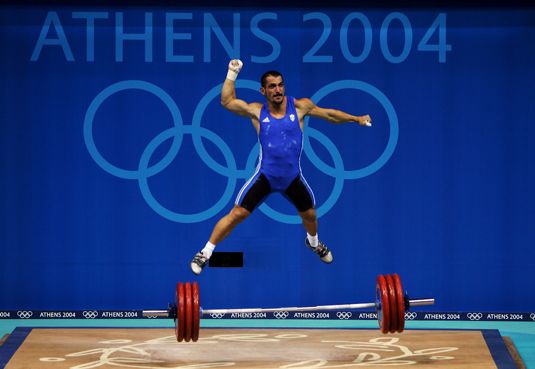
Mens Category 85kg
Mens Category 85kg

Cyclists, on the other hand, spend tens of thousands of hours building the slow (S) and fast-fatigue resistant (FFR) motor units. The growth potential of the S and FFR motor units is less than FF motor units – significantly less when you compare the S and FF types. The quadriceps are one of those rare muscle groups that can grow with intense endurance training. Importantly, most muscle groups will shrink when they’re bombarded with a zillion reps at a small fraction of your maximum one-rep load potential.
However, I don’t want to overload this discussion with motor unit physiology. My point in mentioning the O-lifters vs cyclist muscle relationship is that I don’t want you to build just any type of muscle: I want you to build the right kind of muscle. The muscle that makes you a more explosive athlete.
Hypertrophy requires protein synthesis. Specifically, muscle growth occurs when protein synthesis is greater than protein breakdown. This results in a net protein accretion that can be seen in the mirror over the course of weeks and months.

So to start off 2014, here are my top 5 ways to ensure that you add muscle as quickly as your physiology allows. You must provide your body the right nutrients, and train with principles that tap into the FF motor units.

1. Train with loads greater than 60% of your one-repetition maximum

Imagine two identical twins that have to train with a single dumbbell for six months. Give one guy an 8-pound dumbbell and the other guy an 80-pound dumbbell. You know, of course, that the guy with an 80-pound dumbbell will build more muscle over the course of six months. The reason is because he’ll be able to recruit the FF motor units with virtually any exercise he chooses.

In a study of the relationship between exercise intensity (% of one-rep max load) and protein synthesis, subjects who trained with 60-90% of their maximum training load induced the greatest levels of protein synthesis (Kumar et al, J Physiol, 2009).

As a general rule, 60% of your 1RM is a load you can lift 20 times. So if you’re training with a weight that allows more than 20 reps on the first set, it’s not optimal for hypertrophy.

2. Train Explosively with Lighter Loads

On the days you lift with lighter loads that are close to 60% of your 1RM it’s imperative to perform the concentric (shortening) phase explosively. This ensures that you tap into the FF motor units, even when the loads aren’t within typical strength- and muscle-building loading parameters.

When you train with loads that are 80% of your 1RM or greater, the speed of your shortening contraction phase becomes less important. A weight that only allows four or five reps will tap into your FF motor units, even if the movement is slow. However, it never hurts to try to lift heavier loads faster since it will increase the descending neural drive (i.e., the signal between your brain and muscles) more than if you tried to lift the weight slowly.

3. Maximize Motor Unit Recruitment with Each Rep

The way you perform each rep can have a profound impact on your results. I already mentioned the importance of accelerating lighter loads, but there’s more you can do to trigger muscle growth.
Regardless of the training load – assuming it’s greater than 60% of your 1RM – there’s a sure-fire way to get the most motor unit recruitment from each rep: accelerate the shortening phase, squeeze the peak contraction for at least one full second, and lower under control.

By accelerating the shortening phase you’ll recruit additional motor units. Then the intense squeeze of the peak contraction further increases muscle tension to tap into the FF motor units. And when you lower under control it causes more myofibrillar damage than if you just let gravity take over. That extra tissue damage can lead to extra muscle over time.

This three-pronged approach to each rep is much simpler, and more important, when you’re closer to 60% of 1RM. The likelihood of leaving the FF motor units out of the lift is greater when loads are lighter. That’s why it’s essential to perform the “acceleration/squeeze/lower under control” approach. However, when the loads approach 90% of 1RM your focus should be on achieving proper technique with the lift without regard for anything else.

4. Minimize Low-Intensity Cardio

While in graduate school my thesis paper was on the muscle-fiber alterations between strength- and endurance-training parameters. For months I perused every research paper imaginable on the subject. Put simply: whenever possible, your body will convert the type IIB/X muscle fibers that have the most strength and hypertrophy potential into weaker IIA and I types.

So if your goal is to develop more impressive thighs for spring break, keep in mind that low-intensity jogs will impede the growth potential in your quads, glutes, hamstrings and calves. Now, maybe you don’t care about losing some explosive motor units in your legs and would rather have a slimmer waistline? In that case, jogging is probably fine for you.

However, my recommendation is to limit all cardio to 20 minutes, three times per week. An ideal progression is to run faster during those 20 minutes. Put another way, your goal should be to cover more ground in the same amount of time. Those 20 minutes are enough to reap the health benefits of cardio while minimizing the potential negative hormonal impact that low-intensity training can have on your overall muscle growth.
A 40-minute jog might be good for your heart and endurance, but it definitely won’t get you closer to sporting thighs like Tom Platz.

5. Ingest Protein and Carbs Before Training

You can’t talk about muscle growth without mentioning nutrition. And you can’t talk about nutrition without getting into some biochemistry. (Well, you can but it typically won’t teach you much more than you already know.) So here goes.

In order to maximize muscle growth you must leverage the balance between protein synthesis and protein breakdown in your favor. Your body is in a constant flux between build-up and breakdown, and the goal of training and nutrition is to tip the scale toward protein synthesis. That’s how you grow new muscle.
Over the last few years, the AMPK-mTOR signaling system has become a hot topic amongst those with Ph.Ds behind their name. AMPK and mTOR can have opposing effects on muscle growth.

AMPK activity reduces protein synthesis and muscle growth (Wackerhage et al, Strength and Conditioning). Contrarily, the mTOR pathway appears to be a primary driver for protein synthesis. The relationship between the two is certainly a complicated subject with many unknowns. However, it appears that insulin and amino acids can turn on the mTOR pathway – and subsequently enhance protein synthesis.
I’m a proponent of performing cardio in a fasted state when fat loss is the primary goal. Once glycogen from the liver is used up, your body will start burning fat for fuel.

But during the intense strength training that’s necessary for muscle growth, it’s safe to postulate that carbs and amino acids should be available to fuel your efforts. And it appears that the insulin response from carbs paired with the amino acids (namely leucine) from the protein will trigger protein synthesis via the mTOR pathway.

So when I’m working with a client who seeks fast muscle growth, one piece of fruit combined with 20 grams of leucine-rich, whey protein is consumed 15-20 minutes before training. Thirty minutes after training another 20 grams of protein is paired with berries.
You should experiment with different types of fruit to see which one works best for you. Most of my clients favor a banana, apple or orange with this whey protein.
Add these five steps into your training plan and make 2014 the year that you gain quality muscle faster than ever.
Stay Focused,
CW

Friday, November 30, 2012

How the Frequency Progression Works


Here’s one truism we can all agree on: your body doesn’t want to build muscle unless it’s absolutely necessary. A muscle must be challenged to work harder so your physiology has no choice but to manufacture new muscle tissue to adapt to the demand.
Exercise variety is important and necessary to offset overuse injuries, but merely switching from a standing barbell curl to a dumbbell hammer curl won’t do anything to spark new growth in your biceps. This is true for training any muscle group.
You might get sore when you switch to a new exercise, but that’s mainly because the muscle is being challenged in a different way: it doesn’t mean the muscle has to grow to meet the demand. A better strategy is to find a free weight or body weight exercise that you like, and increase the frequency of training that movement over the course of 4-6 weeks.
Frequency Progression
What it’s best for: muscle growth
Explanation: we all know that increasing the load of a movement is great for building strength, and some muscle growth will follow. However, I’ve found that the fastest growth occurs when you significantly increase the weekly training volume for that muscle group.
Let’s take two guys (Jim and Tim) that perform the pull-up, as an example. Jim weighs 180 pounds and does the pull-up twice per week for 6×4 with an extra 30 pounds of weight attached to a chin/dip belt. You can calculate his weekly training volume with this equation: load x total reps = volume. Since his load is 210 pounds and his total reps are 48, his weekly volume is 10,080.
He’s been feeling pretty strong so the following week he adds 10 more pounds to the chin/dip belt. Now his weekly training volume for the pull-up is 10,560 (220 pounds x 48 reps).
In other words, Jim’s weekly training volume increased 5%.
Tim weighs 210 pounds and has been doing a body weight pull-up for 6×4 twice per week. Therefore, his weekly volume was the same as Jim’s first week: 10,080. Tim has been feeling strong too, but instead of adding an extra 10 pounds to a chin/dip belt he decides to add an extra pull-up workout, thus increasing his training frequency to three times per week. So if we plug in the numbers for Tim’s second week we get a volume of 15,120 (210 pounds x 72 reps).
In other words, by simply adding one extra body weight pull-up workout Tim increased his training volume by 50%!
So which method do you think would send a stronger signal for new muscle growth: a 5% increase in weekly volume or a 50% increase? Yep, you know the answer.
The irony is that it’s easier to add an extra pull-up workout than it is to strain like hell with more load to achieve the same 6×4 workout.
Now, I must state that for maximal strength gains you must focus on adding load to your workouts. But when fast muscle growth is the goal it makes perfect sense to increase the frequency for that movement because it results in a significantly higher weekly volume.
Exceptions to the frequency progression are a barbell squat, bench press and deadlift. However, use the frequency progression for any upper body lift or single-leg exercise and you will build new muscle more quickly.
How to use it: add one extra workout per week for the lagging body part. Perform around 25 total reps with a load that allows 6-8 reps per set. Keep adding one extra workout for that movement for 4-6 weeks straight.

Stay Focused,
CW

Tuesday, March 20, 2012

An Interview with Dr. Stuart McGill, Part II


An Interview with Dr. Stuart McGill, Part II
In part I of my interview with performance and spine expert, Dr. Stuart McGill, we covered a lot of ground. Dr. McGill is mostly known for his approach to "core training," but that term probably doesn't mean what you think it does. When you implement the training techniques that Dr. McGill covers in these interviews your entire body will become stronger and more explosive, not just your abs.
With that in mind, let's get back to the discussion and you'll understand why Dr. McGill is one of the most sought after performance experts across the globe.
Chad Waterbury: Stu, the last time we met up for beers you asked me where I think the core is. I told you that I consider it everything from your head down to your toes. You seemed pleased with that answer. Or maybe it was just the lager talking? Care to elaborate?
CW: In the first part of this interview you gave us a progression of core exercises that have no, or relatively low, rotational velocity. However, some sports such as golf mandate that movement pattern, even if it's high risk. Once a guy has worked through the progression, which exercise do you recommend to train higher rotational velocity?
CW: You mentioned your work with MMA fighters. Those guys can benefit from exercises that develop rotational strength. Some of the coolest and most effective core exercises you've taught me are the ones I use with fighters.
CW: Let's talk about sit-ups. Stu, there are so many guys I know that just can't get enough of them. I honestly believe that we have the Rocky movies to blame for them being so ubiquitous.
Your book Low Back Disorders was one of the first clinical-based texts that taught us sit-ups aren't very good for our discs. Your lab determined one of the primary reasons and it's due to the high compressive forces they induce, on the order of 3400N or 764 pounds. Tell us more about that.
CW: Some guys have said they listened to you and dropped doing flexion training and they became weak because of it. So they returned to doing sit-ups. What do you say?
CW: I know athletes that like to perform the sit-up slowly because they really feel the burn in their abs. I have a gut feeling they think that slow movements are safer for their spine, too. However, I can't see how slow sit-ups would benefit an explosive athlete.

CW: Since sit-ups aren't ideal for sprinters, fighters, linebackers, or explosive athletes in general, what do you recommend they do?
An Interview with Dr. Stuart McGill, Part II
CW: Before we move on from this sit-up topic, I've got to ask you one more question. What do you think of the notion that it might be acceptable to do a thousand sit-ups or crunches every day because some guys can pull that off without any problems?
CW: Okay, let's move on. You talk a lot about stiffening the spine during explosive actions. Can you explain what you mean?
CW: You consult with enough professional athletes to make a person's head spin, especially the NFL where disc problems are rampant. What's the most common training problem you see with their training?
An Interview with Dr. Stuart McGill, Part II
CW: Let me wrap this up by asking you what you feel are the biggest misconceptions about your training concepts? Fire away.
  • Keep power low.
  • Each person has a training capacity that when exceeded, causes injury.
  • Certain exercises steal training capacity and they wear out the spine before the muscles.
  • Certain combinations of exercises are problematic while others are synergistic.
  • Build proximal stiffness for distal explosive power – this means a core that is stopping motion and not creating it.
  • Choose exercises that spare the underlying joints when supertraining the neuromuscular elements.
  • Don't believe that you can train the injury mechanism.
CW: Excellent, Stu. Thanks for your time and incredible insight.


Wikio

Monday, November 21, 2011

How to Build Any Muscle Group


How to Build Any Muscle Group

When you hear the word "science," what does it mean to you? My guess is that word probably makes you conjure up images of a nerdy looking dude in a lab coat who's hovering over a Petri dish that's filled with bacteria.
And when it comes to building muscle, we all know that science often falls short of giving us the best solutions. That's because there's very little funding for studies that elucidate the best methods to turn little Henry into the Hulk.
Computer technology has progressed at an astonishing pace because there's so much funding and because the potential financial rewards are enormous. Not so in the world of muscle building.
Yep, if you've got a burning desire to add muscle to a stubborn body part you'll have no luck finding your answer on Pubmed, even if you pull an all-nighter.


So Where's the Answer?

While I was in graduate school one of my professors made a profound statement that has stuck with me over the years. To quote the good doctor, "Science is about observing the world around you."
For example, if you want to cure Alzheimer's it makes sense to study cultures where the disease is virtually nonexistent. Then you try to figure out what they do that the rest of the world doesn't do.
And if you want bigger quadriceps, it makes perfect sense to look for a sport where the athletes have proportionally large quadriceps development and figure out what they're doing that you're not doing.
That's smart science.


Gut Check

How to Build Any Muscle Group

Before I get to the details of how to add muscle where you need it most, it's important to understand what truly deserves the title as a stubborn body part. Your proportionally challenged biceps might not be stubborn at all, and that's why you should first consider two points.
1. Be honest with yourself. Is the muscle group in question too small simply because you haven't been training it more than once every week or two? Many guys have puny calves because they rarely train them. No big mystery there.
2. Understand that muscle growth takes months. If you just started lifting weights three weeks ago and you're frustrated with your lack of upper arm development, join the club that every guy has been a member of. No one ever complains about building muscle too fast. You must be patient, even if you find the training method that's best for your body type.
Now that those two points are out of the way, if you've been training the stubborn body part consistently for a few months without noticing any results, it's time to do some problem solving.


30 Reps to Bigger Muscles

First, consider the training parameters you've been using. Three sets of 10 reps isn't an ideal way to build muscle, even for muscle groups that welcome growth. Therefore, the best initial approach is to train a stubborn muscle group with a less traditional method that works awesome to build muscle.
– this is a more effective twist on the 10 sets of 3 reps method that I've been advocating for a decade. Instead of doing 10 sets of 3 reps, you'll start with a load you can lift no more than six times for the first set.
Next you'll perform a second set of as many reps as possible (usually it'll be less than six reps). Then you'll perform a third set of as many reps as possible.
You'll continue performing as many sets as it takes until you reach 30 total reps.
You'll use the same load for all sets and the reps will decrease with the sets. This is an ideal way to train since you'll never miss a rep, and it's the way I approach muscle building in my book, Huge in a Hurry.
Here's a sample exercise pairing for the upper arms:
ExerciseWeightSetsRepsRest
1AHammer curl******30 sec.
1BLying dumbbell triceps extension******30 sec.
This is an example for one workout. You'll use only one exercise per muscle group and you'll put all your energy into that lift until you reach 30 total reps. Perform the 30-Rep Method three times per week with a different exercise in each workout throughout the week. You can use those same three exercise pairings for all four weeks.
Of course, the 30-Rep Method can be used for any muscle group that needs more mass without sacrificing maximal strength. You can perform straight sets with 60 seconds of rest between each set, but I've found that it's more effective and more efficient to alternate between exercises for different muscle groups.
You don't have to use an antagonist pairing. For example, if your calves and triceps need help, you could alternate a calf raise with a triceps exercise. The options are endless.
Here's an overview of the parameters for the 30 Rep Method.
The 30-Rep Method is my first line of attack to build a lagging muscle group. Try it for four weeks and I bet you'll like what you see. Importantly, you don't need to perform an entire workout with this method, even though it's an excellent way to train.
For example, you might be content with your current program, but you feel it's neglecting a muscle group that you want to make freaky enough to scare the neighbors. Use the 30-Rep Method three times per week for four weeks to fire things up.


Back to Real World Science

How to Build Any Muscle Group

At this point you might be wondering what all my rambling was about in the beginning of this article when I talked about the relationship between science and real-world observations.
Let's look at the deltoids and quadriceps. They're two muscle groups that are sometimes outliers. They can be problematic for many good muscle building methods, even the 30-Rep Method. Yep, sometimes you've got to break the rules and look around for guidance. Sometimes multiple sets of heavy reps isn't the best approach.
Indeed, if there were ever a muscle group that thrives on high-rep training with lighter loads, it's the deltoids. You only need to look at the shoulders of professional boxers for proof.
The quadriceps can be tricky for a different reason: it's extremely draining to perform 30 total reps of a heavy multi-joint quadriceps exercise three times per week. Elite Olympic lifters might have the best quadriceps development of any power athlete but we all know how impractical and time-consuming it would be to work up to their frequency and volume while keeping your joints in tact.
So we need to keep looking around. Which other athletes have quadriceps development with proportions that even Tom Platz can envy? Professional cyclists.
When you think about professional boxers or cyclists, it's easy to hypothesize that any muscle group can grow if you stimulate it with enough volume and frequency. While that might be true sometimes, it doesn't appear accurate in all cases.
Take the biceps, for example. If the amount of volume from boxing or cycling could carryover to head-turning biceps proportions, elite rowers would have the best biceps on the planet. But they don't.
Gymnasts who perform the rings events hold the title of best pound-for-pound biceps on earth. That's because the biceps need high-tension exercises for growth, unlike the deltoids or quadriceps which are made up of a higher proportion of fast fatigue resistant (FFR) motor units. Those FFR motor units love high-rep training like a fat kid loves cake.
If you need to add more muscle to your deltoids and quadriceps so you can finally hit the beach without ridicule, here's your solution.


5 Minutes of Hell

How to Build Any Muscle Group

The two exercises I use to build the quadriceps or deltoids when traditional training doesn't work are the hill climb and boxer drill. Both of these exercises induce a lot of fatigue so perform them at the end of your workouts or on a day when you're not lifting heavy.
As an added bonus, the following two exercises will help you burn more fat!
Hill Climb: adjust the seat on an exercise bike so your knee joint can only extend to 160 degrees as you pedal. Basically, just make sure your knees can't completely straighten during each revolution to keep tension on your quads. Next, crank up the resistance so you can't perform more than 60 revolutions per minute (RPM) when you're pedaling with maximum intensity.
Continue pedaling with the most effort possible for five minutes. As you fatigue you'll need to decrease the resistance on the exercise bike. The ideal range to stay within is 45-60 RPM. Don't let it drop below 45 or exceed 60 RPM throughout the five-minute climb from Hell.
Perform the hill climb exercise every other day or three times per week until you've added enough muscle to make the effort worthwhile.
Here are a few tips for the hill climb exercise.
  • Stay seated throughout the exercise! If you stand up and pedal it takes stress off your quadriceps (since your body weight can push the pedals down).
  • Don't grip the armrests or handles because it will accumulate unnecessary fatigue. Keep your hands relaxed. It's best to have your arms hanging down at your sides or interlock your fingers and place your hands behind your head.
  • Keep your chest held high throughout the exercise. It's easy to slouch while you're grimacing in pain but this can lead to disc problems.
  • If your cardiovascular system isn't accustomed to high intensity training, start with three minutes and add 30 seconds every other day until you reach five minutes.
Boxer drill: the boxer drill is very straightforward and tough to screw up as long as you put out five minutes of continuous effort. Just grab a pair of 5-pound dumbbells and do your best to mimic Arturo Gatti against the ropes. Throw straight punches, hooks, and upper cuts for five minutes without resting.
Perform the boxer drill every other day or three times per week for as long as you desire.
Here are a few tips for the boxer drill:
  • Keep your hands up throughout the entire drill. You should never drop your hands in a fight and you should never drop your hands in this drill either, since it will take stress off the deltoids.
  • Move around as much as possible while you're throwing punches and switch your stance from right to southpaw every 30 seconds to keep your T-spine mobility in balance.
  • If 5-pound dumbbells are too heavy, start with three pounds.
  • To get the most out of this drill you should be able to throw decent punches. So if you're completely at a loss for how to throw a hook or uppercut, ask a qualified person for technique tips.
  • If your cardiovascular system isn't accustomed to high intensity training, start with three minutes and add 30 seconds every other day until you reach five minutes.


Final Words

One of the best ways to build up a lagging muscle group is with the 30-Rep Method. It can work for any muscle group. However, if you want to mix things up, or if a traditional approach hasn't worked for your quadriceps or deltoids, now you have a couple of solutions that will also help you burn more fat!

Wikio

Friday, November 4, 2011

Waterbury Diet for Muscle Growth


by CHAD WATERBURY on NOVEMBER 3, 2011
In my first installment of the Waterbury Diet I covered the approach I recommend for fat loss and gut health. Basically, you’ll eat very little during the day, take supplements, and then eat the majority of your calories at night during a 4-hour period. This is essentially what the Ori Hofmekler’s Warrior Diet is, and that was the impetus for the Waterbury Diet.
If you haven’t read my first installment, please check it out because it contains the overview of this diet. Without that information, very little of the following will make sense. You can check out the first installment at this link.
The ultimate goal of the Waterbury Diet is simple: improve gut health so your body can use what you put into it. For years, naturopathic doctors and gastroenterologists have been telling us that it’s not what we put in our body that matters: what matters is what our body can assimilate. Proper digestion and absorption are absolutely critical for growth, repair and health.
You will never gain muscle or recover quickly if your gut is unhealthy. I guarantee that 99% of you fall under the category of an “unhealthy gut” or “a gut that’s not as healthy as it should be.” And I’m talking about myself here, too. I always considered myself healthy, but it wasn’t until I started eating this way that I realized just how messed up my GI health really was.
So this brings me to my approach for muscle growth on this diet. One of the primary reasons why most of us hard-training guys and gals have gut problems is because most of the supplements that promise muscle growth are destroying our GI tract. That’s why the system I use for muscle growth builds on the original Waterbury Diet for Fat Loss.
Waterbury Diet for Muscle Growth
There are two primary changes that should be made when fast muscle growth is your goal. First, consume an easily digestible protein source every 3 hours during the fasting phase three days per week to flood your body with muscle-building amino acids. Second, add carbs to your post-workout meal and Feeding Phase.
1. Consume more protein: you already know how important protein is for muscle growth, but you can’t cram crappy protein powders or supermarket beef into your body every few hours and expect your gut to respond well. Frequent meals and high assimilation rates don’t go hand-in-hand. However, our gut can cope with a few, high-quality protein sources.
Which protein sources to use:
1. Whey protein from cattle that were raised without hormones. I prefer Proventive’s Harmonized Protein powder.
2. Vegan protein powders for those who don’t tolerate whey. Sun Warrior’s Raw Vegan protein powder is outstanding. You can find it at this link.
3. Foods that contain milk proteins such as greek yogurt and cottage cheese. I’m only mentioning these because some people get tired of protein powders. However, if you have abdominal distention, or experience any allergy symptoms after consuming milk proteins, remove them from your diet because they’re doing more harm than good.
When to use the protein:
You’ll consume around 20 grams of protein from any of the above sources every three hours, three days per week. Why not every day? Because stuffing protein in your body every day will reduce your assimilation rate and it won’t give your body the fasting phases it needs throughout the week to keep your gut health in check.
Ideally, you’ll consume the protein feedings on the days you lift weights. So if you lift on Monday, Wednesday, and Friday, those should be the days you take in extra protein. Just make sure you don’t have the protein feedings two days in a row, even if you lift weights two days in a row.
2. Consume more carbs: it’s extremely difficult to add muscle without a healthy dose of carbs because they release insulin, an important muscle building hormone. This is especially true immediately after your workouts when your muscles are starving for glycogen replenishment. The amount of carbs you need post-workout depends on how much muscle you have. A 250-pound powerlifter needs more carbs than a 150-pound woman.
However, you don’t need a lot of carbs post-workout – just enough to generate an insulin response so the carbs will be shuttled into your muscles. These carbs should be consumed with around 20 grams of protein powder. Here are the recommendations based on your body weight.
150 pounds: 30-35 grams of carbs with 20 grams protein post-workout
200 pounds: 45-55 grams of carbs with 20 grams protein post-workout
250 pounds: 55-65 grams of carbs with 20 grams protein post-workout
Which carb sources to use post-workout:
1. Organic cherry juice. Research by the British Journal of Sports Medicine shows that consuming cherry juice post workout reduces soreness. As an added bonus, cherry juice contains a healthy dose of melatonin so you’ll sleep better.
2. Organic raisins. Raisins are an alkaline food so they help offset acidification from training. Also, they have a high glycemic load so the carbs can be quickly shuttled into your muscles.
3. Fresh pineapple. Pineapple is great post-workout because it contains bromelain, an enzyme that helps your body assimilate protein and reduce inflammation.
To gain muscle, I also recommend that you get plenty of carbs during the Feeding Phase. Your muscles can take a lot more carbs than you gave them post-workout because they haven’t had any for almost a day.
The ideal sources for carbs in your first meal of the Feeding Phase are: rice, potatoes or pasta. Each as much of those carbs as you want, with protein, until you’re completely satisfied. If you get hungry a few hours after dinner, and if it’s still within the 4-hour Feeding Phase, eat again. At this time mixed nuts, natural cheese or almond butter are good options.
Overview of the Waterbury Diet
As mentioned, there are differences between eating for fat loss and eating for muscle growth. You should read both installments to understand the whole plan. However, the following gives a brief description that shows the difference between the two.
For fat loss: eat very little during the day, consume protein post-workout on the days you lift weights, eat until you’re satisfied during the 4-hour Feeding Phase at night.
For muscle growth (3 days per week): consume protein every 3 hours during the “fasting” phase, consume protein with carbs post-workout, eat until you’re satisfied and include plenty of carbs during first part of the 4-hour Feeding Phase at night.
For muscle growth (4 days per week): eat very little during the day, consume protein with carbs post-workout on the days you lift weights, eat until you’re satisfied during the 4-hour Feeding Phase at night.
Stay Focused,
CW

Friday, October 21, 2011

Waterbury Diet for Fat Loss


Waterbury Diet for Fat Loss

by CHAD WATERBURY on OCTOBER 20, 2011
In the spring of 2010 I started experimenting with the Warrior Diet by Ori Hofmekler and it forever changed the way I approach nutrition. Without that diet, and my subsequent experiments with different versions of it, my clients and I wouldn’t be as lean and healthy as we are today. I won’t delve into why I initially tried the Warrior Diet since I covered most of that in this blog.
This installment covers the nutritional strategies I currently recommend for fat loss and gastrointestinal (GI) health. I’ll tell you upfront that I’m not going to explain why the Waterbury Diet ended up the way it did, or else I’d have to write a book. But I don’t want to do that. Why? There are a few reasons.
First, this version of the Waterbury Diet is similar enough to the original Warrior Diet that I don’t feel right charging people money for it. However, my approach is different enough to justify its own version or else I’d tell you to just follow the Warrior Diet. (Although, reading the Warrior Diet is highly recommended.) Second, since there’s not a lot of research on intermittent fasting (IF) – the key component to this diet – it’s unlikely I’ll be able to reference any new studies you haven’t seen from other experts. Third, it was time I outlined what I’ve been doing since I’m late to the game. My buddy Jason Ferruggia has his Renegade Diet and Dr. John Berardi wrote an excellent piece on this style of eating. Yep, there are many others out there that have their own versions so I thought it was time to outline the approach I use for myself and my clients.
Finally, I must mention that it’s essential for you to consult your physician before embarking on this, or any other, nutrition plan. Now let’s get started.
Gut Health and Intermittent Fasting
In the early part of the 20th century, Dr. Eli Metchnikoff coined the phrase “Death begins in the gut.” That’s probably the most accurate and important statement you’ll ever hear. Indeed, in 1908 he won a Nobel Prize for his work studying gut bacterial flora. In order to get leaner, stronger, more muscular or healthier, you must improve gut health. This is where intermittent fasting (IF) becomes essential.
In the Warrior Diet, Ori Hofmekler outlines two distinct phases of eating each day. The first phase is the aptly titled “undereating phase” where you consume very few calories. (He also refers to this stage as “controlled fasting.”) The undereating phase lasts 16-20 hours. That’s followed by the “overeating phase” at night where he recommends a specific sequence of foods to get the most benefit. During this 4-8 hour window you’ll consume most of your daily calories.
The effectiveness of this diet stems from the intermittent fasting (IF) stage. When you get it right you’ll burn fat, boost energy and improve overall health by reducing inflammation. Importantly, the terms controlled fasting, undereating phase, and intermittent fasting all refer to the same thing. I’ll be using the term “fasting” to describe this phase.
Waterbury Diet for Fat Loss – Fasting Phase (20 hours)
From the time you wake up, until four hours before bed, consume 0.5 ounce of liquid per pound of lean body mass. Your lean body mass is your body weight minus your fat weight. So if you weigh 200 pounds and have 20% body fat, you have 40 pounds of fat. That leaves you with 160 pounds of lean body mass. You need at least 80 ounces of liquid during the fasting phase, mostly from water. You can have up to 16 ounces of tea (green and white tea are best) as part of this liquid requirement. Coffee addicts are allowed up to 8 ounces of black coffee, although it’s not recommended.
The fasting phase is the toughest part of this whole diet, especially during the first few days. You’ll be hungry, cranky, and your energy will be lower than ever. I recommend starting this diet on a weekend when you don’t have work demands or when you don’t need to be a social butterfly. It’s never fun to go through detox, and that’s exactly what the fasting phase is. However, after a few days your physiology will shift, the hunger pangs will go away, your skin will start to clear up, and your energy levels will be higher than ever.
What can you eat during the fasting phase? This is where I differ from the original Warrior Diet that says you can have any fruits, fruit juices, an egg or two, or some yogurt. I’ve found the best results are achieved with the least amount of food possible. Look, anyone can go without eating much during the day, especially when you know you can eat until you’re completely satisfied at night.
Fasting Phase Rule #1: Don’t eat unless you’re really hungry.
At first you’ll be hungry within a few hours after you wake up, maybe even as soon as you wake up if you’re like I was. After a week or so you might not be hungry until 2pm. In any case, wait until the hunger pangs are too tough to withstand before eating anything.
Fasting Phase Rule #2: When you do eat, eat as little as possible.
Consume calories during the fasting phase from only five sources:
1. A handful of fresh berries. Any berries will work, but many people favor raspberries since the high fiber content controls hunger.
2. One-half of an organic apple. If it’s a relatively small apple, eat the whole thing.
3. A glass of vegetable juice made from any fresh veggies. V-8 is not recommended since it’s not fresh, but there are worse things to drink.
4. Mix 4 ounces of organic cranberry juice with 8 ounces of water. This adds toward your daily liquid requirement. Thanks to John Meadows for turning me on to cranberry juice – it’s excellent to support liver health and stave off hunger.
5. Drink 8 ounces of fresh coconut water. Because of the carb content in coconut water, don’t drink more than one serving per day. You can add a pinch of salt to the coconut water, thus making it “nature’s Gatorade.”
So whenever hunger takes over during the fasting phase, choose one of the five options above. You can have any of the above choices up to three times during the 20-hour fasting phase, but mix up your choices each day and spread them out as much as possible.
Fasting Phase Rule #3: Take supplements during the 20-hour phase.
Certain supplements will make the fasting phase much easier to deal with. The following supplements support your metabolism, immune system, and reduce inflammation. I always hesitate to mention supplements because there are so many. It’s inevitable that I’ll get hundreds of questions asking if “supplement x” is ok to take, too. What you see below is what I recommend, but you might want to add other things to the mix. Keep in mind that some supplements should be taken with food so they might not fit in the fasting phase.
1. Multi-vitamin/mineral – my two favorites are the “one daily” versions by MegaFood and Biotest’s Superfood. Take either when you wake up.
2. Curcumin/Turmeric – take 500mg of curcumin when you wake up. I use Biotest’s version.
3. Resveratrol – take a 600mg dose when you wake up. Again, I use Biotest’s Rez-v.
4. Probiotics – I recommend one capsule of MegaFlora by Mega Food when you wake up.
5. Iodine/herbs for thyroid support – each afternoon around 2pm, when I’m hours into the fasting phase, I take one Thyroid Complex by MediHerb. This supplement isn’t easy to find, and I’m sure there are many acceptable substitutes but I recommend a supplement like this to support thyroid health. The MediHerb version contains 600mcg of iodine and a mixture of herbs.
Waterbury Diet for Fat Loss – Feeding Phase (4 hours)
The feeding phase is where the real fun begins. Hofmekler recommends that you eat your foods in a certain sequence during his “overeating phase” at night. Even though I like his approach, I don’t think it’s necessary. Your body has been without any sufficient calories for 20 hours so it’s ready to assimilate what you give it. This is where dieting dogma goes out the window: you can eat the majority of your calories at night, even with carbs, and still lose fat. I’ve seen it countless times over the last few years with clients that range from 24 to 70 years old.
What can you eat during the feeding phase? Whatever you want that’s not processed or crap. Honestly, we all know what good foods are, so I don’t want to rehash them here. No, you can’t eat a bag of Doritos, but you can have a baked potato with dinner.
The key point is to get a big, healthy serving of protein with dinner. You haven’t had any protein yet so your body is craving it. That protein can come from chicken, fish, beef, turkey, eggs, shellfish, or any other complete protein source.
How much can you eat? As much as you want until you’re completely satisfied. But don’t gorge yourself with food, try to eat at a normal pace in order to give your gut time to tell your brain that it has had enough. Drink as much liquid as you feel you need.
You can have spaghetti with meatballs and a side of asparagus. You can have fish with rice and a side of broccoli. You can have chicken with a baked potato and a spinach salad. Again, there are countless options, just eat a complete meal with whatever good foods sound best to you. Dessert is fine, too. A square or two of dark chocolate or a bowl of fruit are great choices. Half a carrot cake isn’t smart.
I recommend three supplements with dinner, and two of them again later in the evening:
1. Digestive enzyme and/or HCl – my clients and I take 1 capsule of Digest Gold by Enzymedica at the beginning of dinner. During dinner some of them take 200-600mg of HCl in addition to the Digest Gold. Importantly, don’t take HCl if you’re having any alcohol with dinner. HCl is a tricky supplement, and beyond what I want to cover here, so consult with your doctor before taking it.
2. Fish oil – during dinner take two teaspoons (not tablespoons) of Carlson’s liquid fish oil or two Flameout pills from Biotest or two Krill oil pills from Pro/Grade that can be found at this link.
3. Astaxanthin – this powerful anti-inflammatory supplement is probably going to be the next big thing. Take one 4 or 5mg tablet with dinner.
That covers your first meal during the feeding phase. It’s likely that you’ll have a little hunger by the end of it. What should you do? Eat! Again, you can eat whatever sounds good that wouldn’t be categorized as junk. Maybe you want some leftover dinner, or a handful of mixed nuts, or another piece of fruit.
When you eat again at the end of the feeding phase take another serving of fish oil and astaxanthin like you did during dinner along with another 500mg of curcumin.
Before bed, preferably a few hours after your last food intake, I highly recommend that you take a full spectrum mineral supplement. It’s not easy for your gut to assimilate minerals so they should be chelated. Two versions I like are Biotest’s ElitePro Mineral Support and Mega Multi-Mineral by Solaray.
Training During the Waterbury Diet for Fat Loss
It’s best to train right before your feeding phase. That way, all those calories will shuttle into your muscles for growth and repair. However, some of you might train in the morning or earlier in the afternoon. Regardless of when you train (morning, afternoon, evening) take one scoop of protein powder immediately after your workout. Proventive’s Harmonized Protein is an excellent whey from New Zealand. If your stomach doesn’t like whey, Sun Warrior makes an outstanding vegan protein that can be found at this link.
This diet can be used in conjunction with any training program of mine. However, if muscle growth is your primary goal and if you’re on one of my more demanding HFT programs, my next installment might better fit your needs.
Final Words
This version of the Waterbury Diet is for those who need to lose a lot of fat or improve their overall health. I want to be clear that I’m not against a more traditional style of eating with multiple meals per day. This diet isn’t for everyone, especially those who want to have breakfast with their family or power lunches at noon. But if you can make this plan work for at least 6 weeks, I think you’ll look and feel better than ever.
You might think this plan is heavy on the supplements, but honestly, it needs to be. During the fasting phase your body is getting very few calories so the nutrients need to come from somewhere. And during the feeding phase your gut is ready to assimilate whatever you put in it, so make the most of that opportunity with the recommended supplements.
In my next installment I’ll cover the changes I make to this plan for muscle growth with fat loss.
Stay Focused,
CW
References (thanks to Mike T. Nelson)
Gjedsted J, et al. (2007) Effects of a 3-day fast on regional lipid and glucose metabolism in human skeletal muscle and adipose tissue. Acta Physiol 191: 205-216.
Johnstone AM. (2007) Fasting – the ultimate diet? Obesity Reviews 8: 211-222.
Aksungar FB, et al. (2007) Interleukin-6, C-Reactive Protein and Biochemical Parameters during Prolonged Intermittent Fasting. Ann Nutr Metab 51: 88-95.

Wikio