Tout dans la vie est une question d'équilibre d'où la nécessité de garder un esprit sain dans un corps sain.

Discipline-Volonté-Persévérance

Everything in life is a matter of balance therefore one needs to keep a healthy mind in a healthy body.

Discipline-Will-Perseverance.

E. do REGO

Monday, July 14, 2014

4 Myths About Female Glute Training


Plus How to Really Perfect Your Glute-Ham Tie-In


Strong-glutes

Here's what you need to know...

•  Judges of female figure and bodybuilding shows look for a glute-ham tie-in, but most women prefer glutes with a more prominent profile.
•  There is no glute-ham tie-in muscle! If you want to maximize the muscularity of the glutes and hamstrings, hammer them with a variety of hip extension and knee flexion exercises.
•  Attempting to carve the glutes with spot reduction exercises like the Stepmill doesn't work.
•  Sprinting doesn't spot reduce fat off from the posterior chain and it doesn't activate the posterior chain muscles to a greater degree than hip thrusts or back extensions.
You've heard of the glute-ham tie-in, the area that separates the glutes and hamstrings. In bodybuilding and figure competitions, judges look for a smooth transition between these two muscles. It's therefore of great interest for physique athletes to optimize the appearance of this region. However, there are several misconceptions pertaining to the glute-ham tie-in.


Myth #1 Do Cardio for Preferential Fat Burning in the Glute-Ham Area

I just don't get it. We see so many physique athletes slaving away for hours on the Stepmill, claiming that it sheds fat and etches in the details in the glute-ham region. According to the research, spot reduction is a myth - it doesn't work. The Stepmill can indeed hit the type I fibers and potentially aid in total muscle building efforts. However, this could also be accomplished via incline walking, cycling, the elliptical, or simply adding in some high-rep, low-load resistance training. I'm not saying that cardio (or the Stepmill) should be avoided; just know that it doesn't preferentially burn fat in the glute-ham region.


Myth #2 You Should Do Special Exercises

I've overheard many bodybuilders and figure competitors mention that a certain exercise "really works their glute-ham tie-in." The trouble is, there's no glute-ham tie-in muscle! The gluteus maximus is one muscle. You also have the hamstrings, which consist of the biceps femoris long head, semitendinosus, and semimembranosus (the biceps femoris short head doesn't apply to the glute-ham tie-in because it only crosses the knee joint). Finally, you have the adductor magnus, which can also contribute to the appearance of the glute-ham tie-in.

There are plenty of exercises that do a great job of activating the glutes and the hamstrings at the same time. Deadlifts and back extensions both hit the glutes and hammies very hard. There are also plenty of exercises that might make you feel sore in your lower glute region, like walking lunges and Bulgarian split squats. However, if you want to maximize the muscularity of the glutes and hamstrings, you'll need to perform a variety of exercises. No single exercise will optimally build both muscles. Rather than looking for a special exercise to help you with your glute-ham tie-in, make sure you hammer your glutes and hamstrings with a variety of hip extension and knee flexion exercises (which we'll review below.)


Myth #3 Sprinting Will Improve Your Glute-Ham Tie-In

Sprinters tend to have impressive posterior chain development, and sprinting works the backside very well. So wouldn't sprinting be a good candidate for improving the glute-ham tie-in? The answer might surprise you. Sprinting is an ultra-high intensity activity. Most physique athletes who decide to take up sprinting will fail to condition their bodies properly and will inevitably injure themselves. Several clients I've worked with have gone against my recommendations and implemented sprinting into their preparatory training and suffered negative consequences as a result. Typical injuries include hamstring strains, hip flexor strains, and sacroiliac joint injuries. I can help you improve your glutes and hamstrings, but only if you're healthy.

Sprinting doesn't spot-reduce fat from the posterior chain and it doesn't activate the posterior chain muscles to a greater degree than hip thrusts or back extensions. These exercises are much easier to control than sprinting, and they lend themselves to slightly greater levels of metabolic stress due to the constant tension they provide.

One last thing - sprinters also lift weights, and much of their muscular development can be attributed to this. If you think back to how sprinters looked before weight training for track & field athletes was the norm, you'll note that their posterior chains weren't quite as developed. My advice for physique athletes is to stick to weights and leave sprinting to the sprinters. If you insist on sprinting, then ease into things gradually and make sure you spend ample time warming up.


Myth #4 A Smooth Transition Between Glutes and Hams Always Looks Best


An aesthetically pleasing glute-ham tie-in is in the eye of the beholder. I like a great deal of separation between the glutes and hamstrings and I like the glutes to pop out visually from the hamstrings. It looks like I'm not alone. Think about which ladies possess the most popular booties worldwide. Jennifer Lopez or Kim Kardashian probably come to mind, or, perhaps you're familiar with Jen Selter. These ladies have big ol' booties and their hamstring development is lackluster, but it doesn't seem to be hurting their popularity.

Jen SelterTo provide further evidence, look at Bikini Olympia winners, like Ashley Kaltwasser. Note the emphasis on glute development over hamstring development.

Ashley KaltwasserIn bikini, competitions are won from the rear, but glute shape seems to trump hamstring shape, which isn't necessarily the case with men's bodybuilding. For females that compete in bikini, glute training should probably be prioritized over hamstring training.


Glute-Ham for Female Bodybuilders and Figure Competitors

There are three things that are vital for aesthetically-pleasing glute-ham tie-ins:

1. Low body fat levels
2. Muscular glute development
3. Muscular hamstring development

Attaining Low Body Fat Levels

This one is obvious, but it can't be stressed enough. If your body fat isn't low, your glutes aren't going to look good, at least from a figure or bodybuilding standard. Attaining low body fat levels is best achieved through a periodized combination of dieting, strength training, and cardiovascular training. You won't be able to optimize your body fat levels if you fail to incorporate all three strategies.

Building Muscular Glutes

hip thrustThe weapon of choice for glute development is the hip thrust exercise. Hip thrusts can be performed with a barbell, with bands, or one leg at a time. However, no exercise on its own will optimally develop any muscle. Variety always trumps single exercise performance when it comes to hypertrophic gains. Competitors also need to perform squats, walking lunges, Bulgarian split squats, barbell glute bridges, back extensions (done in a glute-dominant fashion), and the American deadlift. In case you're not familiar with the American deadlift, it's very similar to the Romanian deadlift, only you incorporate some pelvic motion. At the top of the motion, the bar moves straight forward as your glutes push the hips forward. Think of it simply as a glute-centric Romanian deadlift.

For rep ranges, hit the full spectrum - do some heavier sets in the 3-8 rep range, some medium sets in the 8-12 rep range, and some lighter sets in the 12-20 rep range. I'll even have my female clients perform sets of 30 when using bands for hip thrusts, monster walks, sumo walks, or seated hip abduction.

Building Muscular Hamstrings

For optimal hamstring development, you want to utilize variety. You'll already be hitting the hamstrings hard with American deadlifts and back extensions, but make sure to add in good mornings, Nordic ham curls, glute ham raises, and various leg curls (lying, seated, and standing are all good choices). Stick with low reps and an eccentric emphasis with Nordic ham curls and glute ham raises, but go for high reps and constant tension with the leg curl variations.


Non-Competitive Female Lifters: Focus on Glutes

With most of my female clients, I focus primarily on glutes. It's not easy to create the coveted "pop" that gives the glutes such a 3D appeal. This is why we hip thrust multiple times per week. I'm trying to create a visual discrepancy between the glutes and the thighs.

When focusing on glutes, the quads and hams will become strong and shapely. This is due to the performance of squats, lunges, deadlifts, and back extensions. However, if I added in too many leg extensions, leg presses, leg curls, and glute ham raises, or if I prioritized these movements, then over time some of my female clients would develop legs that were too big for their liking and not enough glute prominence. This doesn't happen with everyone, but it does with some, especially after a few years of progressive training. If you grow the legs without growing the glutes, it makes the glutes look relatively small.

Think of your body as a sculpture. Determine where you want to add clay, and then hammer that region with exercises that activate it. If you don't want more clay on a particular region, then avoid highly activating that area to the best of your abilities. If you want to lose fat, engage in progressive overload, adhere to a sound nutritional plan, and judiciously utilize cardio. It ain't rocket science.

Monday, July 7, 2014

Hypertension : protégez-vous contre le tueur silencieux


Lorsque votre médecin vous dit que vous faites de l'hypertension artérielle, cela veut dire qu'il s'est aperçu que vos artères résistent de manière anormalement forte à l'écoulement de votre sang. Cela fait monter la pression sanguine et perturbe l'irrigation des organes. 

Cela pose problème car, déjà, en situation normale, nos artères sont exposées à une pression si énorme qu'elles ne cessent de se fissurer et d'avoir besoin de se réparer. 

Imaginez : si vous vous percez l'avant-bras et faites un petit trou dans votre artère humérale, celle qui apporte du sang oxygéné dans votre bras, le jet qui en sortira pourrait asperger votre plafond ! Il vous faudra alors appuyer de toutes vos forces sur le trou, avec votre doigt, pour arrêter l'hémorragie ! 

Et c'est la même chose dans les artères fémorales qui irriguent vos jambes. Cela dans des conditions de pression artérielle normale. 

Il n'est donc pas étonnant que les artères s'abîment avec le temps. Elles ont beau être faites de plusieurs parois épaisses et musclées, résister à une telle pression n'est pas facile, surtout avec ce cœur qui ne cesse de battre – plus de 100 000 fois par jour ! 


Votre pression artérielle varie tout le temps
Cependant, le jet qui sortira de votre bras, si vous le percez, ne sera pas stable comme celui d'un tuyau d'arrosage. Il montera et il redescendra à chaque fois que votre cœur bat.

Lorsque le cœur se contracte et envoie du sang dans l'organisme, il fait monter la pression dans les artères. Lorsqu'il se détend, la pression retombe. C'est pourquoi votre médecin est obligé de vous donner deux chiffres lorsqu'il mesure votre pression artérielle : le chiffre au moment où le cœur se contracte, et qui est le plus élevé. Et l'autre, au moment où le cœur se détend entre deux pulsations, et qui est le plus bas. 

Pour impressionner la galerie, vous pouvez utiliser les termes médicaux pour ces deux phénomènes : la pression systolique (haute) et la pression diastolique (basse). Vous lirez sur votre rapport d'analyse par exemple 120/80 mmHg, ce qui veut dire une pression systolique de 120 millimètres de mercure, et une pression diastolique de 80 millimètres de mercure (Hg est le symbole chimique du mercure, parce que mercure se dit en latinhydrargyrus, autrement dit argent liquide). 

Mais cette pression diastolique/systolique n'est pas stable non plus. Elle varie au cours de la journée, elle monte quand vous vous énervez, ainsi que quand vous faites un effort physique. Elle peut aussi monter lorsque vous êtes chez votre médecin, qu'il mesure votre pression et que vous stressez parce que vous craignez qu'il vous découvre de l'hypertension ! C'est pourquoi plusieurs mesures à des moments différents seront nécessaires pour confirmer le diagnostic d'hypertension artérielle. 

Celle-ci est considérée « élevée » lorsqu'elle est en permanence au-dessus de 140/90 mmHg, même lorsque vous êtes assis à ne rien faire et que vous vous sentez détendu. 


Les dangers de l'hypertension
Une pression sanguine trop élevée abîme vos artères et les organes qu'elles irriguent, dont le cœur, les reins, le cerveau et les yeux. 

C'est donc un facteur important de maladie coronaire (maladie des artères qui irriguent le cœur), d'accident vasculaire cérébral (AVC), d'insuffisance cardiaque, d'insuffisance rénale et de cécité (devenir aveugle) parce que de petites artères « pètent » dans vos yeux, dans votre cerveau, dans vos reins. 

C'est pourquoi trop de pression dans vos artères met votre vie en danger. 

De plus, l'hypertension peut donner des maux de tête, provoquer des malaises. 

Si vous souffrez d'hypertension, ou si c'est le cas de l'un de vos proches, il est donc important que vous lisiez ce qui suit. 


Traiter l'hypertension artérielle
Quand on craint un accident imminent dû à une tension vraiment trop élevée (plus de 160 mm de mercure), il peut être nécessaire de prendre des médicaments en urgence pour faire baisser la pression, surtout quand votre médecin constate déjà des dommages sur vos organes. 

Il faut alors d'urgence arrêter les dégâts, en attendant que se fassent sentir les effets d'un changement de mode de vie. 

Voici les médicaments que votre médecin a à sa disposition [1] : 


·  Les diurétiques : ce sont des médicaments qui font uriner. En urinant, vous réduisez la quantité d'eau que vous avez dans les veines, et donc votre volume de sang. Cela diminue la pression sanguine. Les diurétiques chassent aussi le sodium de votre corps (qui provient en majeure partie du sel de table), ce qui est une bonne chose car le sodium retient l'eau. Le problème est que les diurétiques éliminent aussi le potassium et le magnésium. Or ces minéraux sont utiles, en particulier le magnésium qui a la vertu de décontracter les muscles des artères, et donc diminuer la pression sanguine. Abuser des diurétiques peut donc avoir exactement l'effet inverse de celui recherché.
·  Les bêtabloquants : ce sont des médicaments qui bloquent l'effet de l'adrénaline, ce qui a aussi un effet relaxant sur les artères. Malheureusement, leurs effets indésirables sont nombreux et peuvent être très graves (œdème aigu du poumon, angine de poitrine, cauchemars). 
·  Les inhibiteurs calciques : ce sont des médicaments qui dilatent les artères et font baisser la pression sanguine. Ils peuvent provoquer des maux de tête, des œdèmes et sont une cause majeure d'intoxication aux médicaments. À utiliser avec la plus grande prudence. 
·  Les inhibiteurs de l'enzyme de conversion (IEC) et les sartans : ces médicaments sont mieux tolérés, mais les premiers provoquent une toux pénible, les seconds ont été soupçonnés en 2011 de provoquer le cancer. 
Mais ne vous faites pas d'illusions : 

Se contenter de prendre un médicament contre l'hypertension ne va pas résoudre votre problème médical sous-jacent. Il risque au contraire de l'aggraver, car les médicaments contre l'hypertension agissent en perturbant votre métabolisme. 

Si vous prenez des médicaments contre l'hypertension, vous ne pouvez pas les arrêter d'un coup. Il faut donc vous concerter avec votre médecin. 

Dans de rares cas, l'hypertension est provoquée par une maladie, ou un mauvais fonctionnement des glandes qui gèrent votre pression sanguine. Il faut alors identifier et traiter la cause. 

Mais, sauf exceptions, l'hypertension n'est pas la conséquence d'une maladie précise. Elle est provoquée par des problèmes de mode de vie et en particulier l'alimentation. Cela veut alors dire qu'elle peut aussi être corrigée par des changements de mode de vie et d'alimentation. 


Ne vous trompez pas de cible
En général, une personne souffrant d'hypertension va chercher à faire baisser sa pression sanguine. Cela paraît logique, simple. 

Mais attention : au-delà des symptômes (qui n’existent que pour des chiffres très élevés en général et qu’il faut soulager), le problème n’est pas le chiffre de tension lui-même. Qui pourrait penser qu’on est malade avec 140 et qu’on ne l’est plus avec 130 ? C’est stupide évidemment ! Le problème est le mode de vie qui induit des chiffres supposés trop élevés.

N'oubliez jamais que votre but n'est pas de faire baisser telle ou telle mesure, mais de réduire effectivement votre risque de maladie, complication, décès. 

La question à vous poser n'est donc pas : « Est-ce que ce que je suis en train de faire va faire baisser ma pression sanguine ? » 

Mais plutôt : 


« Est-ce que ce que je suis en train de faire va réduire mon risque de complication ? » 
Vous me direz que cela revient au même. 

Eh bien non, pas toujours ! 

Par exemple, réduire votre consommation de sel n'a pas d'effet spectaculaire contre l'hypertension. La consommation excessive de sodium (sel de table) entraîne au bout de 10 ans des changements fonctionnels des reins qui ne le filtrent plus aussi bien. Le sodium reste dans votre corps et l'hypertension s'installe. Mais c'est un processus très long et vous ne le supprimerez pas du jour au lendemain en arrêtant de manger du sel. D'ailleurs, les chercheurs ont constaté qu'une très forte augmentation de la consommation de sel entraîne une légère hausse de la pression sanguine, sans plus. 

Et pourtant, ne soyez pas déçu, on sait que baisser la consommation de sel réduira effectivement votre risque cardiaque [2]. 

De même, si vous fumez, arrêter le tabac ne fera pas chuter votre pression sanguine. Et pourtant, arrêter de fumer diminuera énormément votre risque d'accident cardiaque, en plus bien sûr de diminuer votre risque de cancer et de bien d'autres maladies. 
(la suite ci-dessous) 

Annonce spéciale

3 sur 5 !
Vous avez au moins 3 chances sur 5 de mourir d’une « maladie du mode de vie » liée à l’alimentation, au manque d’activité ou au tabagisme. C’est le constat alarmant d’une étude de l’Organisation Mondiale de la Santé (OMS). Mais vous avez aussi 80% de chances d’éviter ces maladies voire de les guérir en adoptant certains réflexes simples et peut-être inconnus de votre médecin. Découvrez-les sans attendre dans cette vidéo.

Suite de la lettre de ce jour : 

Même chose pour l'alcool : sans avoir aucun effet spectaculaire sur votre hypertension, votre risque cardiaque diminuera en consommant de l'alcool de façon modérée (1 à 2 verres de vin par jour). 

Je vais vous parler du régime alimentaire qui diminue le risque cardiaque et l'hypertension. Mais d'abord, il faut faire de l'exercice physique. 


L'exercice physique : mieux qu’un médicament 
L'exercice physique est mieux qu'un « médicament » contre l'hypertension [3]. 

Il est plus efficace, et jamais toxique ! 

Si vous ne faites absolument aucun exercice aujourd'hui, commencez par des efforts modérés comme la marche à pied. Si vous êtes handicapé, les méthodes alternatives, yoga et exercices respiratoires par exemple, peuvent avoir des effets très significatifs. 

Choisissez une activité physique adaptée à votre climat et à vos goûts, peu dispendieuse, et pouvant être pratiquée toute l'année : piscine, gymnase, piste cyclable, stade, bords de rivière, plage, vélo randonnée pédestre… 

Le minimum est de vous exercer 30 minutes par jour, et en faire suffisamment pour arriver à transpirer un peu. 

Veillez à ne surtout pas blesser vos muscles ou vos tendons, ce qui compromettrait toute activité physique future. Faites-vous éventuellement accompagner par un kiné ou un professionnel de la réadaptation si, au moindre effort, votre pression artérielle s'envole et vous provoque des palpitations angoissantes. 

Par contre, il est important de faire un petit mieux, un petit peu plus long, un petit peu plus vite tous les jours. Le but est de faire des progrès physiques, pas seulement de bouger pour bouger. 

Inscrivez-vous dans une salle de musculation : les exercices de force font baisser la tension mais ont aussi l'avantage : 


·  d'augmenter (évidemment) la masse musculaire, qui est source de protéines indispensables pour le système immunitaire, ce qui augmentera votre résistance aux infections et au cancer ;
·  d'améliorer la résistance du cœur, qui réduit votre risque de mourir ou d'avoir de graves séquelles si vous faites un infarctus ;
·  d'exercer un effet bénéfique sur votre endothélium, les cellules qui tapissent l'intérieur des artères et permettent au sang d'y couler sans s'accrocher. C'est un facteur essentiel pour éviter l'athérosclérose ;
·  et cela réduit bien sûr le risque de diabète, de surpoids et d'obésité.
Le régime alimentaire contre l'hypertension
Pour réduire l'hypertension, le régime le plus couramment conseillé aux USA est le régime DASH (« Dietary Approaches to Stop Hypertension », ce qui veut dire « approche diététique pour arrêter l'hypertension »), qui a fait les preuves de son efficacité [4]. 

Il est pourtant totalement inconnu des Français et de la majorité des médecins européens. 

Il s'agit d'un régime : 


·  riche en légumes, fruits, produits sans graisse et produits laitiers à faible teneur en matière grasse ;
·  incluant des céréales complètes, du poisson, de la volaille, des légumineuses, graines, noix, huiles végétales ;
·  pauvre en sodium (moins de 2,3 g par jour), pauvre en sucre, sans boissons sucrées ni viande rouge.
En termes nutritionnels, le régime DASH est donc : 


·  pauvre en acides gras saturés et trans ;
·  riche en potassium, magnésium, fibres et protéines.
Je pense toutefois que des résultats supérieurs peuvent être obtenus avec une diète méditerranéenne, dont nous avons parlé dans notre dernière lettre. 

En revanche, il est vrai qu'il est très souhaitable d'augmenter fortement votre consommation des autres sels minéraux : calcium, magnésium et surtout potassium. Sans prendre nécessairement des compléments alimentaires. C'est, une nouvelle fois, en mangeant beaucoup de légumes frais que vous apporterez ces nutriments à votre corps sous une forme hautement assimilable. 

Enfin, il est très important d'optimiser votre niveau de vitamine D : plus vous êtes éloigné de l'équateur, plus vous risquez d'avoir de l'hypertension [5]. 

Pour deux raisons principales : 


·  Le soleil augmente votre production d’oxyde nitrique (NO) qui a un effet vasodilatateur (dilate les vaisseaux sanguins), faisant baisser la tension ;
·  les rayons du soleil sont nécessaires à la synthèse de la vitamine D, qui contribue à réguler la concentration en minéraux dans le sang et donc à normaliser la pression sanguine [6]. 
Si vous ne prenez pas assez le soleil, la prise d'un complément alimentaire de vitamine D est recommandée. 


Autres compléments alimentaires et autres alternatives
Bien que certains compléments alimentaires puissent aider, il est important de comprendre qu'ils ne doivent jamais être utilisés pour remplacer un mode de vie sain, qui permet de traiter les vraies causes de l'hypertension. 

D'ailleurs, se contenter d'avaler des compléments alimentaires sans rien changer à son mode de vie s'apparente à l'attitude passive du malade qui avale ses médicaments sur ordonnance. C'est une attitude illusoire que nous dénonçons, car elle est inefficace dans la plupart des cas. Par contre, elle arrange fortement l'industrie pharmaceutique et simplifie beaucoup le travail des médecins. 

Ce n'est donc qu'une fois que vous avez adapté votre mode de vie que vous pouvez utiliser les compléments alimentaires pour améliorer encore votre santé : 

Voici plusieurs pistes intéressantes. 

Normaliser votre ratio d'acides gras oméga-6/oméga-3. Dans la nature, il était prévu que, pour chaque oméga-3 que nous mangeons, il faudrait manger 1 à 3 oméga-6. Or, les oméga-3 se trouvent dans l'huile de lin, l'huile de noix, l'huile de colza, le poisson, des produits qui se font de plus en plus rares dans l'alimentation moderne. Et les oméga-6 se trouvent dans l'huile de maïs, de tournesol, de pépin de raisin et de germe de blé, des produits de plus en plus courants parce que bon marché.

Le résultat est que la plupart des personnes ne mangent pratiquement jamais d'oméga-3, mais consomment à chaque repas des oméga-6. Leur ratio oméga-6/oméga-3 est donc de 25/1 ou 40/1 ! C'est catastrophique pour votre sang, vos artères, vos cellules. Si c'est votre cas, il faut de toute urgence changer cela. 


·  Le magnésium : un complément quotidien de magnésium peut être utile pour diminuer votre pression sanguine, surtout si celle-ci est très élevée ;
·  Vitamines C et E : normalement, une alimentation riche en fruits et légumes frais, en huiles de bonne qualité, en noix et en poissons gras vous apporte les doses nécessaires de ces vitamines, importantes dans le métabolisme de la pression sanguine. Si vous pensez avoir besoin de les prendre sous forme de compléments alimentaires, veillez à choisir une vitamine E naturelle, malheureusement beaucoup plus chère que la synthétique. Dans la liste des composants, la vitamine E se reconnaît à sa forme « d ». Vous verrez qu'il est écrit d-alpha tocophérol, d-beta tocophérol, etc. quand elle est naturelle, et dl-alpha tocophérol quand elle est synthétique ; 
·  Extrait de feuille d'olivier : une étude réalisée en 2008 a indiqué qu'un complément alimentaire de 1 000 mg d'extrait de feuille d'olivier quotidiennement pendant 8 semaines provoque une forte baisse de la tension sanguine. Vous pouvez aussi acheter de simples feuilles d'olivier en herboristerie et les ajouter à votre tisane : faites infuser une cuillère à café pendant 10 minutes.
À noter que les bébés qui ont été nourris au sein pendant 12 mois ou plus ont un risque beaucoup plus faible d'hypertension à l'âge adulte. L'effet protecteur pourrait venir des acides gras polyinsaturés qui se trouvent dans le lait maternel. (la suite ci-dessous) 

Annonce spéciale

L'Université d'Été des Biosciences
Côtoyer, questionner, échanger avec les meilleurs praticiens français de médecines complémentaires (homéo, phyto, aroma, apithérapie ...). C'est possible en septembre, lors de l'Université d'Eté des Biosciences. 
Trois jours de contacts directs exceptionnels. 


Suite de la lettre de ce jour : 


Important pour tenir vos bonnes résolutions

Tous ces changements peuvent paraître lourds et, bien souvent, on ne se sentira pas la force de les entreprendre. D'où le succès des médicaments contre l'hypertension. Les médecins savent qu'ils ont une efficacité limitée et des dangers à long terme ; les patients se rendent compte qu'ils ont des effets indésirables ; les chercheurs s'aperçoivent que les changements de mode de vie sont plus efficaces. 

Mais c'est tellement plus facile d'avaler des pilules. Surtout remboursées par la Sécu. Et quand on a déjà d'innombrables problèmes dans la vie, frustrations professionnelles, conflit conjugal, déprime, on ne se sent pas capable de faire plus. 

C'est pourquoi l'important avant tout, pour tenir dans la durée, est de commencer par faire un travail sur soi, qui peut être douloureux, pour redéfinir ses priorités et répondre à la grande question : quel est mon but dans la vie ? 

Il n'y a qu'à partir du moment où vous avez une réponse à cette question fondamentale que vous trouverez l'énergie et la motivation d'entreprendre les changements nécessaires. Vous pourrez vous fixer un but clair, motivant, et vous trouverez en vous les ressources pour adapter votre mode de vie et votre alimentation, qui vous débarrasseront de votre hypertension et vous permettront de retrouver une vie épanouissante. 

C'est la raison pour laquelle nous essayons, dans cette lettre électronique, de panacher les articles « recettes » qui vous donnent des « trucs » de santé naturelle utiles avec des articles plus fondamentaux touchant au sens de la vie. Cette deuxième catégorie d'articles n'est pas forcément la plus facile à lire, et ce n'est pas celle qui a la plus grande utilité pratique. 

Mais c'est elle qui, sur le long terme, fera la plus grande différence, car c'est là que chacun peut puiser des forces pour se donner de bonnes raisons de tenir ses bonnes résolutions. 

À votre santé ! 

Jean-Marc Dupuis 

Four ways in which gluten is making us fat and sick

gluten

by Michael Ravensthorpe 

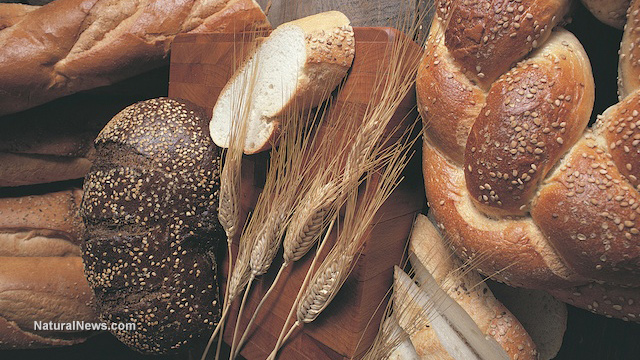
(NaturalNews) It is estimated that up to 40 percent of the United States population suffers from gluten intolerance, and that number doesn't appear to be shrinking. For this unfortunate minority, consuming foods that contain this notorious protein composite, such as wheat, rye and barley, can lead to countless health issues, ranging from bloating and fatigue to constipation and gastrointestinal distress. For the much smaller minority that suffer from the more serious autoimmune disorder, celiac disease, health issues can be much worse. (1)

However, evidence continues to suggest that gluten consumption is bad for everyone, including those of us that don't suffer from an overt sensitivity. This article contains a list of four ways in which gluten consumption negatively affects our health.


Gluten damages our intestine

According to Dr. Alessio Fasano, an expert on celiac disease and gluten intolerance, gluten contains a protein called zonulin that can diminish the seal between our intestinal cells. (2) This activity causes spaces to open between the cells, allowing bigger protein molecules to enter the bloodstream and trigger an immune response. It can also cause a leakage of intestinal contents, such as harmful bacteria, which can overwork the liver and lead to a toxicity crisis. (3) This condition, which is called leaky gut syndrome and accounts for an estimated 50 percent of all chronic complaints in the United States, has also been linked to chronic tissue inflammation, which can lead to digestive issues, fatigue, excess fluid retention and elevated cortisol levels. (4)


Prevents nutrient absorption

Gluten is rich in phytic acid, an indigestible compound that is often considered an "anti-nutrient" since it binds itself to essential minerals in our bodies, such as magnesium, iron, calcium and zinc, and renders them bio-unavailable. (5) This issue, coupled with the fact that most gluten-containing foods seldom contain that many nutrients in the first place, makes gluten one of the worst substances to consume for those suffering from existing nutrient deficiencies.


Triggers insulin resistance

Most, if not all, foods containing gluten contain high glycemic loads. In fact, the glycemic index shows that wheat bread contains a higher glycemic load than a Snickers bar! (6) Consequently, eating these foods can overload our cells with the peptide hormone insulin, which can eventually result in insulin resistance, a condition in which the body can no longer utilize the hormone effectively. Insulin resistance often precedes the development of type 2 diabetes and can make weight loss difficult, even among physically active people.


Triggers leptin resistance

A study published in BMC Endocrine Disorders in December 2005 found that cereal-based diets (which are high in gluten) can contribute towards a leptin resistance in pigs. (7) Leptin is a hormone that regulates hunger and feelings of satiety, and is directly tied to insulin levels. When our leptin levels are disrupted, our brain can become "deaf" to the hormone's signals to stop eating, and we gain weight from overeating.


Conclusion

Ultimately, there are no drawbacks to embracing a gluten-free diet. Gluten-containing foods are almost always poor sources of nutrition, and their negative affects on our blood sugar levels are undeniable. Unlike far healthier foods such as fruits, vegetables, nuts, seeds, eggs and meat, grains aren't even a food that most of us evolved to consume. So, what do we have to lose?

Sources for this article include:

(1) http://alwayswellwithin.com

(2) http://chriskresser.com

(3) http://primaldocs.com/opinion/zonulin-leaky-gut/

(4) http://www.functionalmedicineuniversity.com/public/Leaky-Gut.cfm

(5) http://info.breadbeckers.com/phytic-acid/

(6) http://www.alsearsmd.com/glycemic-index/

(7) http://www.ncbi.nlm.nih.gov/pubmed/16336696

http://science.naturalnews.com/Gluten.html

Sunday, June 29, 2014

Hang Clean For Total Body Power


Clean

Here's what you need to know...

•  The clean is the top dog in resistance programs for improving performance as it requires triple extension of the hips, knees, and ankles in a coordinated, explosive pattern – a movement that simulates the triple extension in both sprinting and jumping.
•  Hang cleans will get you absolutely jacked. They not only stimulate your forearms and traps, but nearly 200 muscles in the body so that you get a huge anabolic surge and training effect.
•  Intelligently planned cleans get you absolutely shredded. Cleans, especially when performed with a full front squat or low catch, are metabolically demanding. The explosive nature and muscle recruitment requirements will leave you absolutely floored when done with proper technique and short rest.
Without question, power cleans are a phenomenal tool in your pursuit of high performance strength and muscle. The problem is, they can be difficult to learn. Most cleans are downright atrocious. You see things like starfish legs, excessive knee valgus, and a gross lack of coordination, none of which have a place in the weight room. Hang cleans, however, are a great, doable, alternative. Here's what the most advanced version (with the added front squat) looks like:


Why the Hang Clean and Not the Power Clean?

Few lifts develop total body power and explosiveness like the hang clean. I prefer it to the power clean because of its quicker teaching time and the elimination of most mobility restrictions when pulling from the floor. Classic exercises like deadlifts are best for developing pure strength, but for explosiveness and gains in athletic performance, cleans bridge the gap between strength and speed better than any other weight room exercise.

The hang clean requires movement from the wrist, elbow, shoulder, ankle, knee, and hip joints, making it a total body exercise. This makes the clean a better bang for your buck deal than just about any other exercise. The corresponding muscles that cross each of those joints must work in cooperation to accelerate a heavy resistance, stabilize the spine, and explosively transfer power. No resistance exercise requires the biomechanical and coordinative demands of the clean. As a result, this unique exercise blends sudden strength, power, and coordination to build a high performance, show-and-go body.


For Building Athleticism

The clean requires triple extension of the hips, knees, and ankles in a coordinated, explosive pattern – a movement that simulates the triple extension in both sprinting and jumping. If you stumble on a sport that isn't improved through more powerful triple extension, coordination, and being able to absorb and transfer force, let me know. Until then, the Olympic lifts are a vital training tool for athletic performance.

When applied correctly with submaximal resistance (40-75% 1RM), hang cleans are a great tool for training speed-strength and strength-speed. Except for competitors in Olympic lifting and athletes being max tested in the clean, training with submaximal loads provides an awesome training stimulus without compromising technique. Unlike squats and deadlifts, cleans aren't an exercise you're able to "blast through" when fatigued because they have a high neurological demand. Freshness and optimal technique are imperative for maximal training effect, brute intensity, and strength.

Try this:
For maximum strength: 90-95% of 1RM for 2-3 sets x 1-2 reps and 2-5 minutes recovery.
For greater strength-speed: 70-85% of 1RM for 4-6 sets x 2-4 reps with 2-3 minutes recovery.
For greater speed-strength: 50-65% of 1RM 4-6 sets x 2-4 reps with 1-2 minutes recovery.


For Building Muscle

Hang cleans will get you absolutely jacked. They not only stimulate your forearms and traps, but nearly 200 muscles in the body so that you get a huge anabolic surge and training effect. Nearly every muscle fiber is engaged and firing to maximize explosiveness, stabilize the core for transfer of load, and to execute the clean correctly.

This ultra-efficient exercise ignites the central nervous system (CNS) to recruit more muscle fibers, challenge fast-twitch muscle fibers, and potentiate the nervous system to allow the use of greater training loads on subsequent exercises. Take a look at any experienced Olympic lifter and you find a jacked posterior chain with thick glutes, spinal erectors, yoked traps, and meat hooks for forearms. Whether you want yoked traps to fill out T-shirts or powerful hip extension for a faster pull and stronger lockout, hang cleans will develop a truly impressive physique.

Try this: 
4x6, 5x5, and 6x4 at 65-85% of 1RM with 1-2 minutes recovery are all awesome hypertrophy protocols.


For Getting Ripped

I'm not a fan of "cleaning" the snot out of people until projectile vomiting ensues and a highly technical exercise becomes a sloppy conditioning tool. There's an inverse relationship between lifting intensity (%1RM) and volume, and increasing both simultaneously is a recipe for injury and faulty movement patterns, not high performance. That said, intelligently planned cleans get you absolutely shredded. Cleans, especially when performed with a full front squat or low catch, are metabolically demanding. The explosive nature and muscle recruitment requirements will leave you absolutely floored when done with proper technique and short rest.

Try this: 
5x5 with 60% of 1RM with 60 seconds of rest or less.
5x5 cleans with 75% of 1RM with 90-120 seconds of rest.
Technique is still key, but don't be afraid to push the tempo. Cleans will leave the most seasoned lifters and athletes heaving, hawing, and pushing the red-line of metabolic demand.


Progression

When it comes to teaching the clean, there are many ways to skin the cat. This progression is meant to teach competence, not perfection and mastery. Mastery takes years of intense practice and scrutiny, a luxury most coaches, lifters, and athletes don't have. Instead, this will have you competently performing hang cleans during your next workout.

1. Romanian Deadlift, or RDL

This is the starting position when pulling from the blocks or hang position. Keep the chest tall and hold the bar at hip height against the mid-thigh. Brace the core and hinge the hips back rather than reaching for the ground. The bar should pass just below the knees while the spine stays welded before returning back to standing position with full hip extension.

2. Hackey Pull

Begin with an RDL position and the bar just below knee-level. Accelerate the bar as it passes the knees, aggressively extending the hips forward, "popping" the bar off the thighs. This movement teaches you to reach full-hip extension before breaking at the elbows during the pull. If the elbows bend, the power ends. The hips must extend first or the athletic carryover of triple extension is minimized, thereby reducing speed and power. If you jump forward or drop under the bar too early, you're likely missing hip extension.


Note: This is to teach hip extension, so be conservative with programming so that you don't get in the habit of bouncing the bar away from vertical. Eventually, the bar will be moving up a body that's "retreating" from it while maintaining a vertical path with hip extension. If "pop" is minimal, you're likely out of position, lining the shoulders up behind the bar.

3. Muscle Clean

The muscle clean is very similar to a hang clean, except the bar sits in a higher position above the knee. Hinge back slightly and use a short, explosive hip action to accelerate the bar vertically and rack it on the shoulders. The arms do a fair amount of work to "muscle" the weight to the shelf position. This is a fantastic way to bridge the gap between the hackey pull and a full hang clean.


4. Hang Clean

Once hip extension is engrained, complete the second pull and catch phases. As you finish extending the hips, knees, and ankles, shrug the shoulders, bending the elbows as the bar rises and transferring the "weightless" bar. As the body reaches full extension, aggressively pull the body underneath, rotating the elbows forward, racking the bar on the front deltoids in the shelf position. Loosen the grip and allow the wrists to turn upwards and the elbows to stay parallel with the ground.


5. Hang Clean With Front Squat (Advanced)

Hip extension is the primary component we're looking to maximize, but as you advance and full-extension becomes automatic, it's important to learn to drop the hips AFTER extension. With the bar racked in the shelf position, drop into a front squat, keeping the elbows up and arms parallel to the ground. After the catch and while maintaining the shelf position, drop into a front squat. Eventually, you'll learn to rapidly pull yourself under the bar during the catch phase, using a front squat to finish off the lift. In time this grooves a smoother transition into a low catch, effectively allowing higher workloads to be used and providing a greater training stimulus.


The High Pull (Optional)

The high pull is a great exercise for accelerating the bar AFTER hip extension is reached. (It also builds a thick yoke!) The problem is that it's difficult to reach full hip-extension during execution of the high pull. For that reason I prefer to train the high pull as a muscle-building exercise and use it sparingly with most athletes. Either way, it's best to experiment with the high-pull and see if your execution fits your goals.


Considerations and Common Issues

Specific Adaptation to Imposed Demands (SAID): Hang cleans are a very technique-intensive lift, best programmed with optimal form and specific goals in mind. Specific adaptations occur based on the imposed demands, so if you allow sub-par triple extension and faulty technique, you won't maximize the clean and gains will be minimized. Lazy form leads to injury and bad results – eliminate it.

Missing Lifts: It happens occasionally, but it shouldn't be common. Cleans are extremely technical – consistently missing lifts will lead to faulty patterns and minimized sports performance carryover. Missing lifts is the result of inappropriate load or technical error. Avoid both for best results.

Ugly Catches: We've all seen it: A good clean until the catch, and then legs split apart and stagger, there's valgus collapse on one leg, and the trainee takes a few steps to stabilize himself and get the hips underneath the bar. Leave your ego at the door. Be intelligent with your loading and ability levels. The clean is a great tool to train triple extension and the absorption of force with proper mechanics. Treat it as such and be smart.

Predator Conditioning


Predator-conditioning

Here's what you need to know...

• Perform your conditioning work like the bad-ass predator that you are. Don't run from it like prey.
• To accelerate the benefits, perform conditioning work in the post-absorptive state or after weight training.
• Adaptation is the enemy. Rotate conditioning exercises and the results will keep coming.


Cardio vs. Conditioning: There is a Difference

We could start here by listing all the studies about the drawbacks of long duration cardio and running. Then we could list all the studies that show the benefits of shorter, high intensity conditioning sessions.

There would be lots of fancy acronyms and PubMed links. You'd feel smart reading it, but most likely you wouldn't apply any of it. Plus, that would be boring. So let's make the distinction between cardio and conditioning like this:

• Conditioning prepares you for battle. Cardio makes you really good at running slowly away.

• Conditioning fires up the metabolism. Cardio extinguishing it over time.

• Conditioning makes a man look good naked. Cardio makes a man look good in lavender skinny jeans and not much else.

• Conditioning builds legs of steel. Cardio builds legs of an underfed seabird.

• Conditioning makes you lean and hard. Cardio makes you small and soft.

• Conditioning gives you an upper body made of stone. Cardio gives you an upper body made of twigs and Jell-O.

• Conditioning makes you better at any physical activity. Cardio makes you good at cardio.

• Conditioning is sex. Cardio is cuddling and a chick-flick.

• Conditioning is testosterone. Cardio is cortisol and estrogen.

• Conditioning is pecs. Cardio is man-boobs.

• Conditioning is Westside Barbell. Cardio is Planet Fitness.

• Conditioning relieves anxiety, boosts all-day energy and fires up brain function. Cardio increases anxiety and cortisol. (Runners are only happy when they run. The rest of the time they're assholes. True story.).

• Conditioning is fun. Cardio is fun when it's over.

• Conditioning is for hunters. Cardio is for Bambi's mom.

• In short, conditioning is for predators. Cardio is for prey.

That was fun. Let's move on.


Predator Conditioning

Predator conditioning, as we'll call it here because it's cool, revolves around two main principles:

Jelena Prowler


Principle #1: Avoidance of Adaptation

Strength training is all about adaptation. You lift weights and the body adapts by getting stronger, building muscle, and increasing your capacity for being awesome. You add load, adjust sets and reps, and tweak exercises to keep the body adapting because that adaptation makes you better.

But the opposite is true when it comes to energy systems work. With traditional long-duration cardio, you adapt too, and quickly. It doesn't take long before you have to run 10 miles to get the "results" that 5 miles used to get you. In short, that form of cardio makes you better at doing that form of cardio, so you have to keep doing more.

Problem is, damage incurs – physical, metabolic, and hormonal – and the "better" you get the worse you look and the weaker you become. When the unavoidable injury occurs, your cardio-adapted body stores fat like a hoarder. (More on that here.) That leads to not only stagnation but fast regression.

Predator conditioning revolves around avoiding too much adaptation, mainly by switching exercise modalities or rotating them. See, you don't want to adapt to conditioning. If you get good at it, it has essentially stopped working, leaving you doing a lot of work just to maintain previous improvements. Nothing like working hard and putting in the time just to maintain a level of stagnation, right? And just adding more of the same type of conditioning leads to all the "cardio" problems mentioned above.

The good news here is that people have an innate desire for variety. Conditioning is your chance to scratch the variety itch while keeping your weight training well-planned and progressive, as it should be.

Principle #2: Selective Workout Timing

Let's preface this by saying that whatever time you have to get your conditioning in is a good time. A tough session at the "wrong" time is far better than skipping the workout entirely. But there are two times where conditioning works even better.


The Post-Absorptive State

Girls RopesThe post-absorptive state is that time between being fasted and being recently fed. You're no longer fasted, but you're finished up with most of the digesting and the nutrients are available in the bloodstream.

"This is where fat oxidation and caloric expenditure are at their greatest," Christian Thibaudeau says. "Unlike fasted cardio, the post-absorptive period isn't catabolic to muscle mass."

Since many athletes and lifters like to do their conditioning work in the morning in a separate training session, what's the best way to take advantage of the post-absorptive state without having to get up at 3AM to eat breakfast?

Easy. Consume the right amount of di- and tripeptides, which are transported directly into the bloodstream without the need to be further broken down. Couple that with a small amount of a special carbohydrate mixture that increases metabolic rate and drives supraphysiologic levels of these di- and tripeptides into the muscle cell.

"That's where MAG-10® shines," Thibaudeau says. "It's readily absorbed. You can drink it and go do your conditioning work soon after."

In other words, the post-absorptive state induces faster fat loss than a fasted workout, with none of the catabolic drawbacks.

"I find that MAG-10® pre-conditioning boosts metabolic rate and helps me get leaner even faster. Two scoops roughly 20 minutes prior to your workout is all you need," Thibaudeau adds.

This is easily applicable in real life. Wake up, drink a serving of Mag-10®, and do your conditioning.


Post Weight Training

Not a morning person? Then simply do your conditioning work directly after your lifting session, choosing wisely among the choices we'll get to below. In short, body fat stores are more easily tapped for energy after you've already had a full weight training workout. It doesn't take much to target excess fat when you've already been going hard for an hour or so.


Predator Conditioning Guidelines

Don't expect any Draconian tempo and duration rules here. You know the difference between sucking wind and, well, just sucking. Conditioning is about short, hard intervals. Kick ass, rest a little, kick some additional ass, repeat. Like this:

1. Choose a conditioning exercise. Go hard for 15 to 30 seconds, roughly.

2. Catch your breath. Don't "rest", just wait for the black spots to fade from your vision.

3. Repeat.

4. Stop after 10 to 20 minutes.

As a general rule, 10-minute sessions are perfect for post-weight training. Longer sessions, up to about 20 minutes, are best for separate conditioning sessions in the post-absorptive state.


Exercise Selection and Rotation

Girls Rope and ProwlerRemember, don't get too "good" at one form. Avoid adaptation. The more you suck at one form of conditioning the higher the impact it will have. Conditioning isn't a competition (CrossFit aside), it's a tool for getting a job done. Focus on the goal you're after, not the tool used to get there.

Conditioning is all about variety, so it's fun and never boring. The list of exercises is endless, but here are some good ones:

Battle Ropes: This is like sprinting for your upper body. Use a variety of undulation techniques. If you can go much over 30 seconds every round, then you're either a world class athlete, you're using dental floss, or you're phoning it in. Go hard. Make noise. Leave some blood on the ropes.

Sprints: Flats, hills, glaciers, with Jim Wendler on your back, etc.

Heavy Bag Work: Beat it like it's wearing an Affliction T-shirt.

Loaded Carries.

Fast Jump Rope: Double-unders if you have the coordination.

Medicine Ball Work: One of the best exercises here is to take a 100 to 150 pound med ball or Atlas stone, pick it up and toss it over one shoulder. Then turn around and repeat. Sadly, 100+ pound med balls are hard to find in most gyms, but they're out there.

Prowler or Sled Work: push it, drag it, or throw it.

The rule here is that if you can do it while checking your iPhone, watching TV, or carrying on a conversation then it isn't predator conditioning. If it would get you kicked out of Planet Fitness, it's predator conditioning.

The goal is not to throw up, but you're on the right track if you get close to it. Train to the limit of your capacity. When you think you can't go a second longer, add five seconds (because you can, sissy), then take a quick breather. Then do it again. This will feel like the longest 10 to 20 minutes of your life, not counting that vasectomy.

Bonus Tip: To really accelerate the effect and perhaps even target abdominal fat loss, do ab work during "rest" periods.
If your knees are already buckling after leg day, don't go run hill sprints. Instead choose an upper-body based conditioning exercise. Reverse that for upper body days. Do what you want if this is a separate training session.

If you're doing conditioning work three times per week, choose a different exercise modality each session. Or, do the same exercise for a week, then switch to something new on week two. Remember, keep sucking and it'll keep working.


Kill It

We could've talked about HIIT, the glycolysis system, EPOC, fartlek, or Tabata, but predators don't sweat the details, at least not when they're hungry and see a doe in front of their conveniently forward-facing eyes.

No, let's keep it simple. Attack your conditioning like a predator. Don't run from it like prey. Hunt it down, kill it, and eat it.