Tout dans la vie est une question d'équilibre d'où la nécessité de garder un esprit sain dans un corps sain.

Discipline-Volonté-Persévérance

Everything in life is a matter of balance therefore one needs to keep a healthy mind in a healthy body.

Discipline-Will-Perseverance.

E. do REGO

Wednesday, August 20, 2014

Five amazing health benefits of ginger


by Dr.Sofiya 

(NaturalNews) Ginger is an herb that is often used to season foods. It is popularly used in Asian cooking, as well as in stir fries. The root of the ginger plant is firm, pungent and spicy. The color of ginger root can vary from yellow or white to red. The time it is harvested determines whether it has a thick or thin skin.

In addition to being prized for the unique and desirable flavor it adds to foods, ginger has been used for thousands of years as a health remedy for various aliments. For more than 2,000 years, the Chinese have been using this popular root plant as a cure for upset stomach and nausea as well as to aid in digestion and diarrhea. Here are five amazing ways that ginger can help improve a person's health.


1. Combat complications from diabetes

Ginger might help protect the nerves of a person who suffers from diabetes as well as lower their fat levels. Another important way ginger could help diabetics is by significantly reducing the levels of serum glucose, as well as proteinuria, thirst and enuresis. This was the result according to researchers who tested rats that were chemically induced with diabetes. The rats that showed these improvements were given 500 mg of raw ginger. In addition, Laurie Steelsmith, a licensed doctor of naturopathy, notes that ginger can help thin the blood, lower blood pressure, increase circulation and lower cholesterol.


2. Ease pain and inflammation

Ginger has been shown to ease muscle pain, as well as back pain. In addition, it has been shown to reduce inflammation. Women have been able to find relief from menstrual pain. Relief from the pain of migraines has also been experienced.


3. Helps relieve nausea and motion sickness

Using ginger to help relieve the symptoms of nausea has been popular for thousands of years. These properties in ginger are the reason why modern-day people drink ginger ale when they are feeling nauseous. Ginger also helps relieve both sea sickness and motion sickness. A study in which pregnant women were given either a ginger drink or a placebo found that many of those women who were given the ginger drink experienced relief from their symptoms.


4. Relieves cold and flu symptoms

Many people who practice Chinese medicine prescribe ginger to their patients who suffer from colds or the flu. It acts as a antihistamine as well as a decongestant.


5. Helps relieve arthritis symptoms

The results of a study published in Osteoarthritis and Cartilage showed that patients who suffer with painful arthritis in their knees had much less pain and loss of movement when they took ginger than those patients who were given a placebo.

In addition to being added to foods, ginger tea or ginger capsules can be consumed to take advantage of the benefits of this plant.

Sources:

http://www.whfoods.com

http://www.lifehack.org

http://www.mnn.com

www.inkling.com

http://science.naturalnews.com

Tuesday, August 19, 2014

5 proven ways to prevent and treat arthritis


by Derek Henry 

(NaturalNews) Millions of people suffer from some form of arthritis. Since arthritis is commonly believed to be incurable, the standard medical response has been to simply prescribe medications to reduce the symptoms. This does nothing to heal the actual root of the issue, and only covers up the problem while potentially making other bodily functions worse.

However, the good news is that substantial evidence now shows that the pain and disability caused by arthritis can be alleviated, and even prevented through diet and alternative therapies.


Diet and nutrition

Dietary practices have a major impact on arthritis. In fact, if you eat the typical American diet, it is likely making your arthritis worse. Among the worst offenders for creating arthritic symptoms include:

- Hydrogenated and trans fats
- White flour and sugar
- Gluten
- Chemical additives
- Yeast
- Milk and dairy products
- Caffeine
- Alcohol
- Tobacco
- Phosphoric acid (large amounts found in soda)

A diet rich in fresh and organic fruits, vegetables, nuts and whole grains (gluten-free) is recommended, as they are richer in nutrients needed to fight destructive free radicals, promote skin and tissue health, repair bones, muscles and tendons, and promote bowel regularity. Try alkaline foods like green leafy vegetables, wheatgrass, aloe vera and cherry juice.


Herbal medicine

In addition to the foundational approach of diet and nutrition, herbs can also play a significant part in reducing inflammation often associated with arthritis. Some of the most recommended herbs for arthritis include:

- Turmeric
- Yucca
- Devil's claw
- Willow bark
- Green tea
- Boswellia
- Ginger
- Ginseng
- Reishi
- Skullcap
- Valerian
- Feverfew
- Stinging nettle

High-quality sources of these herbs taken on a daily basis with a proper diet can provide significant relief of arthritic symptoms.


Massage

Massage is one of the most important therapies for the treatment of arthritis. People with arthritis often experience prolonged muscle tension with poor blood circulation in muscle tissues, which can cause nerve and joint pain.

Massage helps break up muscular waste deposits that can cause pain as well as stimulate circulation in troubled regions in the body, which helps bring more oxygen and other necessary healing nutrients into the tissues and carry toxins away.

Arthritis sufferers should pursue a massage program of 2-3 times a week in the early stages, then once a week for several months, with a maintenance schedule of twice a month.


Chiropractic

Chiropractic is becoming a popular, drug free treatment for arthritis that has been proven to be highly effective. Certain cases of arthritis, particularly osteoarthritis, are often false diagnoses with the symptoms actually caused by misalignment, or subluxation, of vertebrae and joints.

When this is the case, chiropractic adjustments can restore a full range of movement and free the body from pain. Manipulation can help arthritis by restoring proper movement and positioning of the joints. Balanced movement prevents "wear and tear" damage to joints, ligaments, and cartilage.


Acupuncture

According to Dr. William M. Cargile, past Chairman of Research of the American Association of Oriental Medicine, rheumatoid arthritis is a result of an autoimmune problem that prevents white blood cells from recognizing the joint surface as part of itself. He goes on to say that it reduces the aggressiveness of the body against its own tissues and enhances its recognition of the joint tissue. Also, by keeping the all the meridians balanced it keeps energy flowing smoothly and immunity strong, which is a major factor in managing rheumatoid arthritis effectively.

Other natural remedies to prevent and treat arthritis include bromelain, MSM, glucosamine, chondroitin, collagen, colloidal silver, arnica, pure water, and astaxanthin.

Learn more about treating arthritis from the first two sources below.

Sources for this article include:

http://www.healingthebody.ca

http://www.organiclifestylemagazine.com

Trivieri, Larry. Alternative Medicine: The Definitive Guide. Ed. John W. Anderson. 2nd ed. Berkeley, CA: Celestial Arts, 2002.

http://www.naturalnews.com

http://www.naturalnews.com

Monday, August 11, 2014

Sprinting not required for health benefits


by J. Anderson 

(NaturalNews) It is well known that exercise is beneficial in helping to prevent heart disease and improve our overall quality of life. What is not completely understood is whether we can still witness health benefits later in life by running shorter durations or distances, or at a reduced intensity.

It is a commonly held belief that individuals need to exercise for at least 75 minutes a week (World Health Organization recommendation) at a vigorous intensity in order to be heart-healthy. So does this mean that exercising for only 60 minutes a week will not result in any benefits? Recent research has shed more light on this topic. It indicated that individuals who ran for short periods of time or only a couple of times a week or even at a slow speed (less than 6 mph) had a significantly lower risk of cardiovascular disease than non-runners. A little can go a long way.


The Study

The research, which was published in the Journal of the American College of Cardiology, studied over 55,000 individuals between the ages of 18 and 100 years old for 15 years. Only 24% of the individuals during that time period said that they ran as a leisure activity. People who ran had a 45% lower risk of stroke and heart disease and a 30% lower risk of death from all causes, and lived three years longer on average than individuals who didn't run.

Here's where the time component comes in. The research team found that runners who ran less than one hour a week received the same mortality-associated benefits as those who ran over three hours a week. Lastly, it was found that the cohort that received the greatest health benefits (50% lower risk of stroke or heart disease) ran consistently over at least a six-year period. It seems that, as long as you are persistently running, whether it's for one hour a week or three, you will still receive amazing health benefits.


The Benefits of Short-Duration Exercise

The team concluded that this research will hopefully help many sedentary people get up and active even if it is for a short period of time. The ability to receive health benefits in such a short time period needs to be stressed to everyone, as lead author Dr. Duck-chul Lee said, "Running may be a better exercise option than more moderate intensity exercises for healthy but sedentary people since it produces similar, if not greater, mortality benefits in five to 10 minutes compared to the 15 to 20 minutes per day of moderate intensity activity that many find too time consuming."

This is not the first study to stress that a little activity can go a long way. A study last year by a team from the Norwegian University of Science and Technology found that just exercising four minutes, three days a week was enough to decrease blood pressure and raise oxygen intake levels.

While only 12 minutes a week isn't cause for people to exercise less and less, it does point to the fact that a little exercise can go a long way. For the sedentary individual, getting active even for short duration throughout the day can help substantially (until you build-up your exercise capacity to move on to more rigorous activities). In fact, to maximize some of the benefits associated with exercise, many fitness professionals (with research to back it) are now recommending short bursts of exercise with short rests instead of long-duration running.


Conclusion

It seems that there are substantial health benefits associated with both short- and long-duration running throughout the week. So many health benefits, in fact, that the research team even indicated that the promotion of running should be as important as preventing obesity or even smoking. The main point is to stay active throughout the week and do it persistently. You now have the motivation to help you be active even for short durations; do it persistently and you will still reap huge health rewards!

Sources for this article include:

http://www.sciencedaily.com

http://www.naturalnews.com

http://www.naturalnews.com

http://science.naturalnews.com

Saturday, August 9, 2014

Which Common Fruit Fights Cancer Better?


December 10, 2013 by Michael Greger M.D. in News with 12 Comments
Which Common Fruit Fights Cancer Better?
Recently, researchers compared the ability of eleven common fruits to suppress cancer cell growth in vitro. Which do you think was most effective—apples, bananas, cranberries, grapefruits, grapes, lemons, oranges, peaches, pears, pineapples, or strawberries?
There are many ways to compare the healthfulness of different foods. For example, if you were interested in antioxidants you might compare vitamin C content. If you compared vitamin C content between our two most popular fruits, apples and bananas, then bananas would appear twice as healthy (10 mg in a banana compared to only 5mg in an apple). But vitamin C is just one of thousands of different phytonutrients in fruits and vegetables. It turns out the vitamin C in apples accounts for less than 1 percent of an apple’s total antioxidant activity.
In my 5-min video Which Fruit Fights Cancer Better? I show a graph of the total antioxidant content of a red delicious apple. The amount contributed to the vitamin C is so tiny you can hardly see it. Even though there are only about 5mg of vitamin C in a small apple, it has the antioxidant equivalent of 1500 mg of vitamin C! I’ve reviewed before how taking that much vitamin C straight in a supplement may actually have apro-oxidant effect and cause DNA damage (in my video Preventing Exercise-Induced Oxidative Stress With Watercress), but you can get three times that antioxidant power eating an apple, without the adverse effects.
Of course there’s more than just vitamin C in bananas too. I was surprised to see astudy out of Harvard suggesting that bananas were a significant source of anthocyanins, the red/blue/violet phytonutrients found in berries. Maybe I underestimated bananas? They are, after all, technically berries.
Anthocyanins have been found in blue, purple, orange-red, red-purple, and pink-purple wild bananas, but none in domesticated yellow. In the Harvard researchers’ defense, they just took values from the USDA, and it turns out USDA apparently made a mistake. There are no anthocyanins in store-bought bananas, and despite twice the vitamin C, bananas are beat out by apples in terms of overall antioxidant power. But that’s just measuring the ability of these fruits to quench an oxidation reaction in a test tube. It would be nice to measure actual biological activity.
In the red delicious apple study, researchers also measured the ability of apple extracts, from both peeled and unpeeled apples, to suppress the growth of human cancer cells growing in a petri dish compared to control. Wouldn’t it be great to be able to compare that kind of superpower between different fruits? Well, now we can!
In my video Which Fruit Fights Cancer Better? I show a graph of cancer cell proliferation versus increasing concentrations of the 11 most common fruits eaten in the United States. If you drip water on these cancer cells as a control, nothing happens. They start out powering away at 100 percent growth and they keep powering away at 100 percent growth. And pineapples, pears, and oranges don’t do much better.
Peaches start pulling away from the pack. At high peach concentrations, cancer cell proliferation drops about 10 percent, but bananas and grapefruits appear to work four times better, dropping cancer growth rates by about 40 percent. Red grapes, strawberries and apples do even better, cutting cancer cell growth up to half at only half the dose, but the two fruits that won, causing a dramatic drop in cancer proliferation at just tiny doses, were lemons and cranberries. So if you look at the effective dose required to suppress liver cancer cell proliferation, apples are more powerful than bananas, but cranberries win the day. And there was no effective dose listed for orange, pear, and pineapple since they didn’t appear to affect the cancer cell growth at all.
This study reminded me of my #1 Anticancer Vegetable video (along with its “prequel,” Veggies vs. Cancer).
Other videos in which I rank various foods include:
How can you consume cranberries palatably, though? Check out my recipe for Pink Juice with Green Foam and my video Cranberries versus Cancer.
-Michael Greger, M.D.
PS: If you haven’t yet, you can subscribe to my free videos here and watch my live year-in-review presentations Uprooting the Leading Causes of Death and More Than an Apple a Day.
Image credit: kanenas.net / Flickr
Dr. Michael Greger

About Michael Greger M.D.

Michael Greger, M.D., is a physician, author, and internationally recognized professional speaker on a number of important public health issues. Dr. Greger has lectured at the Conference on World Affairs, the National Institutes of Health, and the International Bird Flu Summit, testified before Congress, appeared on The Dr. Oz Show and The Colbert Report, and was invited as an expert witness in defense of Oprah Winfrey at the infamous "meat defamation" trial. Currently Dr. Greger proudly serves as the Director of Public Health and Animal Agriculture at the Humane Society of the United States.

8 aliments pour se nettoyer le foie de façon naturelle

Le foie est le premier organe impliqué dans l’élimination des toxines de votre corps. Il purifie et nettoie votre corps en filtrant les éléments toxiques de votre sang, et aide à digérer la nourriture.

8 aliments pour se nettoyer le foie de façon naturelle
Un foie en bonne santé a pour fonction organique de brûler les graisses ; il prélève les nutriments de la nourriture et les transforme en composants essentiels de votre sang en captant les vitamines et minéraux et en produisant des protéines et des enzymes, ce qui participe à l’équilibre hormonal. Notre foie aide également notre système immunitaire à combattre les infections, il élimine les bactéries de notre sang et produit de la bile, nécessaire pour la digestion de la nourriture.
Lorsque notre foie est mis à mal par le stress ou par une exposition trop importantes à des toxines, tout notre système interne peut être affecté, ce qui peut causer de graves problèmes de santé.N’oublions pas qu’il produit de la bile, qui aide à la purification, et qu’elle est nécessaire à l’élimination et à l’assimilation des graisses et des protéines de notre nourriture.
C’est pourquoi il est essentiel que notre foie bénéficie d’une attention particulière, car un foie en mauvais état est incapable de traiter de manière efficace les nutriments de votre nourriture, ou de purifier le sang qui circule dans votre corps. Le docteur Karl Maret écrit, au sujet de l’importance d’un bon fonctionnement hépatique : « Les milliers de systèmes d’enzymes qui sont responsables de presque toutes les activités du corps sont générés dans le foie. Le bon fonctionnement de la vue, du cœur, du cerveau, des organes reproducteurs, des articulations et des reins dépend entièrement d’une bonne activité hépatique. Si le foie n’est pas en mesure de produire ne serait-ce qu’un seul des milliers de systèmes d’enzymes dont le corps a besoin, le corps tout entier est dérangé, ce qui provoque un stress métabolique important ».

Voici donc 8 aliments importants qu’il faut envisager d’intégrer à un régime quotidien afin de garder un foie en bonne santé.

avocat

L’avocat

Inclure davantage d’avocats dans votre régime peut aider votre corps à produire un type d’antioxydant appelé « glutathion », dont notre foie a besoin pour filtrer les composants toxiques, et ainsi améliorer son pouvoir purifiant. Des recherches ont montré que manger un ou deux avocats par semaine durant ne serait-ce qu’un mois peut réparer un foie endommagé.
garlic

L’ail

Il contient de nombreux composés organo-sulfurés, dont l’allicine et le sélénium, deux puissants nutriments dont il a été démontré qu’ils aident à protéger le foie des dégâts liés aux toxines, et à activer les enzymes hépatiques responsables de l’extraction des toxines de notre corps.
pamplemousse2

Le pamplemousse

C’est un fruit naturellement riche en vitamine C et en antioxydants, deux puissants agents de purification hépatique. Tout comme l’ail, le pamplemousse contient des composés qui améliorent la production d’enzymes hépatiques ayant un rôle détoxifiant. Il contient également un composé flavonoïde, la naringénine, qui aide le foie à brûler les graisses plutôt qu’à les stocker. Manger du pamplemousse ou boire son jus peut aider votre foie à évacuer les toxines et les substances cancérigènes.
thé vert

Le thé vert

Rempli d’antioxydants connus sous le nom de catéchines, dont il a été prouvé qu’elles améliorent les fonctions hépatiques. Des études ont également démontré qu’elles aident l’élimination graisseuse du foie et favorisent une bonne fonction hépatique. Cette excellente boisson à base d’herbes protège également le foie contre les toxines susceptibles de l’endommager sérieusement.
noix

Les noix

Riches en L-arginine (un acide aminé), en glutathion et en acides gras oméga 3, qui contribuent au processus de purification du foie et aident à détoxifier le foie de l’ammoniac, qui cause des maladies. Les noix facilitent également l’oxygénation du sang, et les extraits de leurs coques sont souvent utilisées dans la production de formules de purification du foie.
epinard roquette

Les légumes-feuilles

Comme par exemple les épinards, la margose, la roquette, les feuilles de pissenlits, la chicorée et la laitue. Ces légumes-feuilles sont en mesure de neutraliser les métaux lourds, les produits chimiques et les pesticides présents dans vos aliments, et d’agir comme mécanisme protecteur du foie, en favorisant la production et le flux de bile purificatrice.
chou-fleurs

Les légumes crucifères

Les légumes tels que le brocoli, les choux-fleurs ou les choux de Bruxelles aident également à augmenter la présence de glucosinolates (composés organiques) dans notre corps, ce qui facilite la production d’enzymes digestives.
curcuma

Le curcuma

C’est l’un des aliments les plus efficaces pour maintenir le foie en bonne santé. Il a été démontré qu’il protège activement le foie contre les dégâts toxiques, et régénère même des cellules hépatiques endommagées. Le curcuma améliore également la production naturelle de bile, réduit l’engorgement des conduits hépatiques et améliore la fonction globale de la vésicule biliaire, autre organe purificateur du corps. Il s’agit d’une forme naturelle de détoxifiant pour le foie.

Sunday, August 3, 2014

The five keys to a great daily detoxification process


by Dr. David Jockers 

(NaturalNews) The modern world is full of environmental toxins. It is estimated that there are over 80,000 toxic chemicals used regularly in the US. There are over 500 chemicals stored in our body, and tests show that the average individual has at least seven pesticides in their urine. It is imperative to have a daily detoxification lifestyle to get these unwanted toxins out of our system.

A great detoxification program must focus on five major areas: the cells, blood, gut, liver and kidneys. There are many ways and many products that help the detoxification systems. However, very few are targeted to address all five of the major areas with the essential nutrients they need to properly deactivate and eliminate toxins.


Cellular detoxification:

If the cells of the body are not properly detoxifying, they end up accumulating toxins that damage DNA and intracellular organelles such as the mitochondria. This process creates abnormal cells and can lead to chronic diseases such as cancer and autoimmunity.

The major antioxidants that protect the cellular components from toxins and free radical stress include glutathione, superoxide dismutase and catalase. These antioxidants protect the DNA and mitochondria from oxidative stress. Every chronic degenerative disease is associated with lowered levels of these three intracellular antioxidants.


Blood purification:

Impurities that are able to flow through the bloodstream can interact with various cells, tissues and organs, including the brain, and cause major destruction. When the blood has high levels of unchecked toxins for an extended period of time, it leads to cardiovascular and neurological challenges.

Blood purification comes from chlorophyll-rich foods such as wheat grass, oat grass, chlorella and spirulina, along with regular consumption of dark, green leafy veggies.


Liver detoxification:

This is the primary organ that neutralizes and transforms toxins into a form that allows them to be successfully carried out of the body. When the body's toxic burden gets too heavy, the liver can become overwhelmed and unable to neutralize hazardous debris in the blood stream.

The liver has three detoxification steps to neutralize and eliminate toxins. Key nutrients include cysteine, glycine, glutamine, sulfur compounds and glutathione. Herbal components that enhance liver detoxification include ginger and milk thistle. These all benefit phases I and II liver detoxification.

Phase III liver detoxification includes gallbladder support for healthy bile flow, which is key for toxin removal. Key herbs to support this process include ginger, peppermint, fenugreek and fennel.


Gut movement:

Regular healthy bowel movements are absolutely essential for removing toxins from the body. We should be eliminating all toxic waste from the meals that we consume, along with the waste from the microorganisms in our gut, every 24-hour period.

This means that, if you consume a meal at 12 pm on Monday, you should have eliminated all the waste from it by 12pm on Tuesday at the latest. If this does not happen, the waste creates a breeding ground for hazardous microorganisms and parasites.

This leads to a putrification process and exponentially larger release of endotoxins throughout the bloodstream. This can then overwhelm the liver and create a vicious cycle of toxicity that affects everything in the body.


Kidney Cleansing:

The kidneys are an essential detoxification organ that pulls urea out of the body. Poorly functioning kidneys lead to elevated toxicity, particularly ammonia, which is extremely toxic to the brain. Poorkidney elimination is also related to blood pressure and cardiovascular disease.

Certain herbs enhance kidney function and improve the all-critical kidney filtration process. The kidney also depends upon a high level of glutathione production to perform all its functions. Kidney-strengthening herbs include milk thistle, ginger, peppermint, fenugreek and fennel.

Sources for this article include:

https://www.drjockers.com

https://www.drjockers.com

http://www.naturalhealth365.com

http://science.naturalnews.com

Tuesday, July 29, 2014

Suggested foods for diabetics: Top 10 list


by Aurora Geib 

(NaturalNews) If you've been diagnosed with type 2 diabetes, your doctor has probably already advised you to limit simple sugars in your diet, avoid highly processed carbs and perhaps even increase your intake of whole grains, leafy greens and vegetables. These are your first steps toward better health. But, what if there were foods that had very targeted effects on blood sugar and type 2 diabetes? Here are 10 foods that lower blood sugar, support pancreatic health and may lessen your need for insulin.

  1. Blueberries - Blueberries are not only yummy; they are packed with flavonoids and antioxidants. Their high fiber content and high levels of vitamin C and E make them the ideal blood-sugar-stabilizing food. You can enjoy blueberries fresh or frozen year round. Use them in fruit smoothies, on top of whole-grain cereal or even just plain. Blueberries are naturally sweet and need no condiments of any kind. You can even enjoy their benefits cooked in whole-grain pancakes or muffins. A study published in the International Journal of Food Sciences and Nutrition, "Cooking Does Not Decrease the Hydrophilic Antioxidant Capacity of Wild Blueberries," showed that, whether blueberries where baked, steamed or even microwaved, their antioxidant activity was not reduced.
  2. Garbanzo beans - Sometimes called chick peas, garbanzo beans are high in fiber and low in fat. Garbanzo beans are also high in protein and can replace animal proteins in your diet -- such as red meat, milk and cheese -- which are high in saturated fat. You can cook garbanzo beans at home or use them canned; just be sure to choose the low-salt variety. Garbanzo beans are great when chilled and added to a green salad. They can also be used in soups, as a meat substitute in spaghetti and chili, or pureed and mixed with olive oil to make hummus.
  3. Apples - Apples are high in fiber, antioxidants and vitamin C. Apples are easy to add to your diet. They can be served up as apple sauce or sliced into a Cobb salad. Apples are easy to add to a brown-bag lunch, as well. Just wash one and drop it in. If you don't like the mild flavor of Red Delicious apples, try some of the newer varieties. Fuji and Gala apples have a wonderful, tangy, straight-from-the-tree flavor.
  4. Broccoli - Broccoli is high in fiber and a good natural source of chromium. Both fiber and chromium have been proven to be beneficial in treating diabetes. Broccoli can be lightly steamed and served with a touch of olive oil and sea salt. It can also be added to salads and sandwiches.
  5. Avocados - Most of us know that avocados are rich in heart-healthy monounsaturated fats which can lower cholesterol levels and decrease the risk of stroke and heart disease. A 2008 study published by the American Journal of Clinical Nutrition (2) has also shown that unsaturated vegetable fats can significantly reduce the risk of developing type 2 diabetes. You can add avocados to your diet as guacamole, diced in a salad or sliced onto a sandwich. Buy avocados that are firm and dark green, then let them ripen until they turn nearly black and develop their signature rich, nutty flavor.
  6. Asparagus - One serving of asparagus has only 5 grams of carbohydrates and a mere 20 calories yet is high in fiber, antioxidants and folate. It also has glutathione, which has been shown to lower blood sugar and increase insulin production.
  7. Almonds - Almonds are packed with protein, fiber and polyunsaturated fats. All of these are the ideal components of a healthy diet. Almonds have been shown to stabilize blood sugar levels in people with diabetes. The good fats in theses nuts slow digestion, stave off hunger and delay pancreatic fatigue. You can enjoy roasted almonds as a snack. They can also be added to salads and are good when thinly sliced and sprinkled over many Asian dishes.
  8. Kale - Kale, according to The World's Healthiest Foods (3), is rich in fiber and in vitamins E, C and A, all of which have been shown to help stabilize blood glucose levels. While some people enjoy kale raw in salads, for the biggest nutritional punch and ideal flavor, steam it lightly for five minutes and then let it rest five minutes before serving. Don't add butter or salt, or you're negating many of kale's health benefits.
  9. Cranberries - Many people think of these as a seasonal dish, but cranberries should be part of your year-round diet. They are high in phytonutrients such as anthocyanin which can help lower blood glucose levels.
  10. Oats - Oats are high in soluble fiber. A diet high in fiber can, according to a document published by the Harvard School of Medicine (4), prevent constipation, lower cholesterol and control blood sugar levels. Because the fiber in foods is digested differently than other carbohydrates, it does not require insulin and passes through the digestive track intact. This has the benefit of helping you feel full without altering your blood sugar levels.
Source:

1) http://science.naturalnews.com

2) http://ajcn.nutrition.org

3) http://www.whfoods.com

4) http://huhs.harvard.edu

http://science.naturalnews.com


Monday, July 28, 2014

The Agricultural Holocaust explained: the 10 worst ways GMOs threaten humanity and our natural world


by Mike Adams, the Health Ranger, NaturalNews Editor 

(NaturalNews) Why are genetically modified organisms (GMOs) a serious threat to humanity and the environment? The reasons span the realms of science, social justice, economics and the environment, and once you understand this, you'll readily understand why so many environmentalists, humanitarians, responsible scientists and social justice advocates are strongly opposed to GMOs.

Here are the top 10 ways GMOs threaten us all:

#1) Every grain of GM corn contains poison

GM corn is genetically engineered to develop a deadly pesticide in every grain of corn. When this corn is harvested and turned into Corn Flakes, corn tortillas, corn syrup or other corn-based foods, that same poison remains in the corn.

What is the effect of human children eating all the poisons grown in GM corn? Nobody knows for sure because the tests haven't been conducted on human consumption. That's why GMOs remain an untested experiment that exploits humans as guinea pigs.

See www.GMOevidence.com to learn more.

#2) GMOs have never been safety tested for human consumption

Although GMO advocates ridiculously claim GMOs have been "proven safe in thousands of studies," what they don't tell you is that those were all short-term studies on animals, not humans.

In fact, GMOs have never been shown to be safe for long-term human consumption. What happens when a child eats GMOs for two decades? Does it substantially increase their risk of cancer, diabetes, kidney failure or future Alzheimer's? Nobody knows, exactly, because the tests haven't been done.

As often happens with other chemicals, GMOs are simply let loose into the world with an attitude of "let's see what happens!"

See: www.GMOseralini.org to learn more.

#3) GMOs transform farming freedom into farming servitude

Because GMOs are sold with an intellectual property restriction that prevents farmers from saving their own seeds, they invoke "economic servitude" where farmers are forced to buy expensive new seeds each year from the GMO seed supplier.

As a result, farming practices (like seed saving) that have sustained humanity since the dawn of civilization are now being criminalized. And when GM crops fail, as they frequently do, the economic burden placed upon farmers is often too much to bear. That's why farmer suicides have skyrocketed in India among farmers who bought GMO seeds.

Reportedly, over 270,000 suicides have already happened in India due to crop failures, and more happen every day.

Learn more from the GMO Myths and Truths report.

#4) GMOs run the very real risk of runaway self-replicating genetic pollution and ecocide

Unlike isolated chemicals, GMOs self-replicate. This means there is an automatic risk of a runaway ecological holocaust caused by genetic pollution from GMOs.

Once scientist calls this risk "ecocide" and has calculated the risk of ecocide caused by GMOs will approach 100%. As I wrote in this March 2014 article:

As Taleb convincingly argues, genetically engineered crops are specifically designed to have a survival advantage over conventional crops, allowing them to better resist droughts or infestations of pests or weeds. This survival advantage -- if it's as real as seed manipulators claim -- means genetically engineered plants can out-compete non-GMO crops in open fields. The genetic pollution which is already underway across North America will only get worse, therefore, and there's no reversing it because all living systems -- even genetically engineered ones -- have a natural drive to spread, multiply and survive.

The result is that GMO crops will out-compete and thereby displace non-GMO crops over time. Why does this matter? Because the rise of GMOs is nearly synonymous with the collapse of genetic diversity in seeds and food crops.


#5) GMO agriculture is breeding a new generation of chemical-resistant superweeds

The rise of chemical-resistant superweeds is a horrible problem for modern farmers. In the same way that deadly superbugs have arisen from the abuse of antibiotics in hospitals, "Frankenweeds" have arisen from the continued growing of GMOs and the routine application of glyphosate to crop fields.

Glyphosate-resistant superweeds have become such a problem that the very industry which once claimed GMOs would require "fewer chemicals" to grow food is now recommending fields be treated with a triple or quadruple layer of multiple chemicals to attack the superweeds with different chemicals.

That's why agriculture experts are right now sounding the alarm over glyphosate, GMOs and superweeds, calling for an end to the unsustainable GMO farming practices that seriously threaten the sustainability of agriculture.

See www.naturalnews.com/superweeds.html

#6) GMOs may have long-term unintended consequences on the environment

What happens when genetically engineered plants cross-pollinate with non-GMO plants and are then subjected to the random mutations of plant evolution?

No one knows because it's never been tested in the open world. Or, I should say, it's being tested right now on us all, in the world's largest genetic experiment ever conducted (without our consent, no less).

The problem in all this is that Mother Nature has a way of bringing about unintended consequences, even from well-meaning scientists. Is it possible that an artificial, genetically engineered trait could dominate future plant generations but begin to show a completely unintended physiological trait that scientists never intended? You bet it is. From Thalidomide to Fukushima, the world is full of examples of catastrophic consequences that scientists once swore could never happen.

Famous last words: "What could possibly go wrong?"

#7) GMOs collapse biodiversity

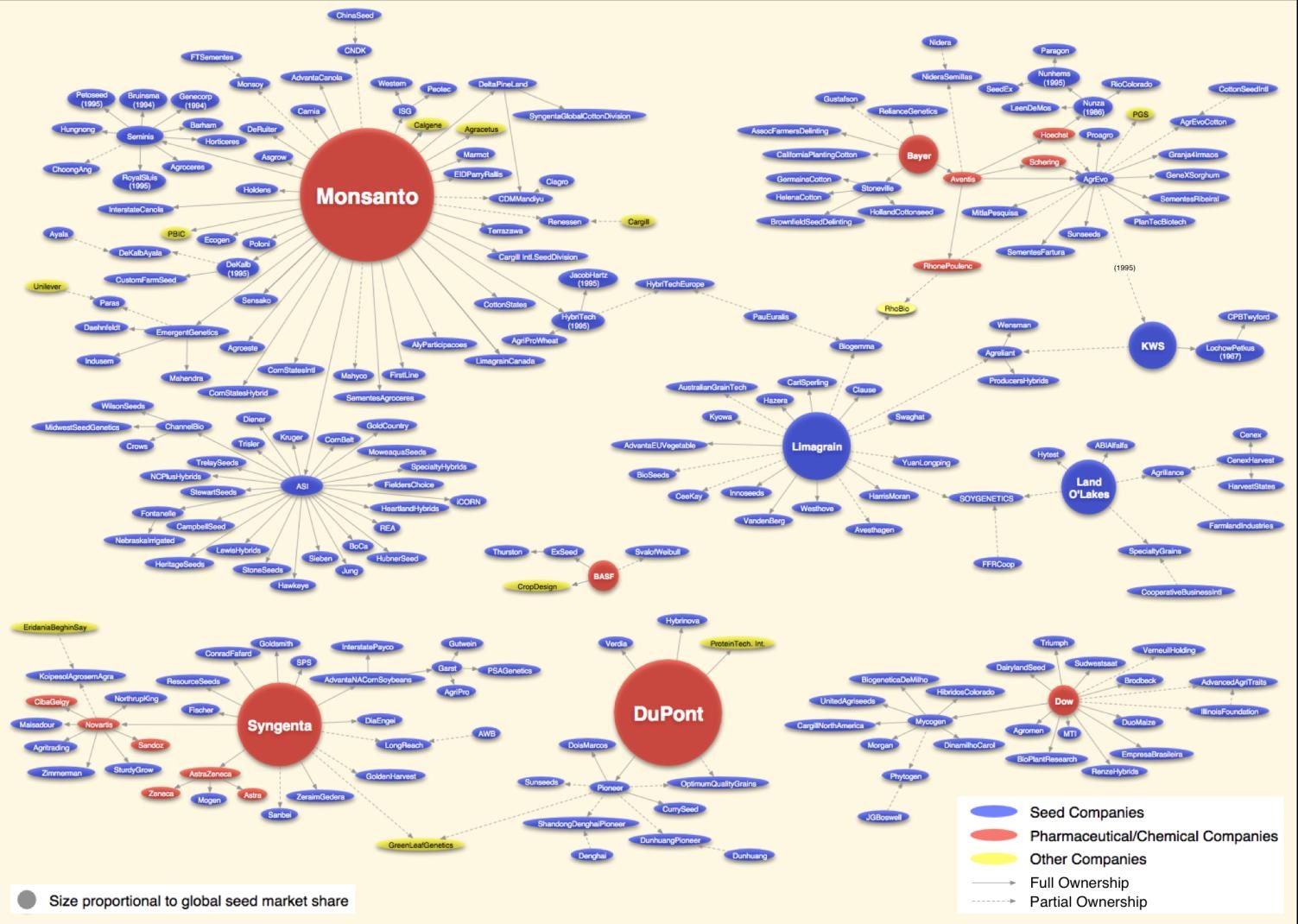
In an effort to monopolize the global seed supply, GMO companies are buying up smaller seed companies and shutting them down, collapsing their seed supplies. The following chart shows some of the seed consolidation activity that's concentrating ownership over seeds into the hands of a very small number of powerful, unethical corporations:

(Click image to view full-sized chart.)


This consolidation of seed companies has caused an alarming collapse in seed diversity over the last decade, placing humanity at increased risk for catastrophic crop failures due to a loss of genetic diversity.

That's the problem with genetic conformity: it makes the crops far more susceptible to systemic diseases that can cause catastrophic crop failures. Precisely this scenario is happening right now with banana crops, as most commercial banana trees are genetically identical clones.

As a result, a fungus has attacked banana crops and is causing devastating destruction across the banana industry. The industry is responding by -- guess what? -- foolishly turning to genetically engineered bananas which will suffer from the exact same weakness of genetic conformity, practically guaranteeing a future disease epidemic.

#8) GMOs put control over the food supply into the hands of profit-driven corporations

Before corporate agriculture, food production used to be under the control of local farmers who cared for their families and communities. But now, food seeds are monopolized by greed-driven corporations that care nothing about families or communities (but worship profit at all costs).

It almost goes without saying that these corporations make decisions in the best interests of their shareholders, not the best interests of humanity or the environment.

Expecting corporations to place the long-term sustainability of life on Earth as a higher priority than their own quarterly profits is a form of insanity. Corporations only exist to maximize short-term profits, regardless of the long-term cost to humanity or the planet.

#9) GMOs may be harming pollinators

Although the evidence on this isn't yet conclusive, GMOs may be contributing to the harming of all-important pollinators, without which we would all starve from lack of food crops.

Honeybee pollinators are dying in record numbers across North America, and many scientists fear we may be witnessing a catastrophic collapse of pollinator populations. Evidence is already emerging that neonicotinoids -- a class of pesticide chemicals -- may be responsible for the collapse, but there's also evidence that GMOs may be worsening the population decline.

Were GMOs ever tested for their long-term impact on pollinators in the wild? Of course not. That would cost too much money, and the promotion of GMOs is all about making money; the environment be damned.

"If the bee disappeared off the surface of the globe, then man would have only four years of life left. No more bees, no more pollination, no more plants, no more animals, no more man." - Albert Einstein

#10) The kind of scientists who collaborate with biotech companies are the most dishonest, corrupt and unethical scientists in our world

The world of science consists primarily of ethical, reasonable people who are doing their best to contribute to knowledge and progress for our world. But the darkest "fringe" fanatics of bad science are found in the realm of GMOs, where scientists routinely accept money from the biotech industry to lie to the public and attack "GMO skeptics" -- people who are skeptical about the false promises made by biotech corporations.

Biotech-linked scientists and journalists are the most nefarious and evil-minded of their kind, waging vicious smear campaigns against environmentalists while working desperately to block the public's right to know what they're eating. "Biotech shills" have been a key part of the defeat of GMO labeling laws in California and Oregon, for example, where their message has been, "Make sure the public NEVER knows they're eating GMOs!"

In every way imaginable, the scientists and journalist who blindly push GMOs are a great disservice to the scientific community and will only discredit science in the long run as the long-term harm caused by GMOs becomes undeniable.

REAL science allows for skeptical questions and embraces the precautionary principle, but quack "GMO science" abandons precaution while disparaging anyone who poses reasonable questions about playing God with nature.

The blind leading the blind

GMO shills, of course, dismiss all these concerns (or hope you don't notice them). Their foolish strategy is to cover their eyes, cover their ears and march humanity down this path of destruction, all while hoping to cash in on quarterly profit dividends in the mean time.

There is no rational justification for putting the entire world at risk with genetically engineered crops that have clearly failed to be subjected to responsible long-term scientific testing. As with most other chemicals -- aspartame, Agent Orange, Bisphenol-A and so on -- industry simply unleashes them onto the world and hopes nothing goes wrong.

But Murphy's Law tells us bad things can happen even when you don't want them to, and with GMOs, we're now playing with self-replicating organisms rather than mere chemicals. GMO-based agriculture is a Pandora's Box which can never be closed once opened.

While I do believe GMOs might one day be developed and deployed in a safe and cautious manner, today there is presently zero willingness on the part of biotech corporations to expend the kind of time, money and resources required to establish such safety. There is also zero willingness in the minds of GMO-fronting scientists to even consider the possibility that they might be wrong. One such GMO front man named Jon Entine has even written a book with one of the most disturbingly arrogant titles imaginable: "Let them Eat Precaution."

And so, in a very real sense, we are all playing Russian Roulette with our collective future, hoping against all odds that the shortcut scientists working for companies like Monsanto have already thought of everything.

History tells us such hope is deeply misplaced.

Learn more about GMOs:

www.ResponsibleTechnology.org
www.OrganicConsumers.org
www.GMwatch.org
http://gmomythsandtruths.earthopensource.org